
1. Experimental Social Housing in Carabanchel District
This is a successful and consolidated new urban development called PAU, or in spanish, Plan de Actuación Urbanísitica, constructed prior to the 2008 financial crisis.
A PAUs are new urban planning projects developed on land that previously had no urban program, enabling this area to be urbanized. They are often areas that result from the building of new ring roads, empty gaps between them, and other existing urban centers, as it is the case of this PAU of Carabanchel built in between the existing municipal village of Carabanchel and the M40 ring road. PAU´s have being the response to the scarcity of housing that the city has suffered for the last 35 years.
Carabanchel has become a reference housing laboratory because it cloisters numerous unique projects designed by international architects such as Tom Mayne (Morphosis US) and Alejandro Zaera (FOA, London) and others. The reason why we find so many experimental projects here is because in the present, the Municipal Land and Housing Agency of Madrid are working in changing the historical Spanish mentality of social housing in Spain being of inferior class and quality. Their strategy for last two decade has been to create international competitions and hire renowned architects:
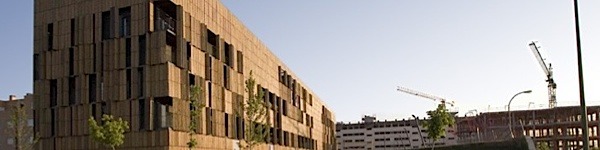
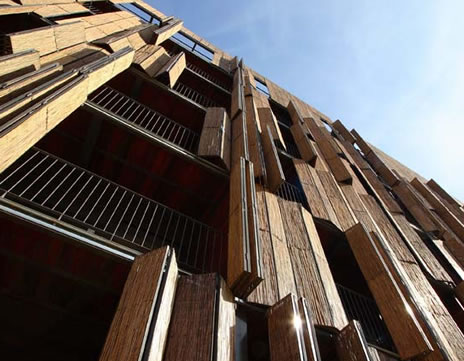
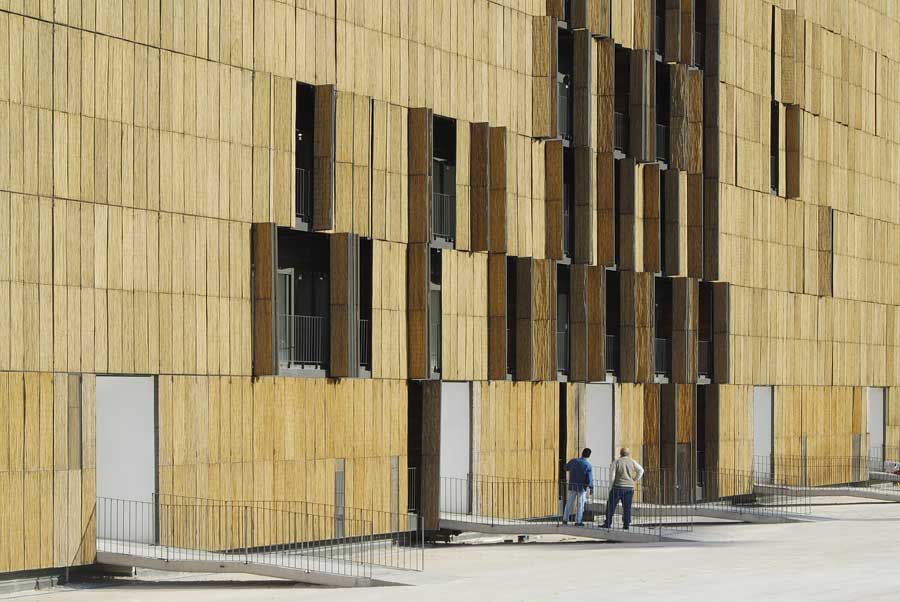
1.1 – Foreign Office Architects FOA (2007) 88 dwelings. The bamboo box is housing project designed by Alejandro Zaera Polo. He is a Spanish architect based in London and has being an architectural tutor at on of the most prestigious international schools of architecture, the Architectural Association. His studio is well known for designing the Yokohama Port Terminal. The material he has used in the facade is bamboo. The different two and three bedroom typologies are ”pasantes”, ie. all have both east and west orientations resulting in very long pieces that can be easily identified in the floor plans.
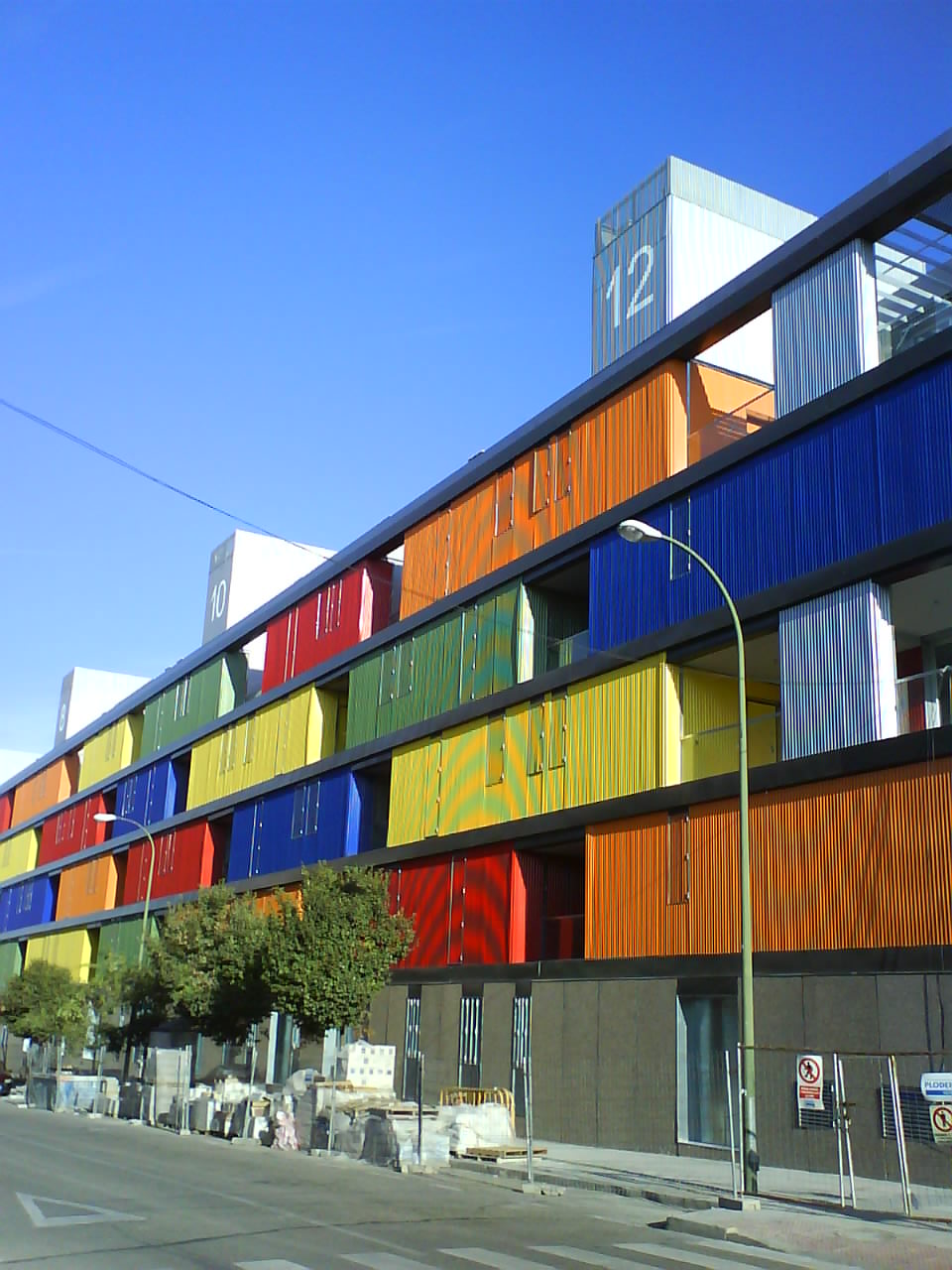
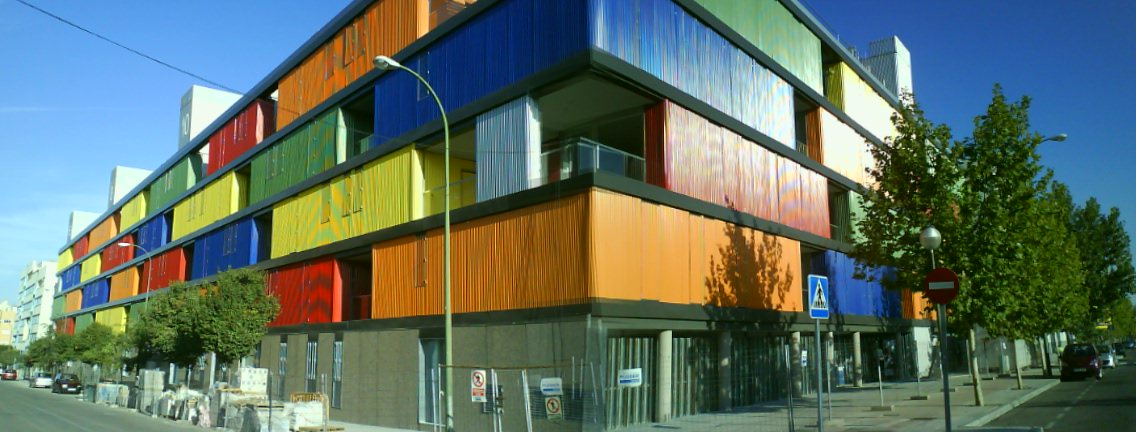
1.2 – ACM Architects (2010) 88 dwellings by Alxu Anann, Andres Cánovas & Nicolas Mauri, a first price proposal won by a local team of young architects. Very strong in concept “container” housing typologies, large colorful block with a central patio, which includes a beautiful cozy park in the centre.
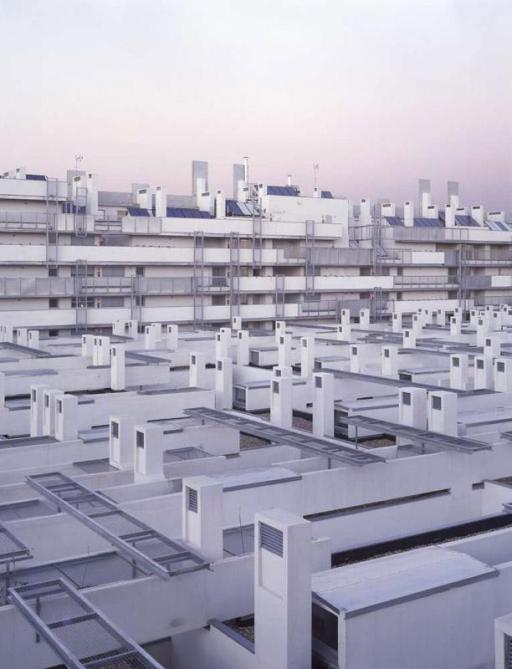
1.3 – Dosmasuno Arquitectos (2008). In the area we find other innovative projects, some of them designed by young architects based in Madrid, as it is the case of Ignacio Borrego, who was a colleague at the School of Architecture I used to teach at here in Madrid. He was concerned with the relationship that the building had with the pine forest on the west side of the plot. That is the reason why he pushed the volumes towards those edges of the site, leaving an inmensus courtyard in the back were we can find an interesting composition of cantilevered volumes that are the result of an exploration on how a two bedroom typologies can be expanded into three and four bedroom by the plug-in of modular units in the back façade.
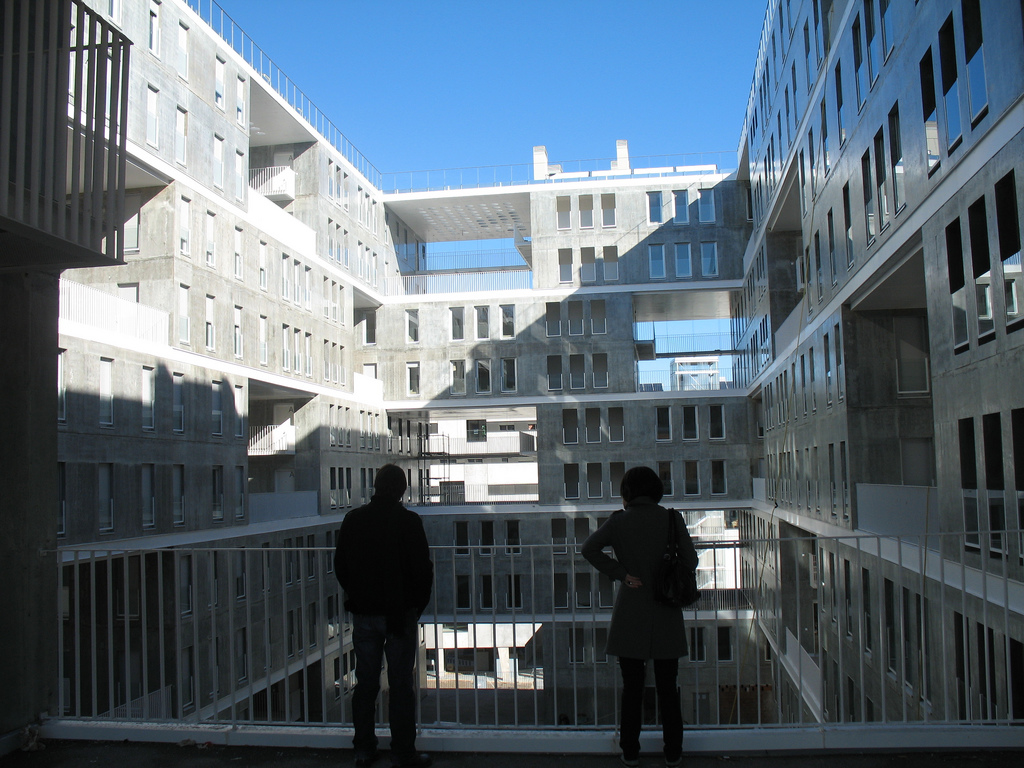
1.4 – Morphosis (2008) by Thom Mayne is an American architect based in California exploring ideas of morphosis and transformation. In this site he was interested in the forces driven in the area, and the influence that the highway had in the site, resulting in the bending of an abstract mesh composed of an overlay of diagrams, for instance, bedroom typologies, circulations, and a green layer, in the diagram, in elements in yellow. This final layer was of importance for the author. As you can imagine, for an architect, the model of the Spanish pueblo was always present, with the aim of creating streets and public spaces like patios where the residents could meet, while controlling at the same time the micro climate.
1.5 – Extra – 168 dwellings (2010) Coco Arquitects / 159 dwellings (2017-22) by Javier Gª German (TAAs) / 146 Housing Dwellings (2002 – 06) by Angeles Gª Pedrosa
Photos:







2. Sculptural Social Housing in Villaverde District
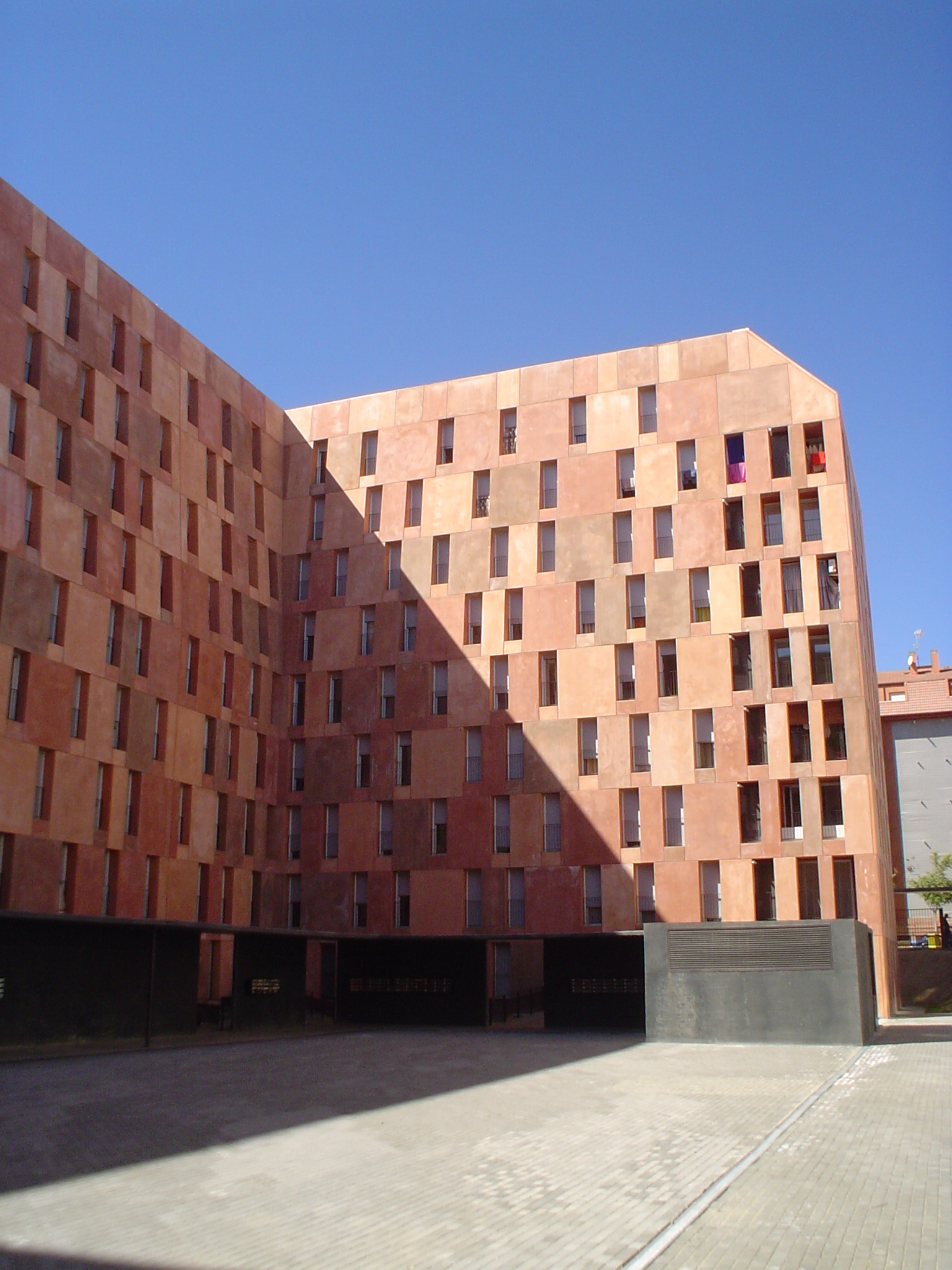
2.1 – Chipperfield & Fernandez Isla (2009). Low cost building where it was previously industrial grounds. Cross ventilation scheme. From the technological and construction point, the building is a classic concrete structure , and in the facade, prefab GRC (Glass Reinforced concrete), which enables the author to compose the facades with a skin of great artistic value. While working with the concept of volume and massiveness as a whole, David Chipperfield also explored the colored composition of the GRC panels, studying the disposition and the possibilities of different chromatic combinations. More info…
Photos:


3. VALLECAS DISTRICT: High rise & landmark promotion, Eco-Bulebard and Eco-Neighborhood.
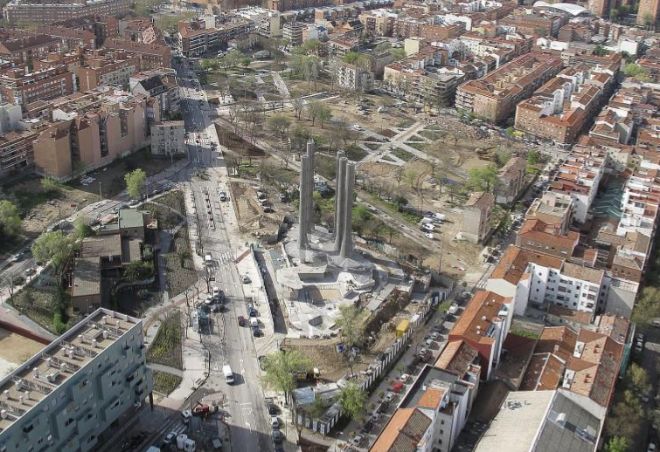
3.1 – Eco-neighbourhood of Vallecas / Social Housing Promotions by Municipal Housing Agency (EMV) linked by the District Heating (DH). The Especial Urban Plan of Interior Rehabilitation (PERI) of the old municipal colonies of San Francisco which had homes built in the 1950s, to accommodate a huge number of migrants from the countryside. After considerable deterioration of the residential areas EMVS took them over in 1982 to start the renewal process. All apartments in the area are intended for the most disadvantaged population groups. It has allowed their replacement with new developments that include more than 1,890 homes, built with high criteria on sustainability in 8.35 hectares (3.2 square km). It is called the Eco-Neighborhood of Vallecas, designed entirely with environmental and social sustainability criteria. It is the result of a large and complex process directed by the city of Madrid housing agency (EMVS), Empresa Municipal de Vivienda.
3.2.- District Heating (DH): Located in the Econeighborhood of Puente de Vallecas, as one of the promotions of the EMVS that has 1,200 homes, this pioneering project has a centralized heating and domestic hot water system (‘District Heating’) and another pneumatic waste collection system, which gives numerous benefits, environmental and notable economic savings for tenants. This new pneumatic waste collection system, allows the residents of these new homes to separately deposit containers, rest and organic matter in the gates located in the common areas of their buildings. The result is a new cutting-edge neighborhood in which energy consumption and CO2 emissions have been significantly reduced.
San Francisco Javier VI (2023) is an EMVS promotion that combines efficiency, design and comfort. 102 apartments with 1, 2, 3 and 4 bedrooms typologies, many of them with terraces. Distributed in 4 portals, there are also duplex typologies and some homes adapted for people with reduced mobility. Read more…
The apartments have abundant natural light, thanks to their large aluminum windows and double laminated glass with an argon gas chamber, which provides great thermal and acoustic insulation. The flooring throughout the house is a wooden laminate, except in the kitchens and bathrooms, with ceramic tiles. Doors are made of lacquered DM, like those of the modular wardrobes. The building is between 5 and 8 floors high, with four patios that allow independent circulations with their own access from the outside. The abundant vegetation in the common areas stands out, helping to create a pleasant microclimate. With energy certification A, the building has cross ventilation and a high-performance thermal envelope. In addition, it has aerothermal energy with solarphotovoltaic panels.
As it is located in the Econeighborhood of Puente de Vallecas, it benefits from the advantages of ‘District Heating’, for heating and hot water for the bathrooms.
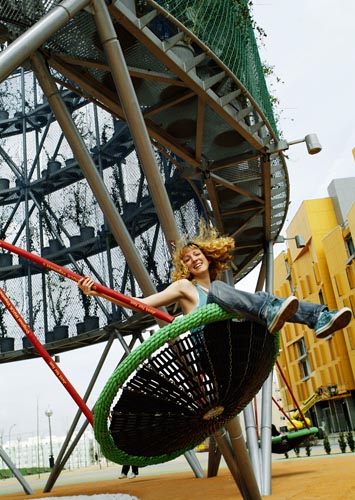
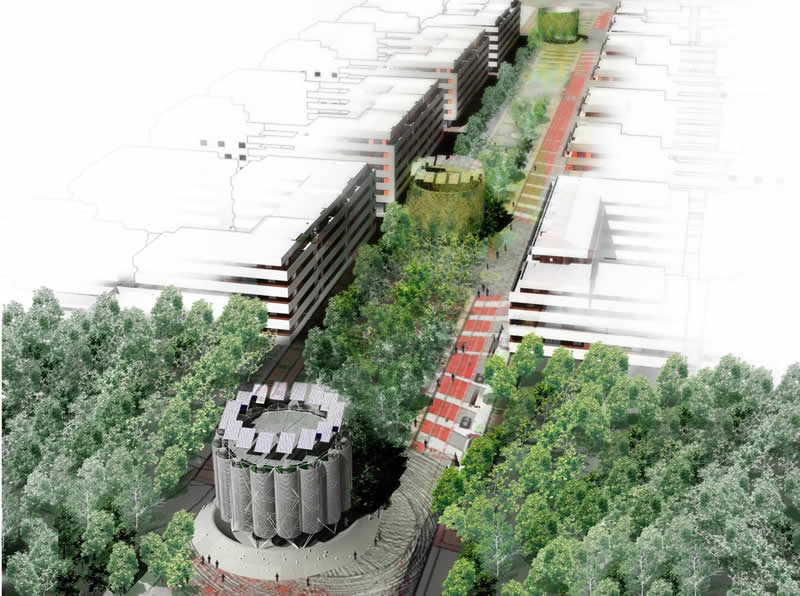
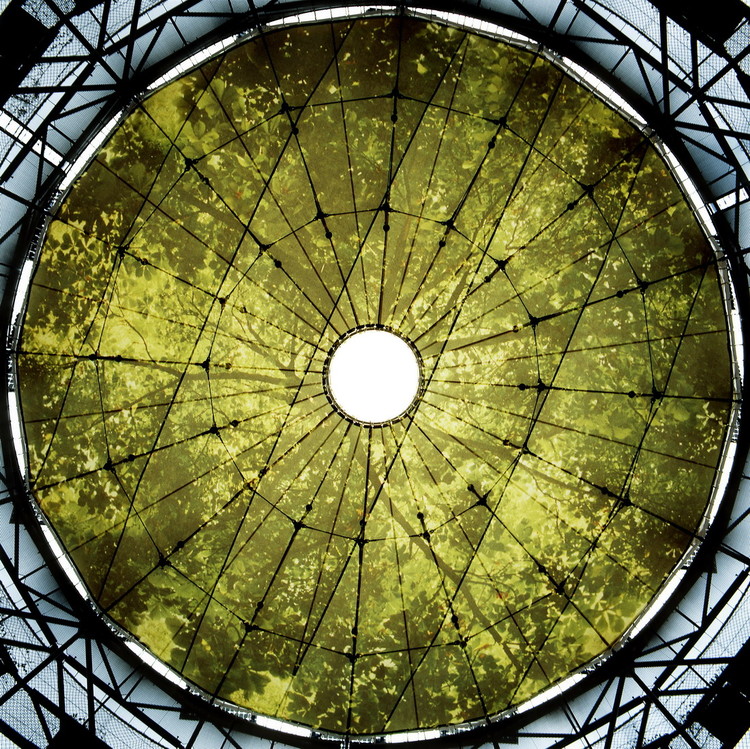
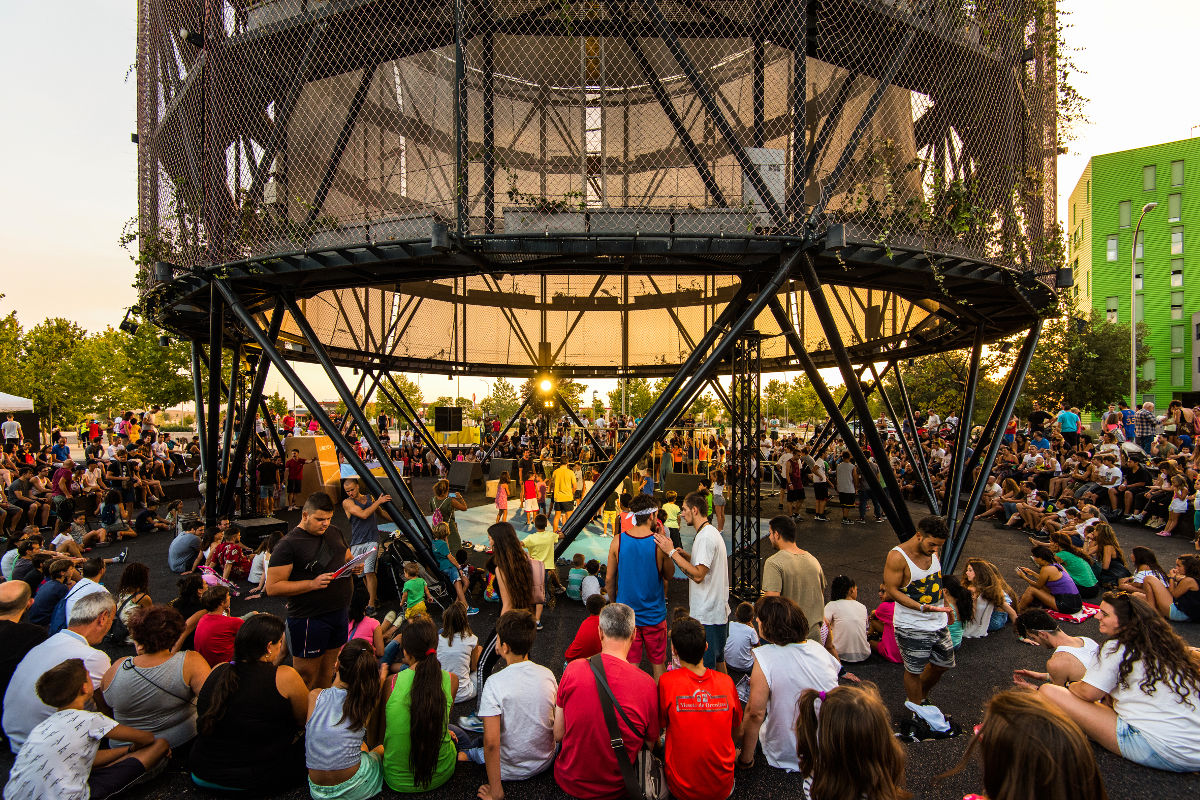
3.3 – The Eco-boulevard (2007) is an urban intervention that aims to activate an area by attracting the residents to some unusual and interactive artefacts that have different eco-organic functions. It is a pilot experience for the climatic adaptation of outdoor spaces, awarded in 2004 at the Eco-Boulevard competition organised by the Residential Innovation Management Office within the Municipal Housing Corporation of Madrid and funded by the European Union (LIFE program). The trees of air is a light structure that is self-sufficient and can be dismantled. It consumes only what it can produce through photovoltaic solar energy collection systems. Selling this energy to the power network generates a surplus on the annual balance sheet which is employed for the maintenance of the structure.
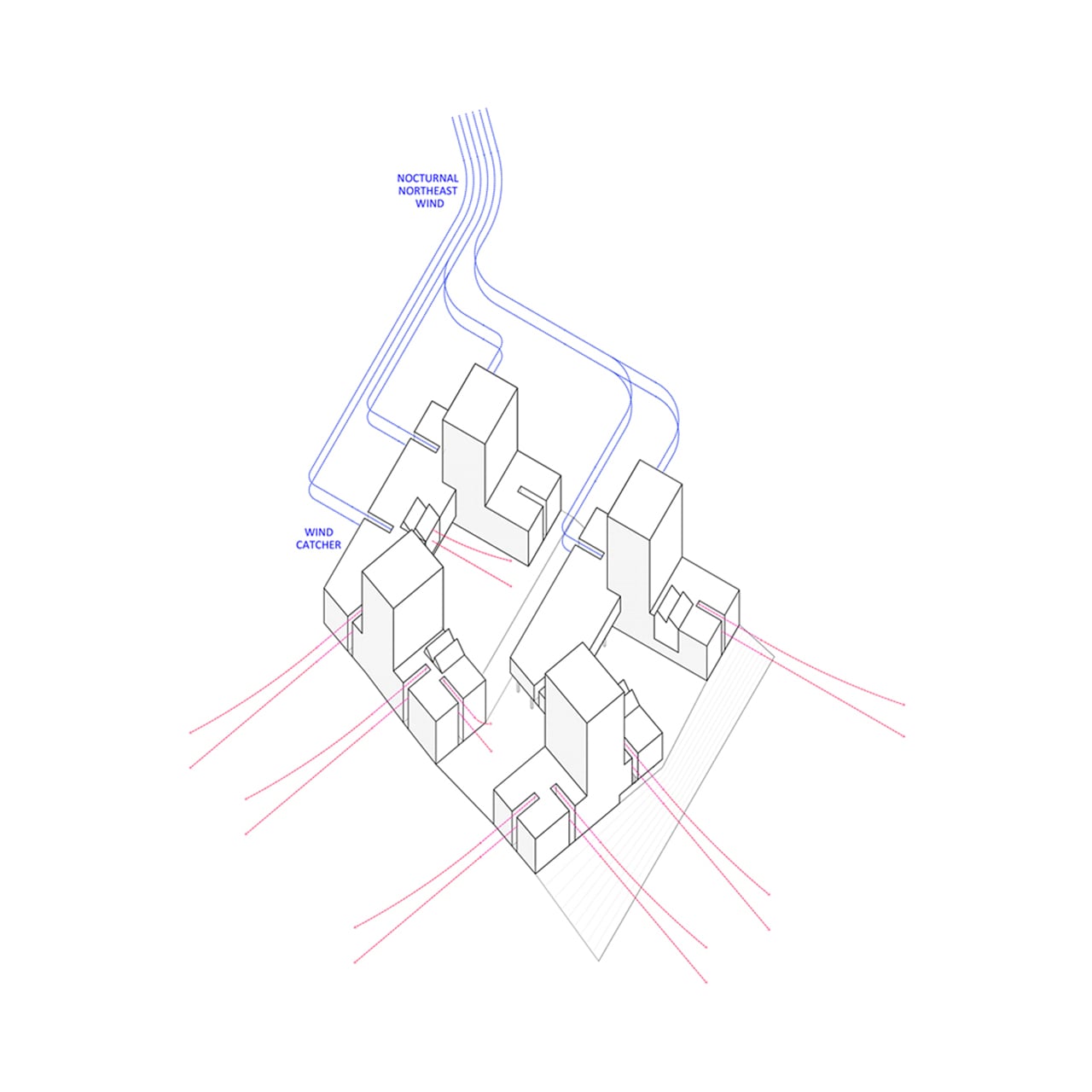
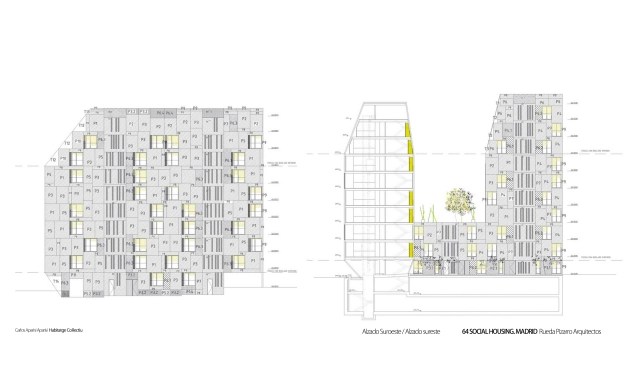
3.4 – EMV Housing 66 dwellings (2006 competition 2010 construction) by Rueda y Pizarro. (Description submitted by the project team) We intend to establish a compromise between rigorous respect for the rules of the urban game (an absolutely preconfigured closed block volumetry) and the in-depth study of it to find the loopholes that allow giving identity to the architectural volume. We establish a series of operations in the solid capacity given by the regulations that aim to achieve homes with greater climatic, thermal and lighting comfort.
First, the volume is vacated on the northeast façade to achieve the largest possible façade surface with good orientation (south) and adjust the excess buildability. Then, the height of the south façade is lowered and an inclined plane are created to achieve greater sunlight on the less favorable façades.
39 Dwelings (2012) by Iñaqui Carnicero, Ignacio Vila, Alejandro Virseda.
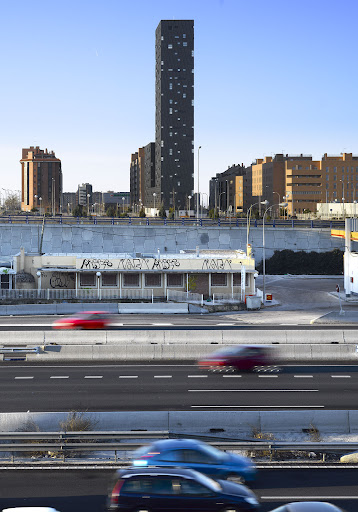
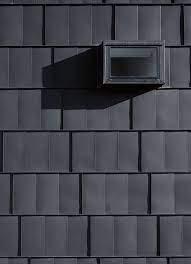
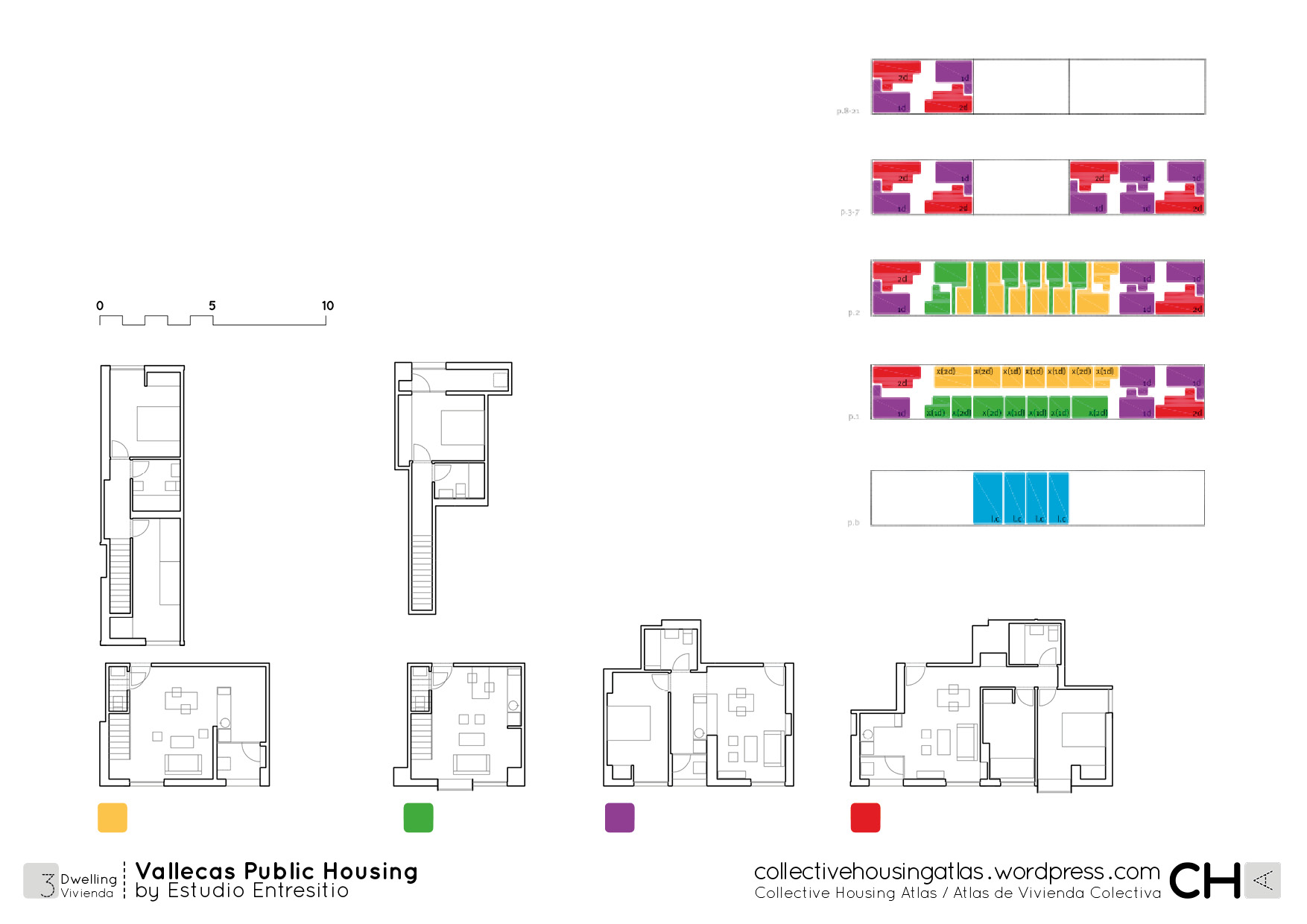
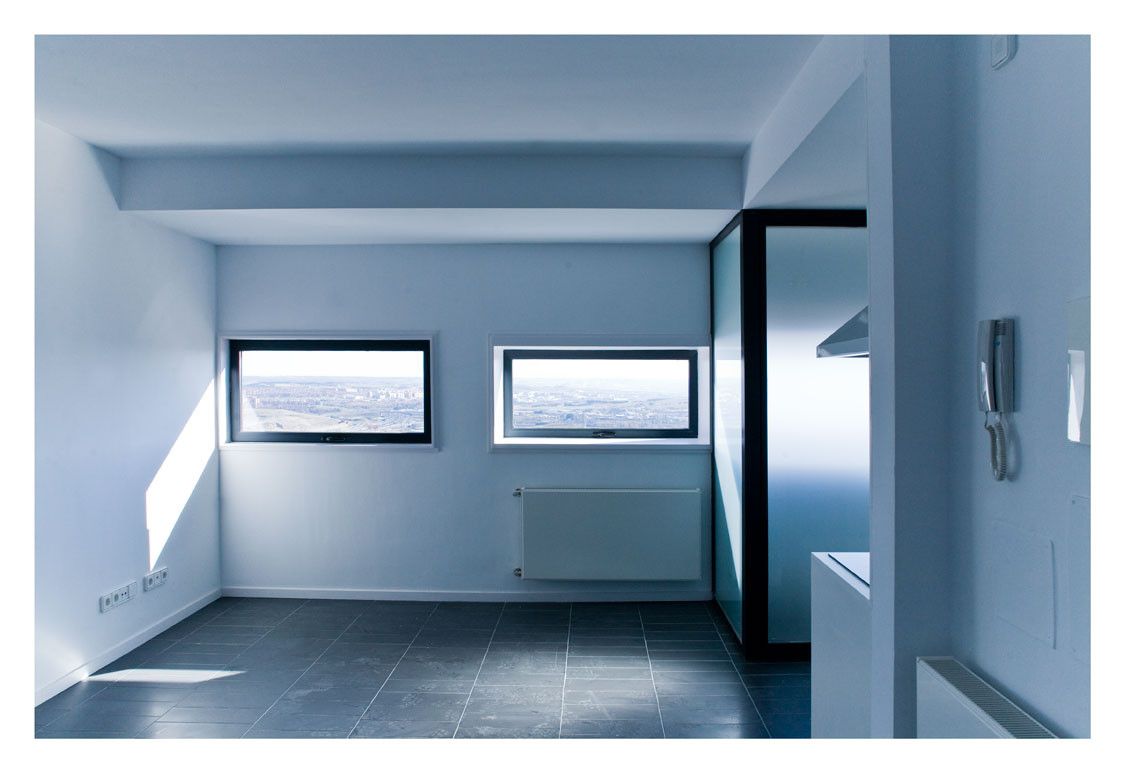
3.5 – 132 Dwellings (Competition 2003, constructed 2006, finished 2009) by Estudio Entresitio. It is a skin of black zinc scales (escamas) in horizontal strips that slide over each other with a slight offset and in which the holes are inserted with the intention of not making the floor levels evident. Constructively, the zinc facade becomes the central argument not only because of its material execution but also as an energy efficiency strategy. A minimum maintenance solution is proposed, in a transventilated position, which facilitates the transpiration of the facade, protects the building from the infiltration of rainwater and prevents interstitial condensation. It involves the optimization of the thermal and acoustic insulation of the building, which, being located on the outer face of the bricks enclosure, avoids possible thermal bridges. Built area: 15.451 sqm. The project builds a total of 132 one- and two-bedroom homes for a building area of 9000 m2 plus 300 m2 for commercial use on the ground floor.
Photos:


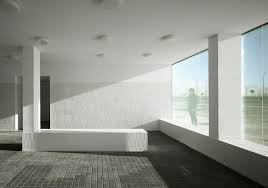








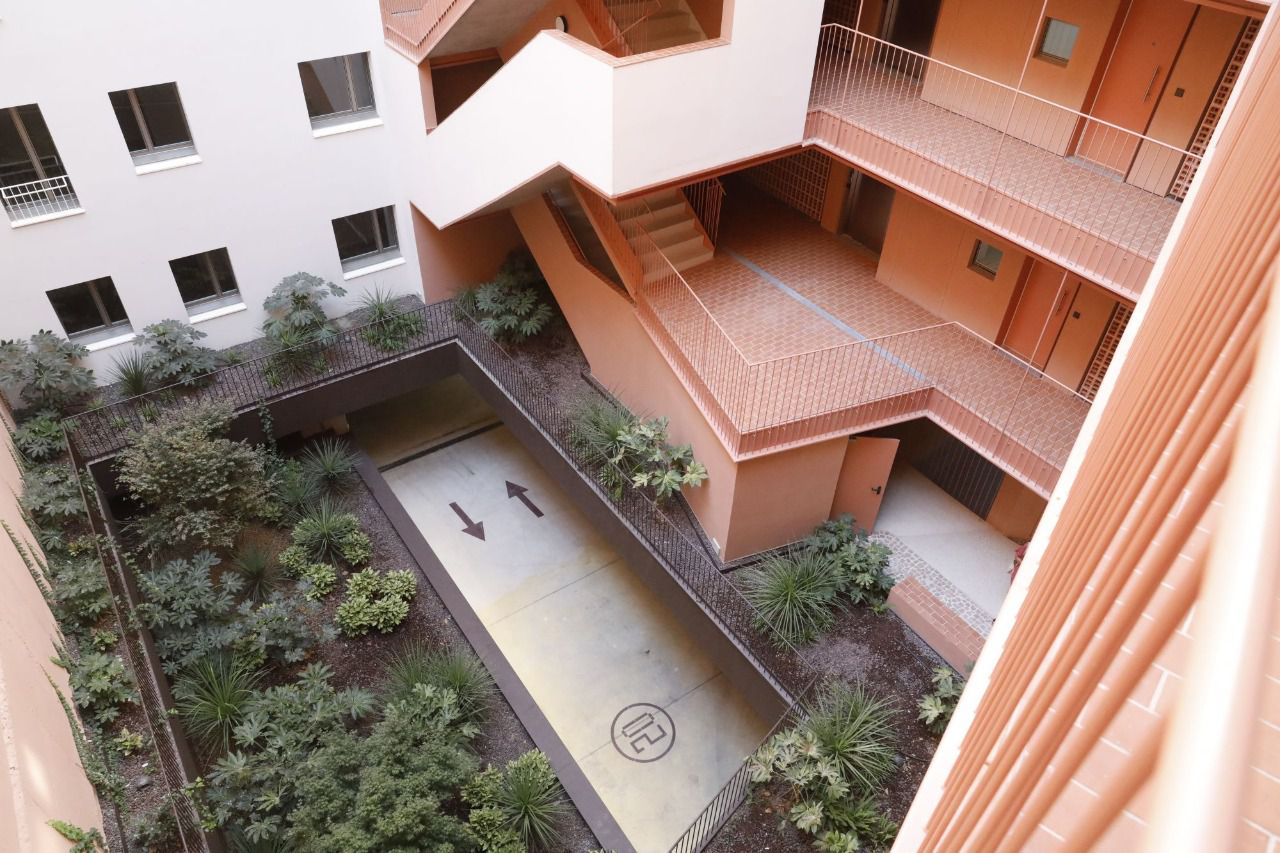
- Claudio Coello, 121 (44 dwellings 2020) by Arenas Basabe & Palacios. The assignment consisted of the design, execution and construction of a residential building at 121 Claudio Coello street, in the heart of the Salamanca district. Its exceptional location represents an opportunity and at the same time a challenge due to its visible presence from the Juan Bravo bridge on the Castellana. Aware of the importance of its location, the project presents a dual character through the contrast in its materiality. Facing Claudio Coello Street, the building responds to the classic organisation of the neighbourhood, with tripartite facades with a plinth, body and crown. This more urban view is shown strictly, without ornament, modulated by cutting precast white concrete panels.
However, towards the interior, a lighter and more friendly façade opens onto the garden through large glass panels covered with a wooden lattice. A low volume in the form of a house on two heights closes the garden, giving the built complex a human scale.
- Lagasca 99 (44 dwellings 2026-17) is an elegant and exclusive 44 dwelling private housing development building in the middle of the golden mile of the Salamanca District. A luxurious, still modern and elegant, is designed by a prestigious architect from Madrid, Rafael de la Hoz. The most expensive rental apartment in Madrid which costs around 16,000€ per month and is owned by a couple from Venezuela whose construction company has participated in large public works for the Government of their country. They live in Miami and it is their real estate agent who receives those interested in the street, at the doors of the 650-square-meter lobby, the largest in the capital of Spain. The starting price per flat was between 3 and 17 million. On the roof terrace, we find an L-shaped outdoor pool twenty meters long. Under the lobby there is another pool, gym, sauna and Turkish bath, 156 parking spaces and storage rooms.
- Sun Flower Bldg (1964-66) José Antonio Coderch in José Ortega y Gasset, 23.T he building was built in 1966. The design capable of making the most of daylight, like the sunflowers, earned it the name. One of the innovative characteristics of the time is the design of each house, which has the existence of private access elevators. The design considered the use of daylight, which is why it was called the Sunflower Building. This use is made by rotating the axis of each house towards noon, calculating this rotation based on the favorable and unfavourable positions of the sun throughout the day and year.. The fusion of rationalism with organicism is one of the characteristics of this building. The architect José Antonio Coderch is looking, together with the architects of the Team 10 team, for new parameters to improve the specifications of the International Style. In the Girasol building, Coderch seeks light with the twists in the façade, orienting the windows towards the midday sun. This building represents as a whole, elevations, plan and sections, the innovation objectives that Coderch incorporates into his architecture and that inspired the next generation of architects.
4. IF TIME. Sanchinarro District
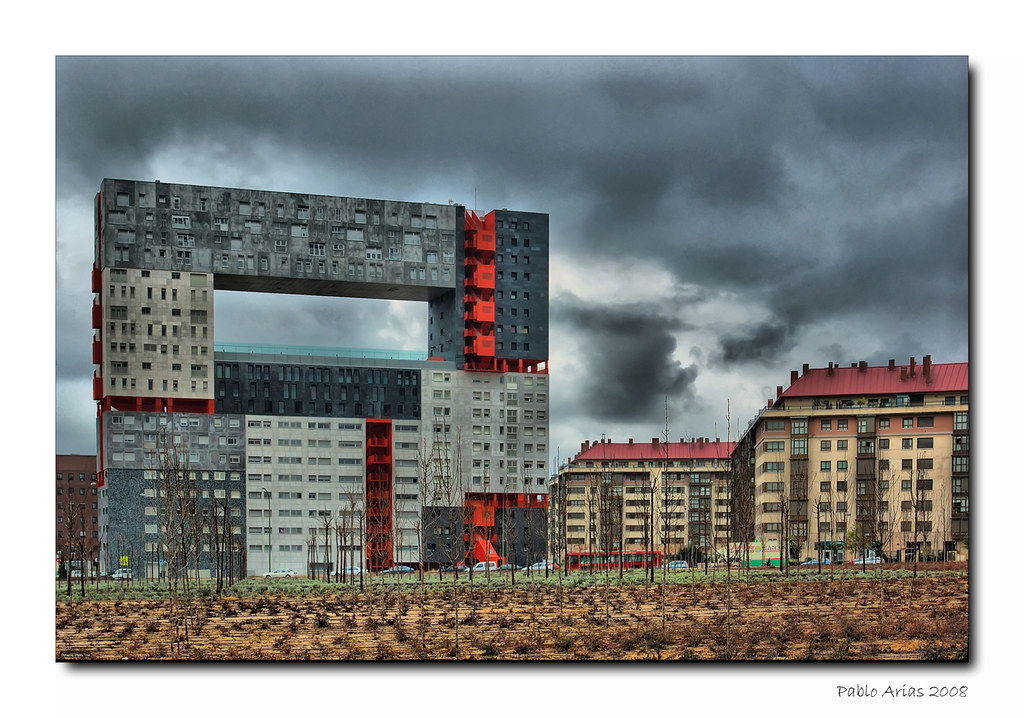
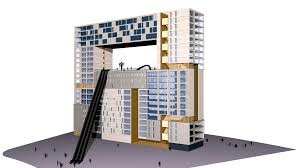
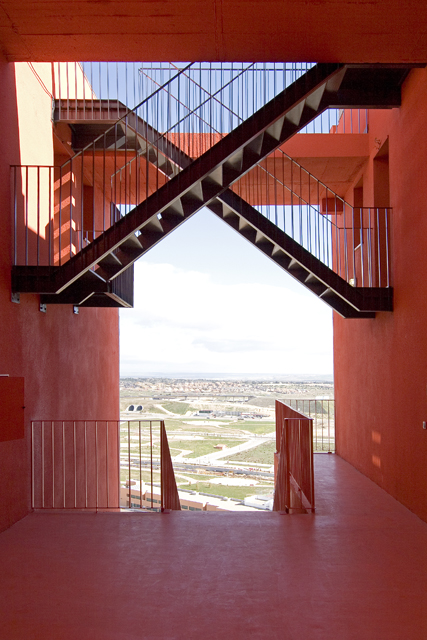
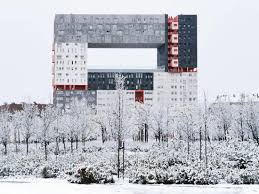
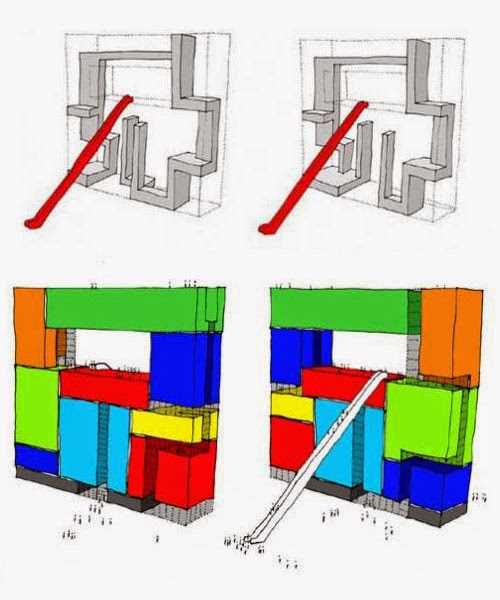
4.1 – The Viewpoint of San Chinarro District, in Spanish known as “Mirador de San Chinarro” (2005) by Jacob van Rijs (MVRDV, Rotterdam) is a 22 floor housing block in the District of Sanchinarro, a residential suburb on the north east edge of Madrid. The most impressive element of the building is the incredible gap, or empty space in the centre, which acts as a frame for the distant landscape and the mountains to be looked at from this elevated viewing platform. This large communal plaza or community space, stand 40 meter above the ground, and was meant to be used by the neighbourhood as a meeting area and playground. The Mirador Bldg. contains 156 dwellings with a wide variety of typologies . MRDV created a distinctive silhouette by grouping nine blocks. The articulation of these blocks is apparent in the exterior with a palette, of stone, concrete and tile, and red metal red strip of red indicate the circulations, staircases and corridors. The way the nine parts are stacked and joined together, make up a new towering impressive ‘superblock’ (MVRDV). Blanca Lleó Asociados (Madrid) was the local studio that was responsible for executing the project on site.
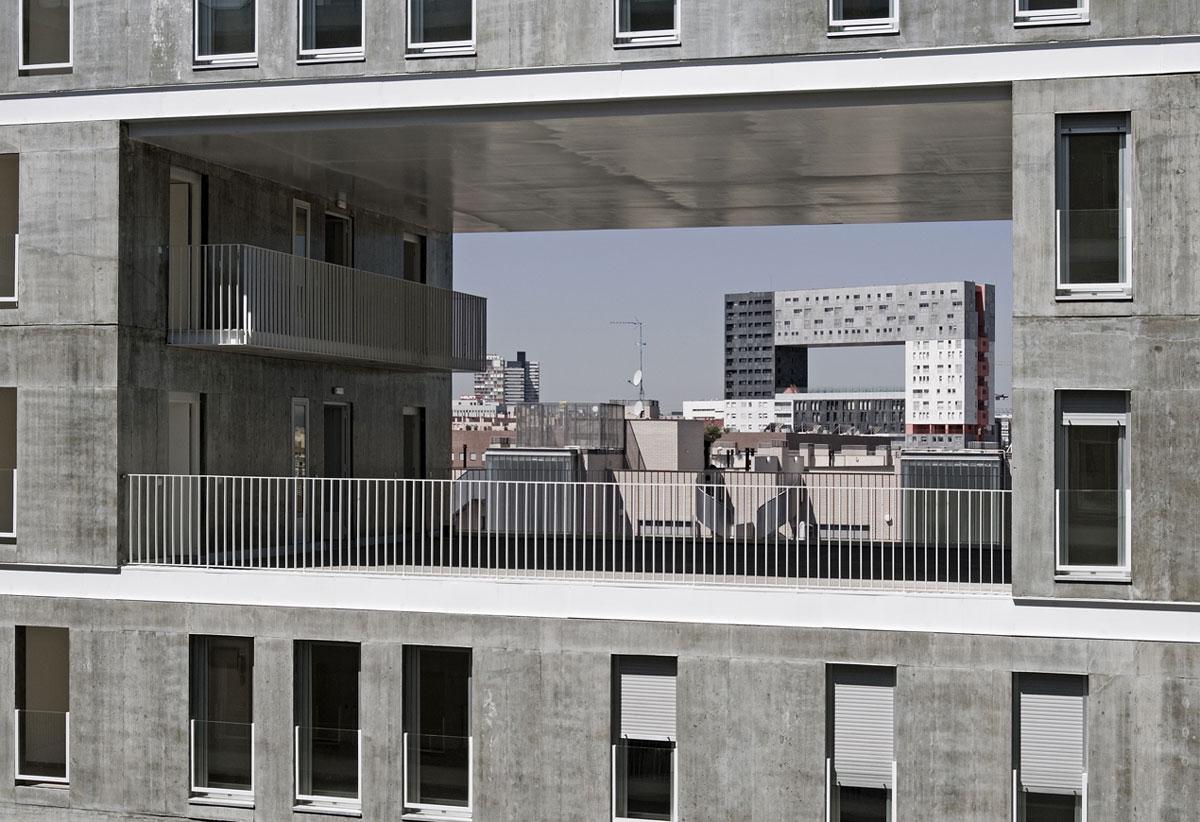
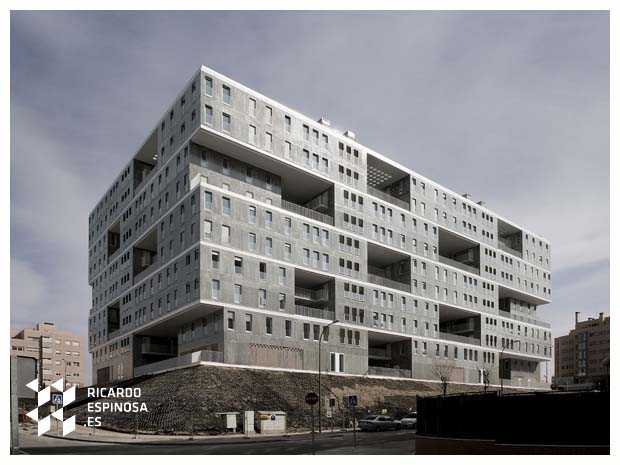
4.2 – Lattice House Block (2009) also Jacob van Rijs (MVRDV, Rotterdam) in San Chinarro. Edificio Celosia in Spanish means Lattice building. This social housing project is an alternative solution to the closed block. The proposal aspires to be a construction system rather than a unique building. The block, in the form of lattice, mixes 30 constructed boxes and 30 empty spaces. Those empty spaces are for intermediate neighbourhood life. The volumes contain 1, 2 and 3 bedrooms typologies and the vertical patios generated between them are common spaces that allow crossed visual perspectives in all directions. The birds, wind and the sun cut through the building. The concrete formwork construction explored a more effective and quality of a faster and a more sustainable construction system (text from website Blanca Lleó).
Fotos:








Extra– BBVA Bank Headquarters (2007-15) by Herzog & de Meuron. Read more…
is perhaps one the best contemporary project in Madrid. A whole new complex that recovered several pre-existing buildings on site that were in a good condition. The former building with the new ones are unified by a linear continuous facade that is a very original compositions of irregular, still “aerodinamic” brise-soleis. This is a solar protection system of beautiful aesthetics. The space between the buildings, like in a green village in itself, have corridors, patios full gardens and streets. In the interior, we will see as we approach later the complex by foot, stands out a major circular plaza. It is the main “public” space or for the complex, where we find the main central building: A transparent , also circular high rise building, which has become a north landmark for the territory known as the “sail ” (in Spanish vela) as the whole complex was a futuristic sail boat.
This sail is orientated in relation to the sun path, to minimice sun exposure during the summer season. We wont be granted permission to enter the complex, but first we may appreciate its presence from the distance. We will also get closer to the facade and from the perimeter, as it is so permeable, look into the streets and main plaza.
.
Chronograma edificios:
- Edificio Girasol (1964-66) José Antonio Coderch
- Legorreta (2004) 111 Viviendas
- Mirador de San Chinarro (2005) 156 dwellings by Jacob van Rijs
- Eco-boulevard (2007) Belinda Tato
- Foreign Office Architects FOA (2007) 88 dwelings
- Dosmasuno Arquitectos (2008) Nestor Montenegro, Ignacio Borrego, Lina Toro 102 dwelings (52 1D, 35 2D, 15 3D)
- Morphosis (2008) 141 dwellings by Thom Mayne
- Parroquia de Santa Mónica (2008) Ignacio Vicens
- Chipperfield & Fernandez Isla (2009) 176 dwellings (london, shangai) 1, 2 y 3D
- Lattice House Block (2009) 146 dwellings Jacob van Rijs
- Estudio Entresitio (2009) 132 Dwellings
- ACM Architects (2010) 88 dwellings
- Coco Arquitects (2010) 168 dwellings (1D y 2D)
- Rueda y Pizarro (2010) 64 dwellings (1, sobre todo 3 y 3D)
- Iñaqui Carnicero, Ignacio Vila, Alejandro Virseda (2012) 39 dwellings
- Guillermo Vázquez Consuegra (2015) 165 Viviendas de 2 y 3D
- Lagasca 99 (2017) 44 dwellings by Rafael de la Hoz
- Claudio Coello, 121 (2020) 44 dwellings by Arenas Basabe & Palacios
- Javier Gª German (TAAs) (2022) 159 dwellings
- Eco-neighbourhood of Vallecas (2023/2024/2025) 205 dwellings

 Pure Expeditions