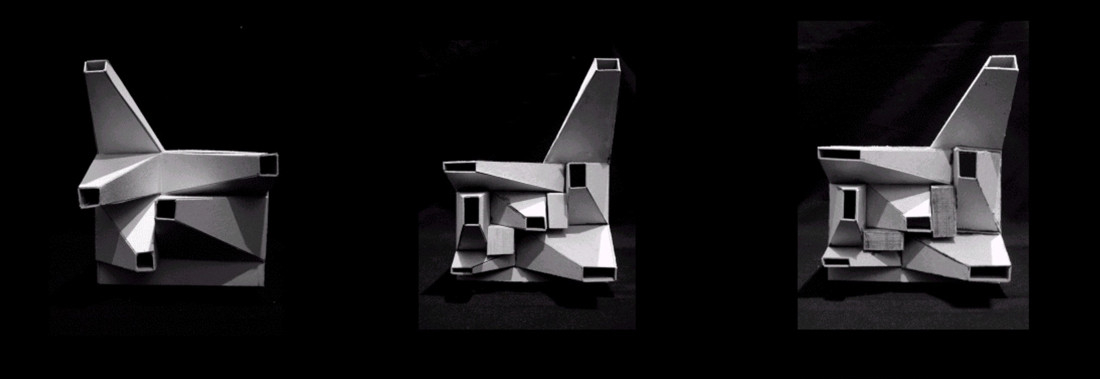
In Madrid, a PAU, or in Spanish, Plan de Actuación Urbanísitica, are new urban planning projects. They are developed on land that formerly had no urban program. This development enables the area to be urbanized. These areas often result from the building of new ring roads. There are usually empty gaps between these roads and other existing urban centers. This situation applies to the PAU of Carabanchel. It was built between the municipal village of Carabanchel and the M40 ring road. PAUs have being the response to the scarcity of housing that the city has suffered for the last 35 years.
An important industrial and technological activity takes place today in Madrid, fundamentally located in the periphery. During the dictatorship of Francisco Franco, the south of Madrid became very industrialized. This trend accelerated especially after the sixties. Many people migrated from rural environments into the city. Madras’s south-eastern periphery became an extensive slum settlement.
South East Development : PAU of Cañaverales, Los Ahijones, Berrocales, and others.
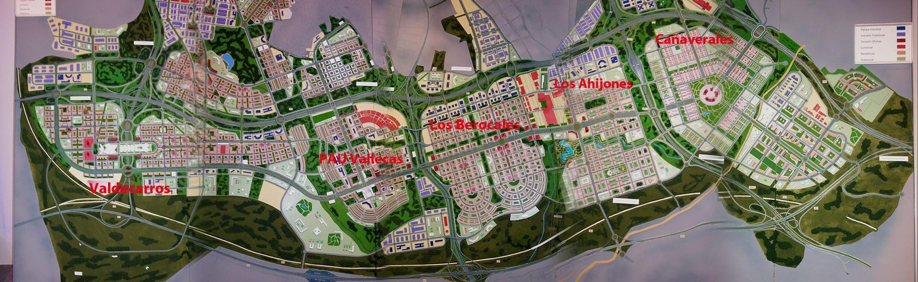
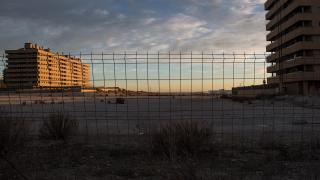
Here we find the most dramatic situation in Madrid’s latest urban developments. This south east development forms five different PAUs. Some have being approved, but have not started construction, and their future is quite uncertain. Others have finished building the infrastructures, but the different cooperatives were not be in a position to start building. The result seems to be the construction of “isolated islands” in the middle of an unconnected urban mesh. The situation since 2008 has been similar to what we find today. We will visit the few promotions that have since started construction. This will help us find out how construction resumes nowadays.
Seseña Massive Urban Development and the case of Francisco Hernando Contreras (the Wellman)
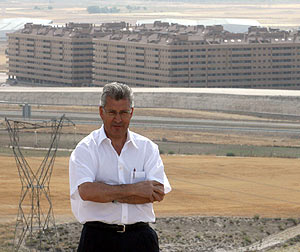
Seseña is a municipality of Spain located in the province of Toledo (next to Madrid). It gained visibility due to controversial speculative development projects in Vallegrande and El Quiñón during the Spanish property bubble. These were developed by Franscico Hernando Contreras, also known as known as Paco el Pocero, or, Frankie the Well(for water)man.
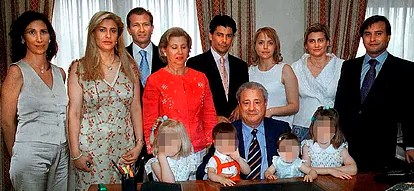
Francisco Hernando Contreras (2 June 1945 – 3 April 2020), was a Spanish developer. From a humble background, Hernando became a prominent builder in the Madrid area. His most famous project is Seseña, near Madrid.
The Residencial Francisco Hernando development was built in the El Quiñón area of Seseña by property developer Onde 2000 belonging to the Grupo Francisco Hernando. It begun during the construction boom of the 2000s (decade), due to the municipality’s location within commuting distance of Madrid, it was to be one of the largest such developments in Spain, with an original plan of 13,500 units costing over 9 billion euros to build. However, the massive project raised eyebrows. Since utilities such as water and gas lines were not included in the plans, the completed units risked being uninhabitable. Also the project had been approved unusually quickly: it turned out that the authorities had been bribed, and the former local Mayor José Luis Martín was soon arrested, but never brought to trial.
Following scandal and the economic crisis related to the Spanish property bubble, the developer ran into trouble sustaining demand and financing for the project. By mid-2008 fewer than 3000 of the completed apartments had been sold and fewer than a third of the sold apartments were occupied, leaving the development a “ghost town”. Read more…
The developer, Francisco Hernando Contreras aka El Pocero, was never criminally charged with wrongdoing. He moved his business to Equatorial Guinea. He died on 3 April 2020 of coronavirus disease 2019.
In the context of the boom of logistics experienced in La Sagra, the mobile home phenomenon spread in nearby locations such as Carranque, Yeles, Numancia, Illescas, and Yuncos. Most of the dwellings in the Residencial Francisco Hernando were inhabited by the early 2020s. The municipal government then unblocked a plan for the construction of more buildings. The municipality laid out a project in 2022 to build “up until 13,825 dwellings”, even more than those ‘El Pocero’ dreamed of.
Today, the ghost town is becoming alive because of the favorable quality-price ratio and proximity to Madrid. It has gone from being empty and not a single house sold to being bursting at the seams. Francisco Hernando began building this macrourbanization almost 20 years ago. It was for many a symbol of the real estate bubble.
Now it is full of families, businesses and even new homes are beginning to be built. What seemed like a desert in the middle of nowhere is now a large urbanization with everything you need to live. “They have already completed the institute and now they will start with the health center,” says a neighbor.
Great apartments and prices that, although they are beginning to increase, are still very competitive. “A two-bedroom home, with its pool, garage and concierge, costs around 135,000 euros,” says a real estate employee.
This makes more and more families decide to invest in El Quiñón. “In Madrid you don’t find this,” says a neighbor, “you are close to Madrid but with more peace of mind.”
To this day, the construction of new residential blocks and facilities continues for the area, located near the A-4, already in the province of Toledo, just 36km from Madrid.
IN THE AREA: Church of Santa Mónica by Ignacio Vice´ns (2009)
Ignacio Vicéns is a popular professor at the Technical School of Architecture of Madrid at the Polytechnic University, in fact this project has these academic feeling, could have perfectly come out of one of his design units.
“The project whose is already completed is the third proposal. The first two were rejected and it’s a shame. I think that they were much more interesting, at least from the point of view of adherence to the liturgical rules of Vatican II.” Vicens & Ramos.
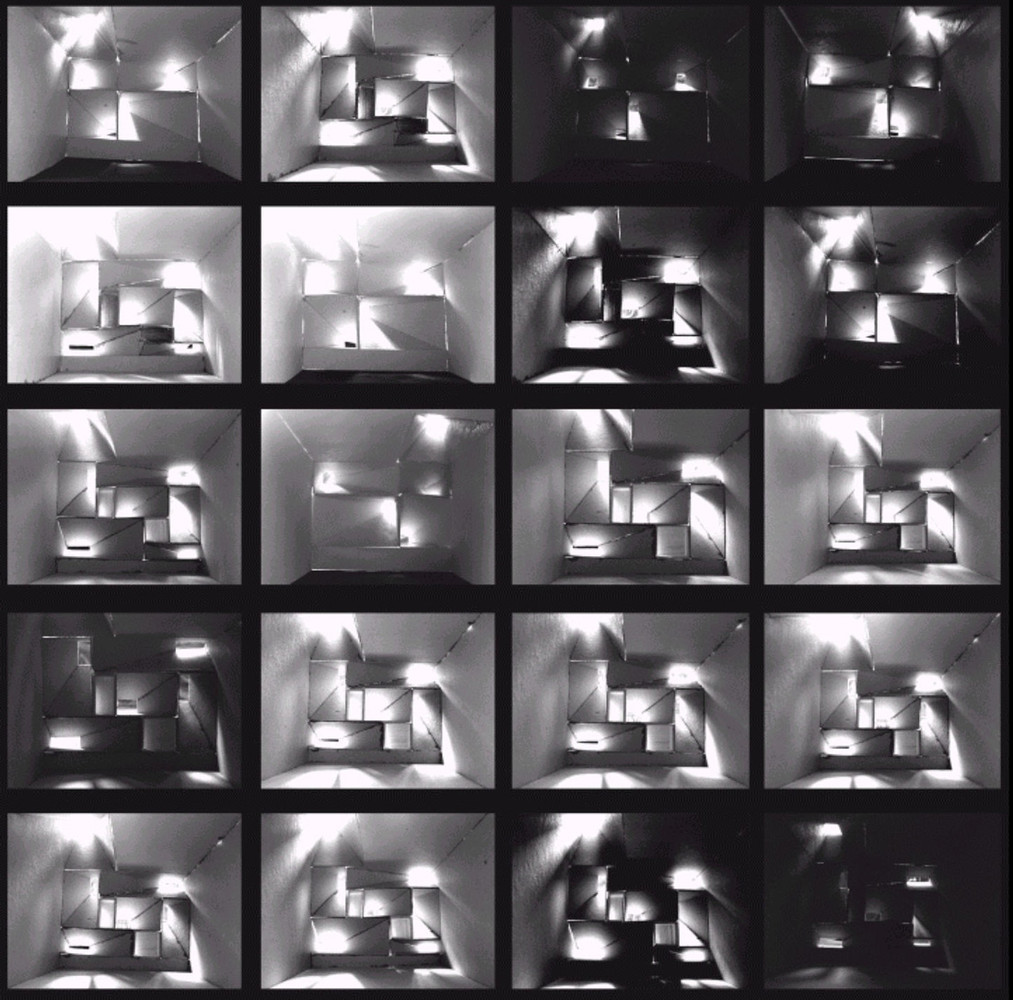
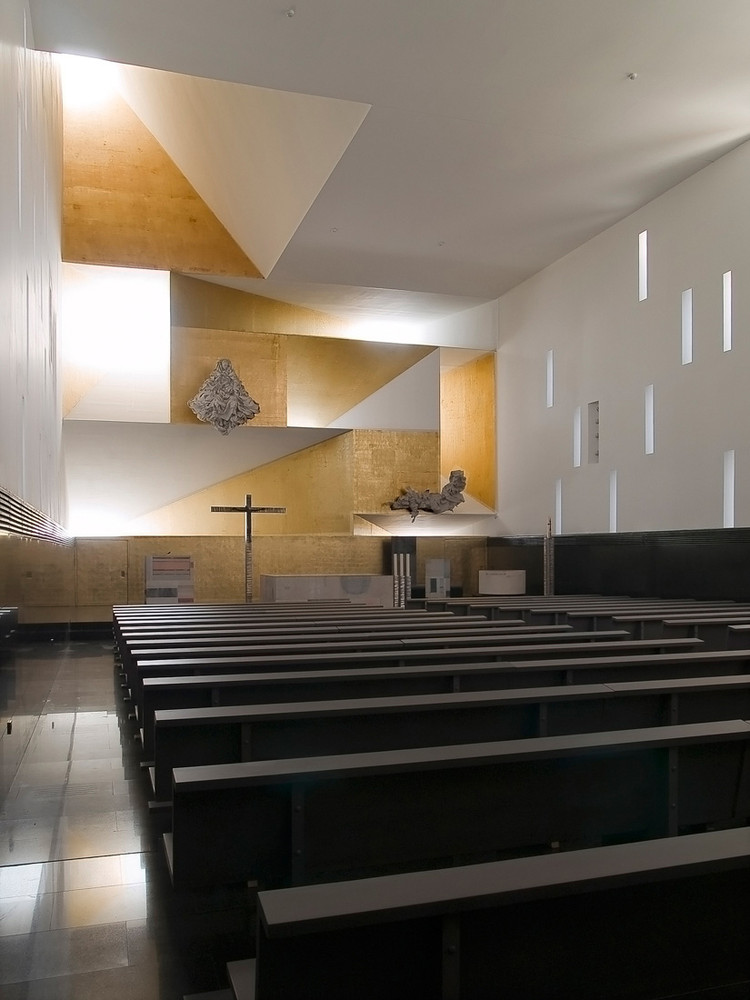
This project I find has a strong influence by Lecorbusier, specifically the interior of the Church of Ronchamp in France. They both work with beautiful abstract compositions of color and indirect lighting, as we will see inside. Read more…
The generating idea of the project was that of situating, within the confusion of the surrounding urban environment, a building that would mark a milestone and become a continuous testimony to the spiritual function produced in its interior, and which must necessarily spread and manifest itself permanently to the nearby social and urban medium.
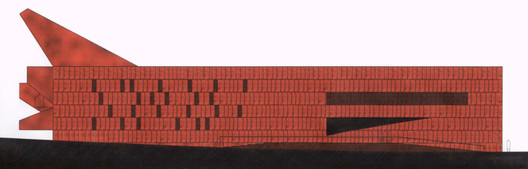
The complex is made up of two independent buildings: one houses the church, strictly speaking, and the daily chapel, in a structure with large steel portico’s, while a second block with a structure of reinforced concrete accommodates the housing and parochial rooms. Both are tied together by a continuous corten steel skin which, as a whole, creates a piece that gives an image of great unity and rotundity.
Photos:









Locations:

 Pure Expeditions