
.
MAD(drid): Experimental Social Housing in Carabanchel District
This is a successful and consolidated new urban development called PAU, or Plan de Actuación Urbanísitica constructed prior to the 2008 financial crisis.
A PAUs are new urban planning projects developed on land that previously had no urban program, enabling this area to be urbanized. They are often areas that result from the building of new ring roads, empty gaps between them, and other existing urban centers, as it is the case of this PAU of Carabanchel built in between the existing municipal village of Carabanchel and the M40 ring road. PAU´s have being the response to the scarcity of housing that the city has suffered for the last 20 years.
Carabanchel has become a reference housing laboratory because it cloisters numerous unique projects designed by international architects such as Tom Mayne (Morphosis US) and Alejandro Zaera (FOA, London) and others. The reason why we find so many experimental projects here is because in the present, the Municipal Land and Housing Agency of Madrid are working in changing the historical Spanish mentality of social housing in Spain being of inferior class and quality. Their strategy for last decade has been to create international competitions and hire renowned architects:
1. Morphosis (2008)
Thom Mayne is an American architect based in California exploring ideas of morphosis and transformation. In this site he was interested in the forces driven in the area, and the influence that the highway had in the site, resulting in the bending of an abstract mesh composed of an overlay of diagrams, for instance, bedroom typologies, circulations, and a green layer, in the diagram, in elements in yellow. This final layer was of importance for the author. As you can imagine, for an architect, the model of the Spanish pueblo was always present, with the aim of creating streets and public spaces like patios where the residents could meet, while controlling at the same time the micro climate.
2. Dosmasuno Arquitectos (2008)
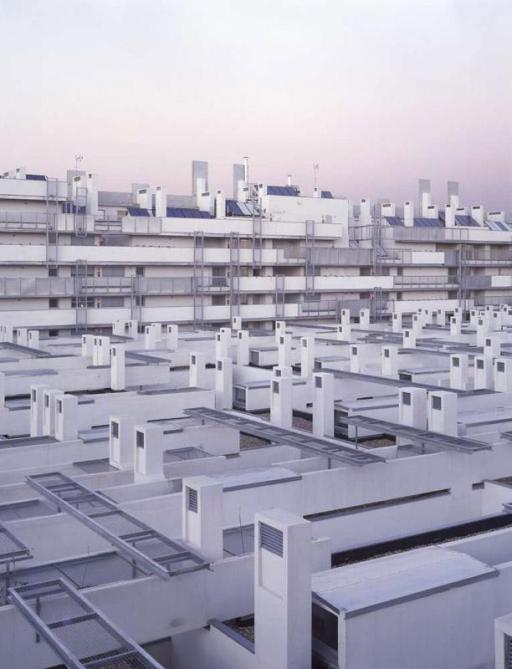
In the area we find other innovative projects, some of them designed by young architects based in Madrid, as it is the case of Ignacio Borrego, who was a colleague at the School of Architecture I used to teach at here in Madrid. He was concerned with the relationship that the building had with the pine forest on the west side of the plot. That is the reason why he pushed the volumes towards those edges of the site, leaving an inmensus courtyard in the back were we can find an interesting composition of cantilevered volumes that are the result of an exploration on how a two bedroom typologies into three and four bedroom by the plug-in of modular units in the back façade.
3. ACM Architects (2010)
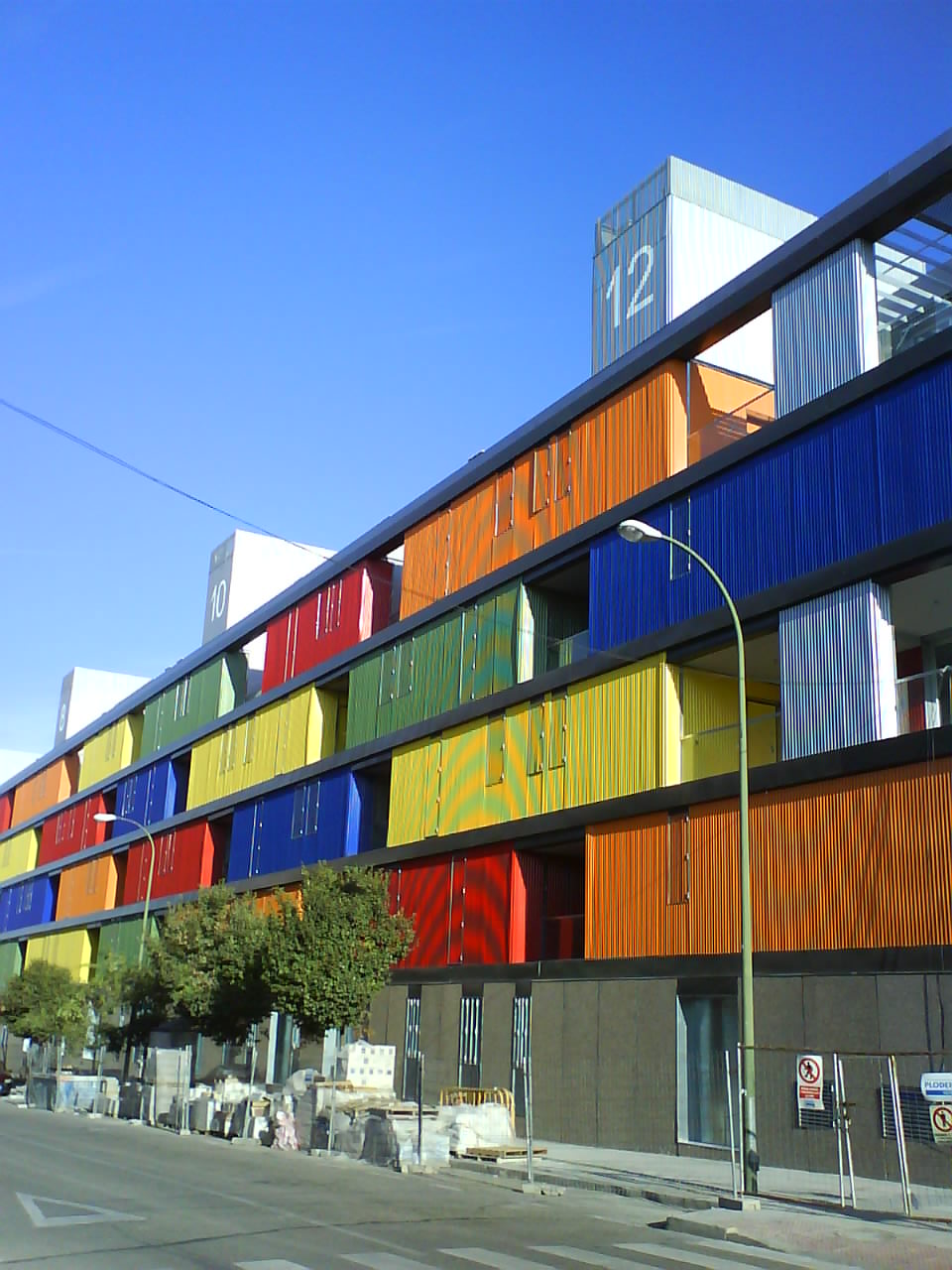
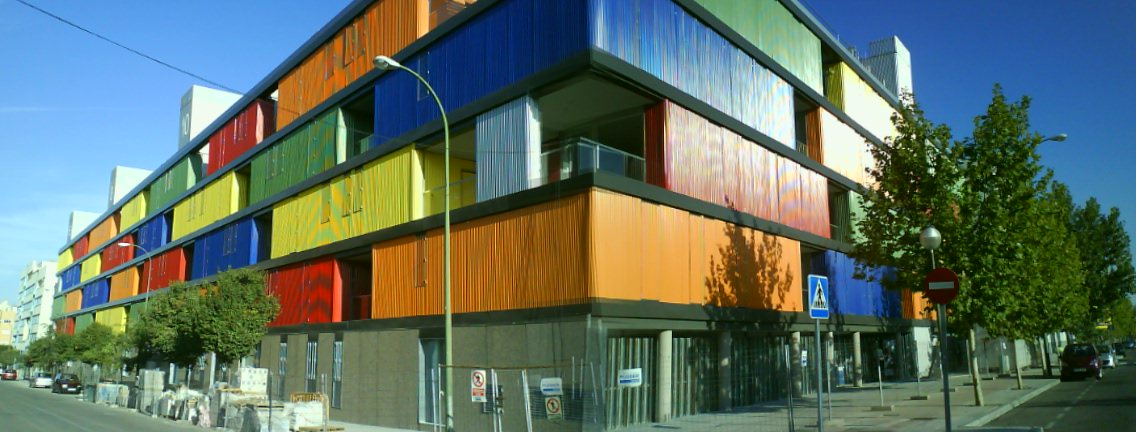
By Alxu Anann, Andres Cánovas & Nicolas Mauri, a first price proposal won by a local team of young architects. Very strong in concept “container” housing typologies, large colorful block with a central patio, which includes a beautiful cozy park in the centre.
4. Foreign Office Architects FOA (2007)
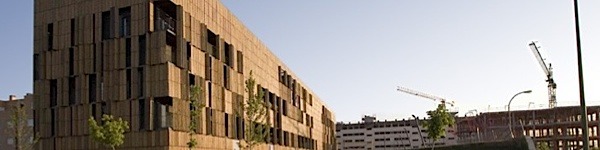
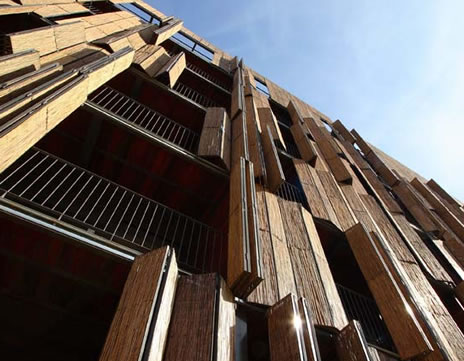
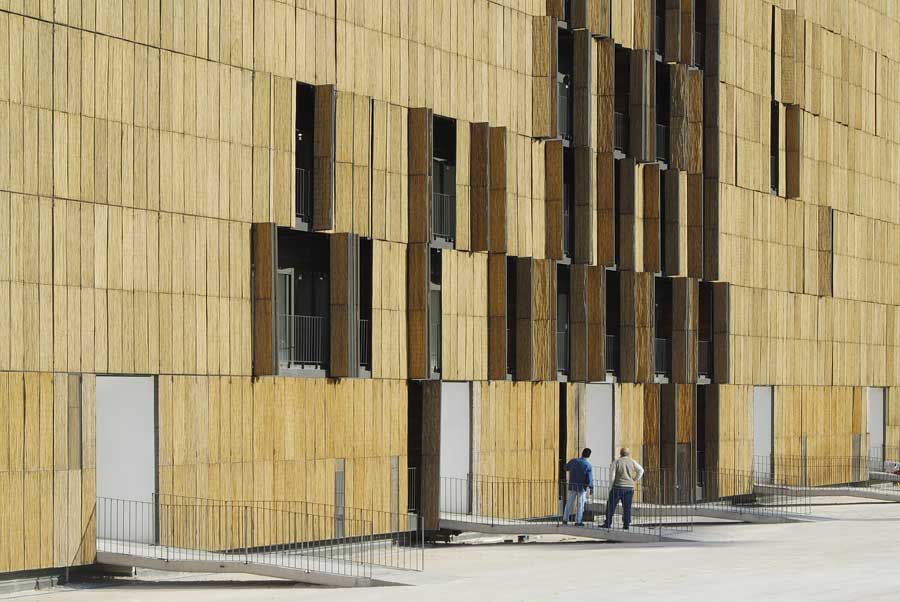
The bamboo box is housing project designed by Alejandro Zaera Polo. He is a Spanish architect based in London and has being a architectural tutor at on of the most prestigious international schools of architecture, the Architectural Association. His studio is well known for designing the Yokohama Port Terminal. The material he has used in the facade is bamboo. The different two and three bedroom typologies are ”pasantes”, ie. all have both east and west orientations resulting in very long pieces that can be easily identified in the floor plans.
Possible Extension to Villaverde
4. Chipperfield & Fernandez Isla (2009)
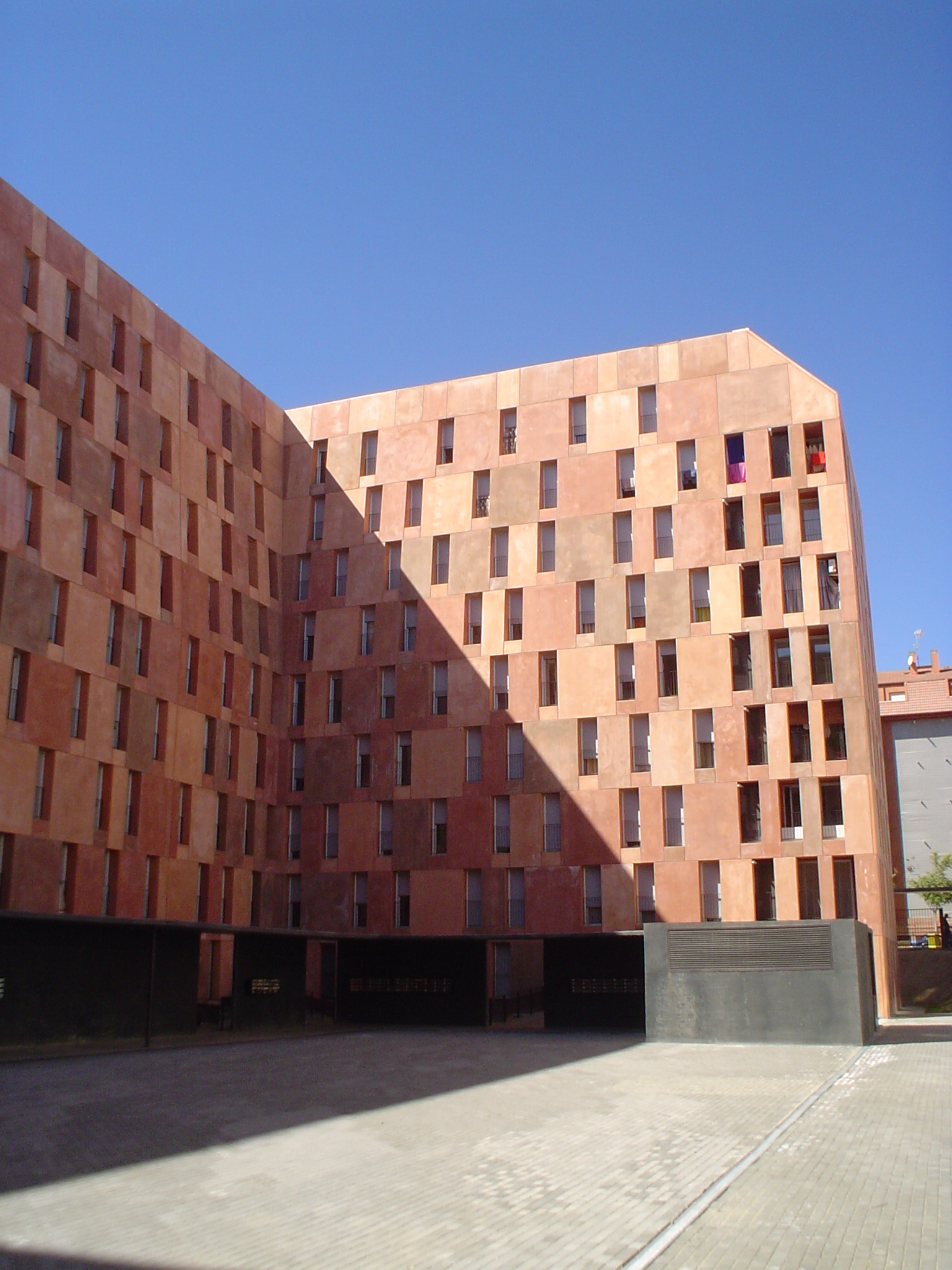
Low cost building where it was previously industrial grounds. Cross ventilation scheme. From it technological and construction system, the building is a classic concrete structure , and in the facade, prefab GRC (Glass Reinforced concrete), which enables the author to compose the facades with a skin of great artistic value. While working with the concept of volume and massiveness as a whole, David Chipperfield also explored the colored composition of the GRC panels, studying the disposition and the possibilities of different chromatic combinations.
.
Details:
- Starting Point: At your hotel if we come in a private transport or at Metro Banco la Peseta (L11) if done by public transport
- Duration: Between 2,5 – 4 hrs. Full 3 hrs tour would include Chipperfield Block and other interesting attractions on the way to Carabanchel.
- Language : English, Spanish and others upon request
.
Map:
Photos:







.


 Pure Expeditions