
.
A walk trough MAD(drid)‘s Bourgeois District with emphasis in Private Housing Developments.
The City Council approved the Prado-Recolteos Project, which aims to recover this axis for citizen use, restoring dominance to the pedestrian and restricting occupancy by private vehicles. Here in the Colon Plaza we can find a built first phase of of this urban refurbishment project, with new underground pedestrian accesses and tunnels that incorporate underground exhibition spaces. The project was a competition won by the Portuguese master architect Alvaro Siza. We see some of his design in his glass structures on surface, also we may visit the below ground surprising spaces and interior patios full of light.
In the 1950-60s the extension to the Castellana takes place, classic palaces are demolished and the most modern buildings of Madrid are then built. Thus, the Castellana becomes the finance and commerce center of the city. Colón Towers (1967-76) Antonio Lamela
We will then drive north through the Paseo de la Castellana, flanked on the left by the Chamberi District and on our right still the Salamanca District. The Salamanca district received its name because it was conceived and developed by the Marque of Salamanca in the 19th century. It is an upper class bourgeois District, known for its elegant atmosphere, and numerous luxurious firms and fashionable shops, as we will se as we drive back through the Serrano Streets.
On foot, we may move through, first entering the
- ABC building by José López Sallaberry is a late 1920´s were the famous newspaper had its headquarters. Front facade neo-mudejar, back neo-plateresque. It was refurbished in the early 1926 and 1932, latest renovation by Mariano Bayón in 90’s with an interesting concrete volt with cables for the old main printing room (1995) that makes the roof practicable, i.e. it allows the roof to become of a walkable terrace with magnificent views. We may cross the building trough its interior, from Paseo de la Castellana, to Serrano Street located on a higher level. From Serrano St, we may continue to find the following private housing development projects:
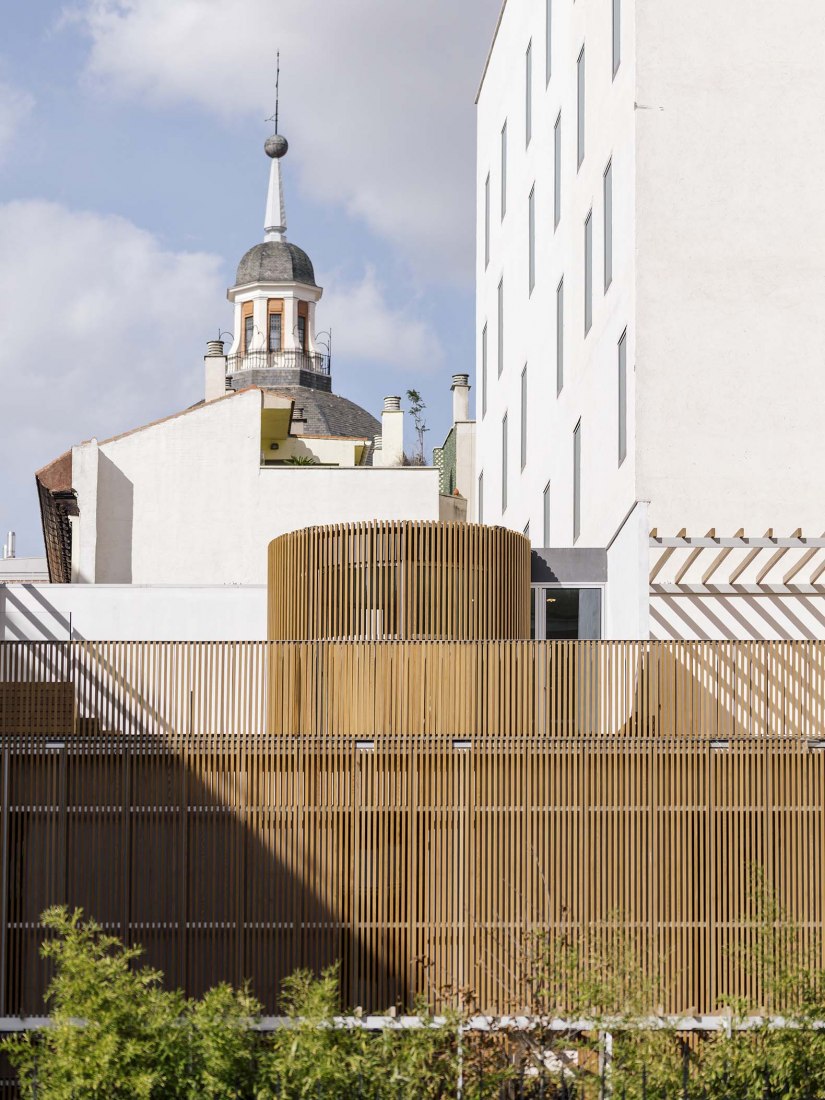
- Claudio Coello, 121 (44 dwellings 2020) by Arenas Basabe & Palacios. The assignment consisted of the design, execution and construction of a residential building at 121 Claudio Coello street, in the heart of the Salamanca district. Its exceptional location represents an opportunity and at the same time a challenge due to its visible presence from the Juan Bravo bridge on the Castellana. Aware of the importance of its location, the project presents a dual character through the contrast in its materiality. Facing Claudio Coello Street, the building responds to the classic organisation of the neighbourhood, with tripartite facades with a plinth, body and crown. This more urban view is shown strictly, without ornament, modulated by cutting precast white concrete panels.
However, towards the interior, a lighter and more friendly façade opens onto the garden through large glass panels covered with a wooden lattice. A low volume in the form of a house on two heights closes the garden, giving the built complex a human scale.
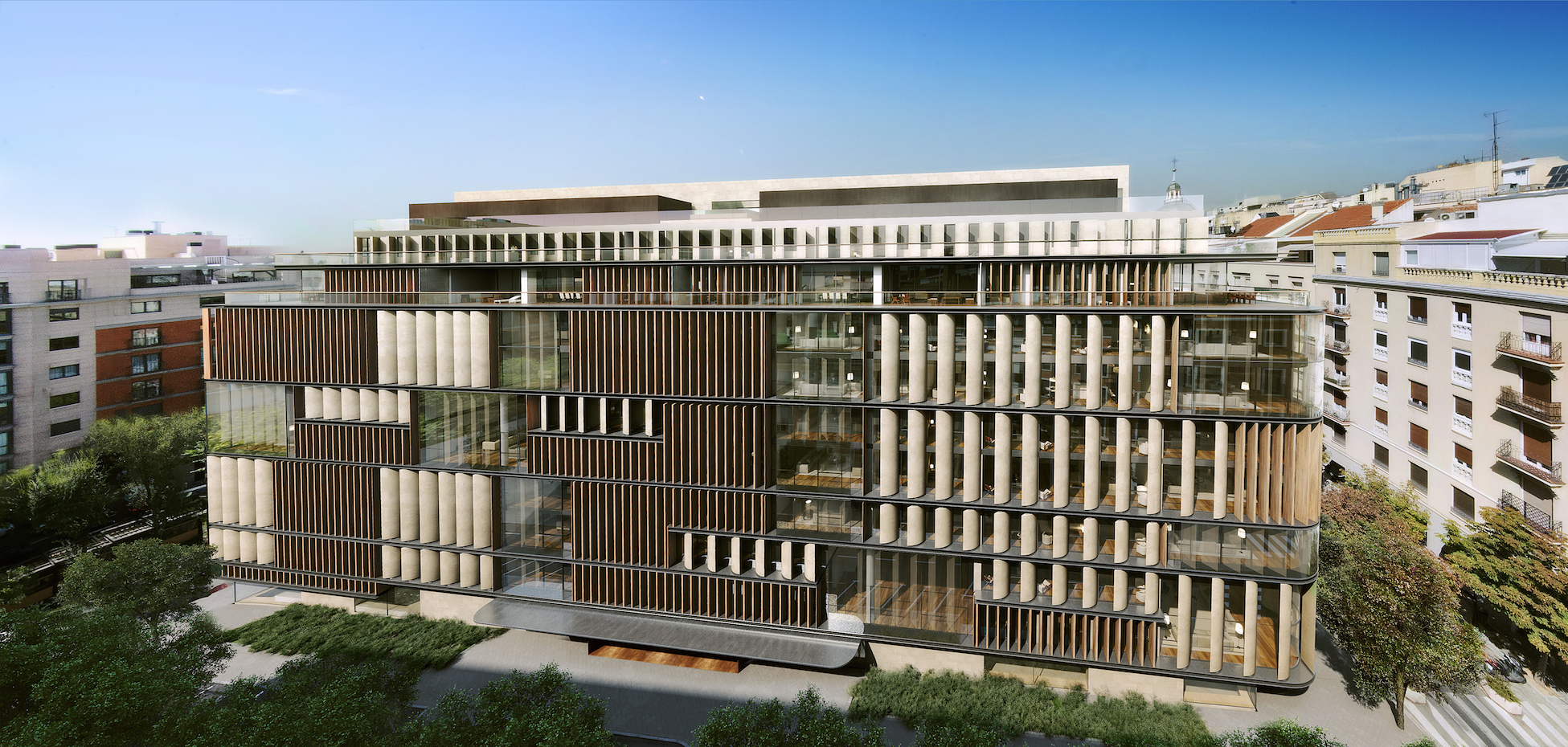
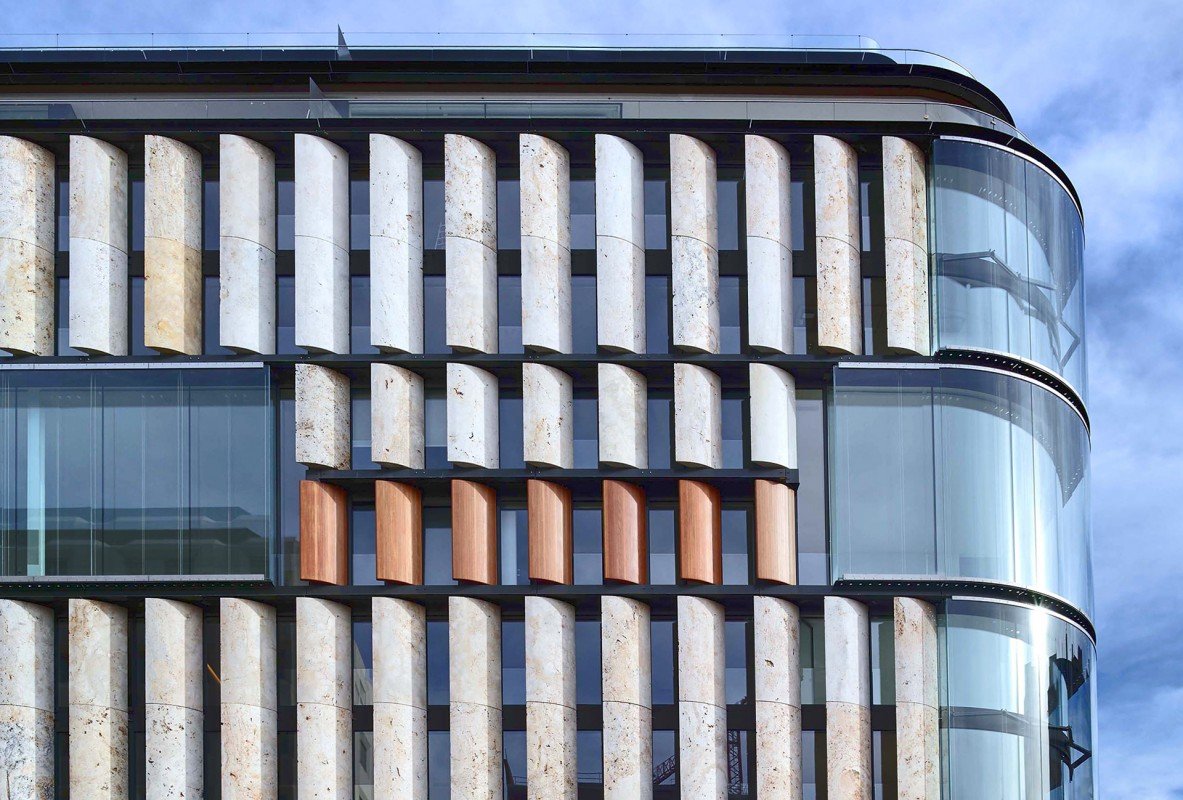
- Lagasca 99 (44 dwellings 2026-17) is an elegant and exclusive 44 dwelling private housing development building in the middle of the golden mile of the Salamanca District. A luxurious, still modern and elegant, is designed by a prestigious architect from Madrid, Rafael de la Hoz. The most expensive rental apartment in Madrid which costs around 16,000€ per month and is owned by a couple from Venezuela whose construction company has participated in large public works for the Government of their country. They live in Miami and it is their real estate agent who receives those interested in the street, at the doors of the 650-square-meter lobby, the largest in the capital of Spain. The starting price per flat was between 3 and 17 million. On the roof terrace, we find an L-shaped outdoor pool twenty meters long. Under the lobby there is another pool, gym, sauna and Turkish bath, 156 parking spaces and storage rooms.
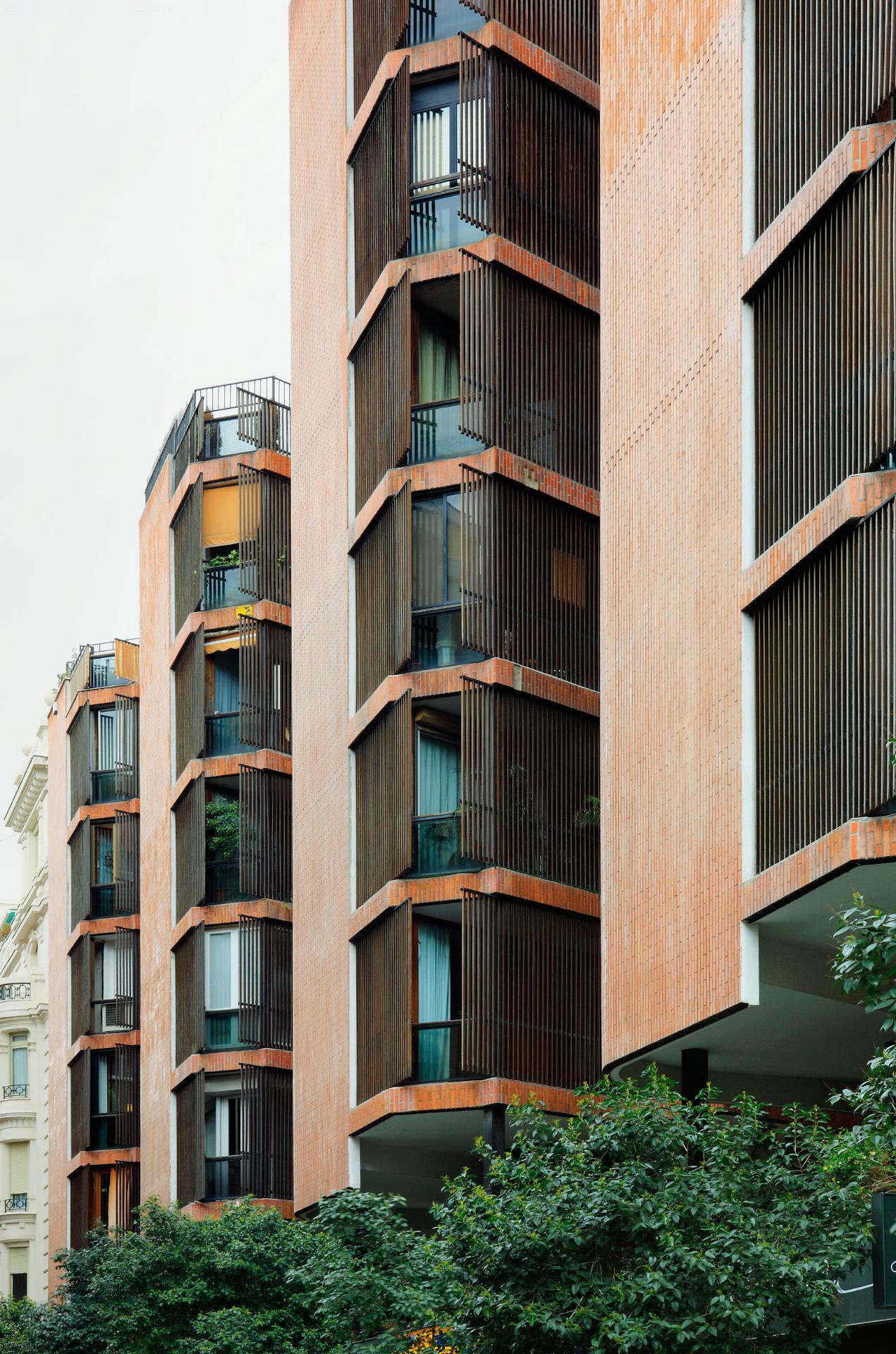
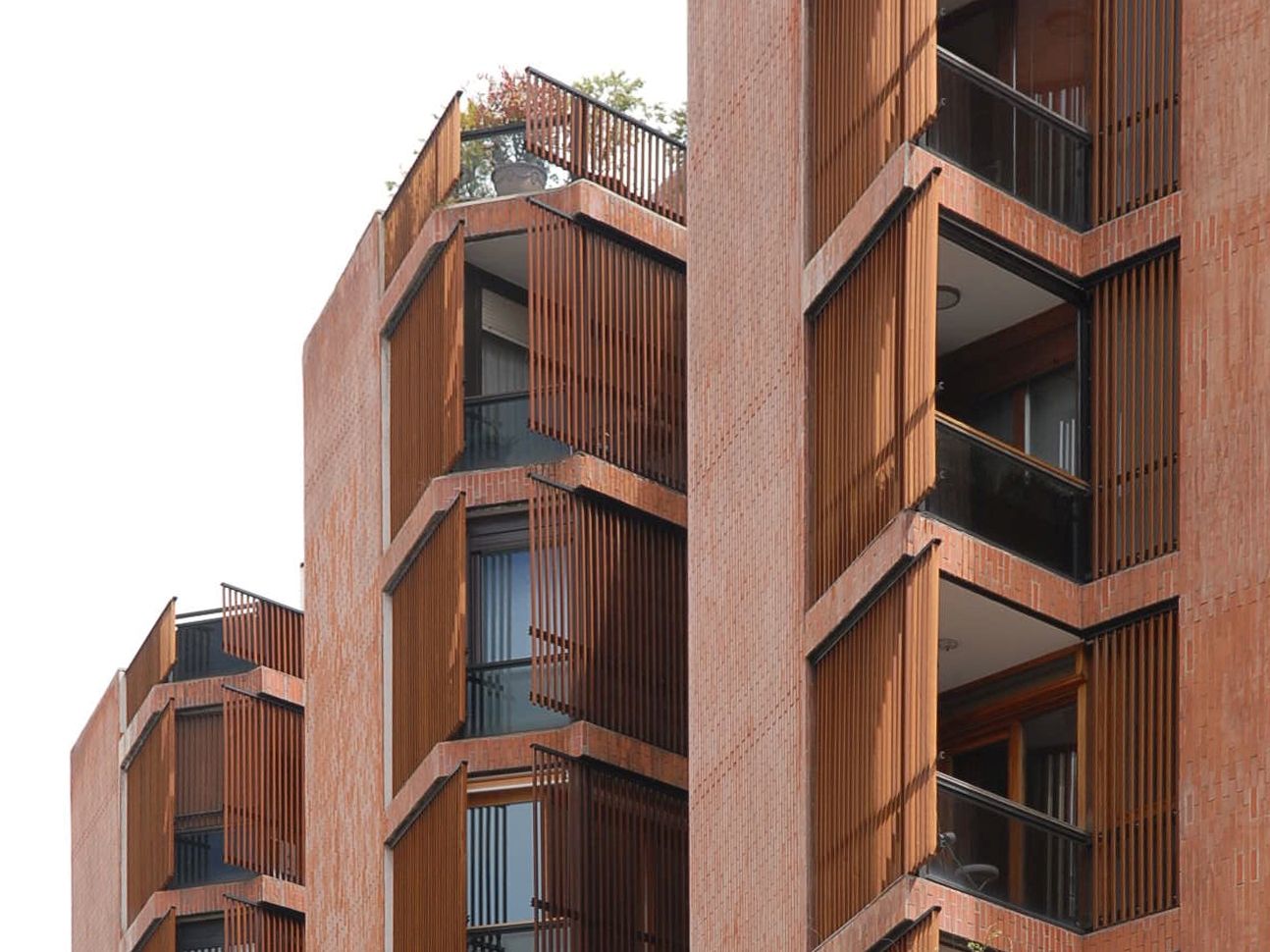
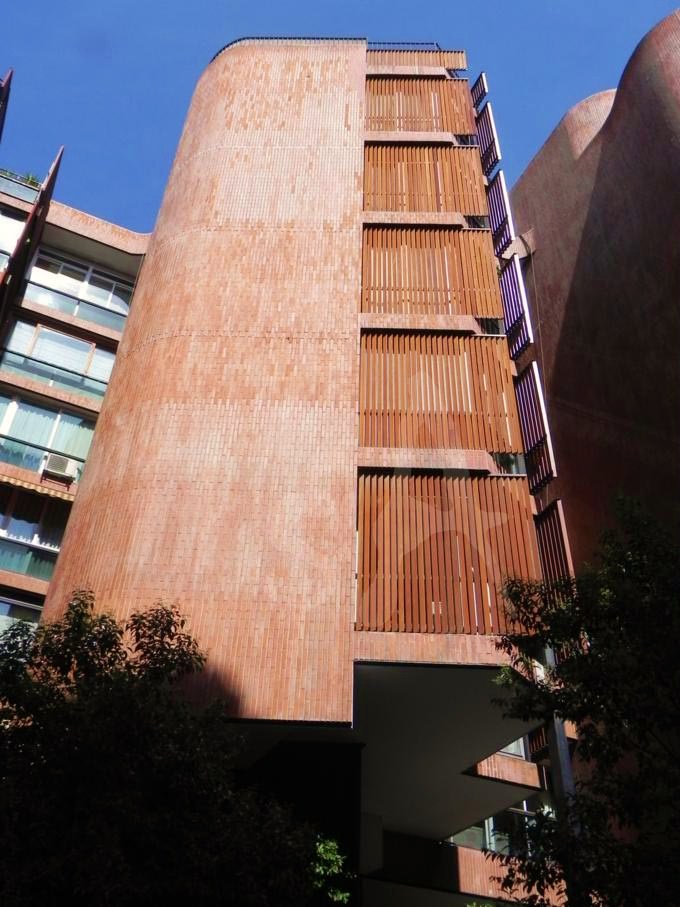
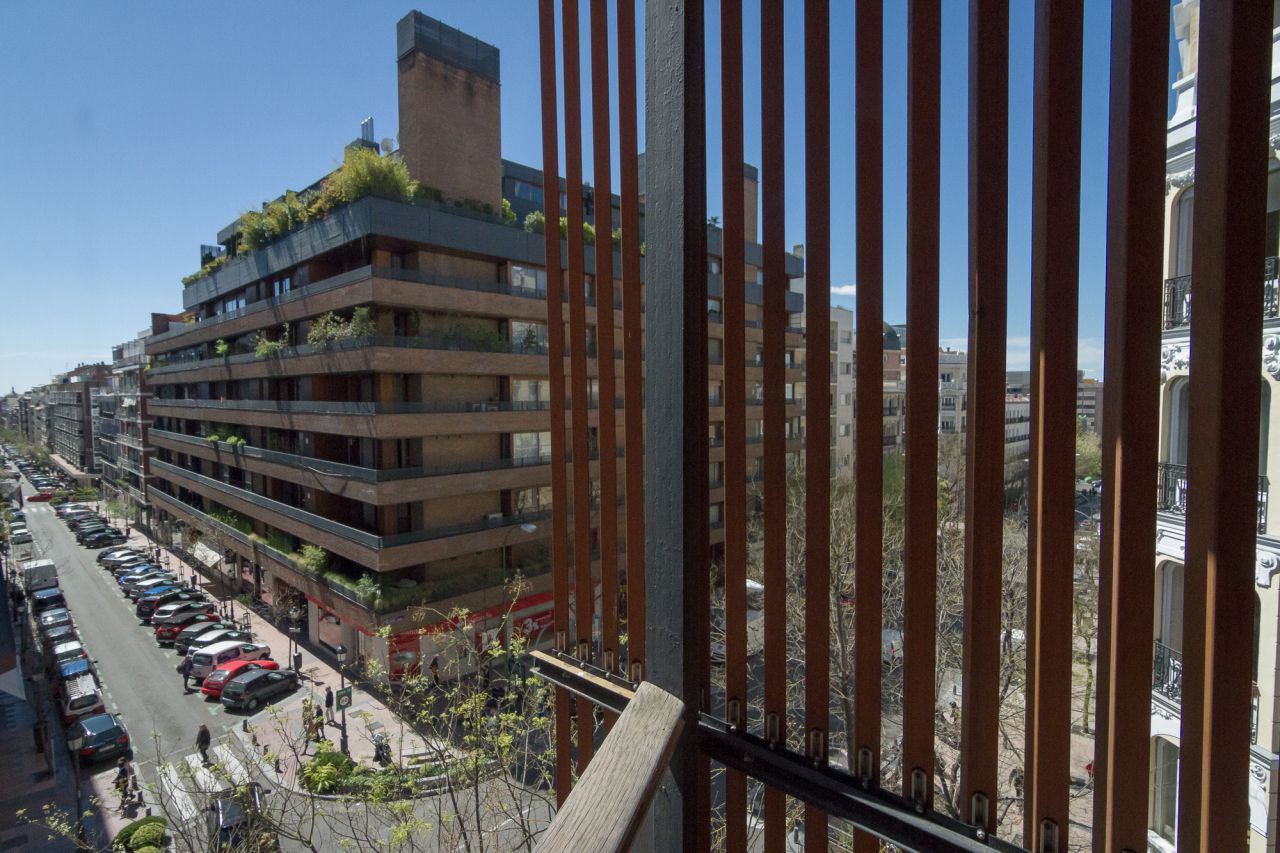
- Sun Flower Bldg (1964-66) José Antonio Coderch in José Ortega y Gasset, 23.T he building was built in 1966. The design capable of making the most of daylight, like the sunflowers, earned it the name. One of the innovative characteristics of the time is the design of each house, which has the existence of private access elevators. The design considered the use of daylight, which is why it was called the Sunflower Building. This use is made by rotating the axis of each house towards noon, calculating this rotation based on the favorable and unfavourable positions of the sun throughout the day and year.. The fusion of rationalism with organicism is one of the characteristics of this building. The architect José Antonio Coderch is looking, together with the architects of the Team 10 team, for new parameters to improve the specifications of the International Style. In the Girasol building, Coderch seeks light with the twists in the façade, orienting the windows towards the midday sun. This building represents as a whole, elevations, plan and sections, the innovation objectives that Coderch incorporates into his architecture and that inspired the next generation of architects.
.
Details:
- Starting Point: At your hotel if we move on public or private transport, alternatively meeting point in the neighbourhood Metro Colón (L4).
- Duration: Between 2,5 – 4 hrs.
- Language : English, Spanish and others upon request
.
Itinerary:
Photos:





.


 Pure Expeditions