
ENG
.
MAD(drid) Grand Museums
.
The Prado Development is a great sample of neoclassic urbanism. King Carlos III with his European ideas, gave Madrid in the 18th century an splendour never seen before. He completely remodelled Madrid equipping it with a public space appropriate for its condition as a capital. For this project he selected the best architects of the Court. Hermosilla, Ventura Rodríguez, Sabatini, Villanueva, planed, cleaned, ornamented and built, a Paseo in the shape of a racetrack, with two big fountains, Cibeles and Neptuno on both extreme, and a third one in the centre, the one dedicated to Apollo (you know, Greek mythological gods and goddesses).
.
To complete the project, the Botanical Garden, the Academy for Natural Sciences (now the Prado Museum) and the Astronomic Observatory. The boulevard (Paseo del Prado) was used already in the XVI century as a place to go for a walk in the outskirts of the city. It became a social place to meet and being seen, in summary, the perfect place to show off the new Bourbonic ideals.
.
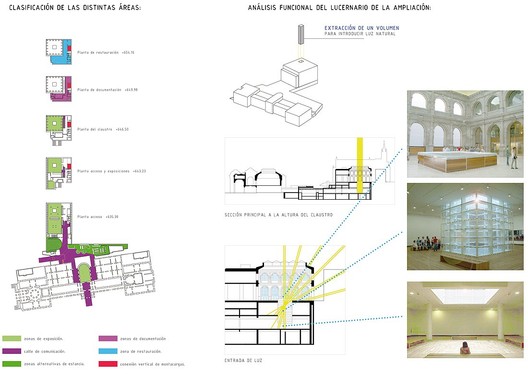
So, the Prado Museum was originally not a museum but a the Academy of Natural Sciences. Only later King Fernando VII transformed the project to incorporate the painting collections from the Austria’s and the Bourbons. The new extension to the museum is from 2007 by the Spanish architect Rafael Moneo. It is located in the back of the original building, integrating into the museum the abandoned cloister of San Jerónimo del Real Church (1612). Underneath the cloister Moneo projected a three-story skylight as the central space for the temporary exhibitions that we do visit in the 4h full tour, worth seeing.
.
This area is one of the most elegant residential area of Madrid, surrounded by señorial buildings, luxury hotels and old places, some of them transformed into museums, like the Thysse –Bornemisza Museum. It is located in what used to be the Villahermosa palace, a neoclassic late 18th century building refurbished by the architect Rafael Moneo in the late 80s to exhibit the magnificent collections that the Spanish Ministry of Culture acquired from the Baron Thyssen.
.
The Ritz Hotel is an early 20th century (1914), where we see how the classic French style was very fashionable those days. Same thing for the Palace Hotel built in 1912, both grand hotels designed by French architects (by Mevves).
.
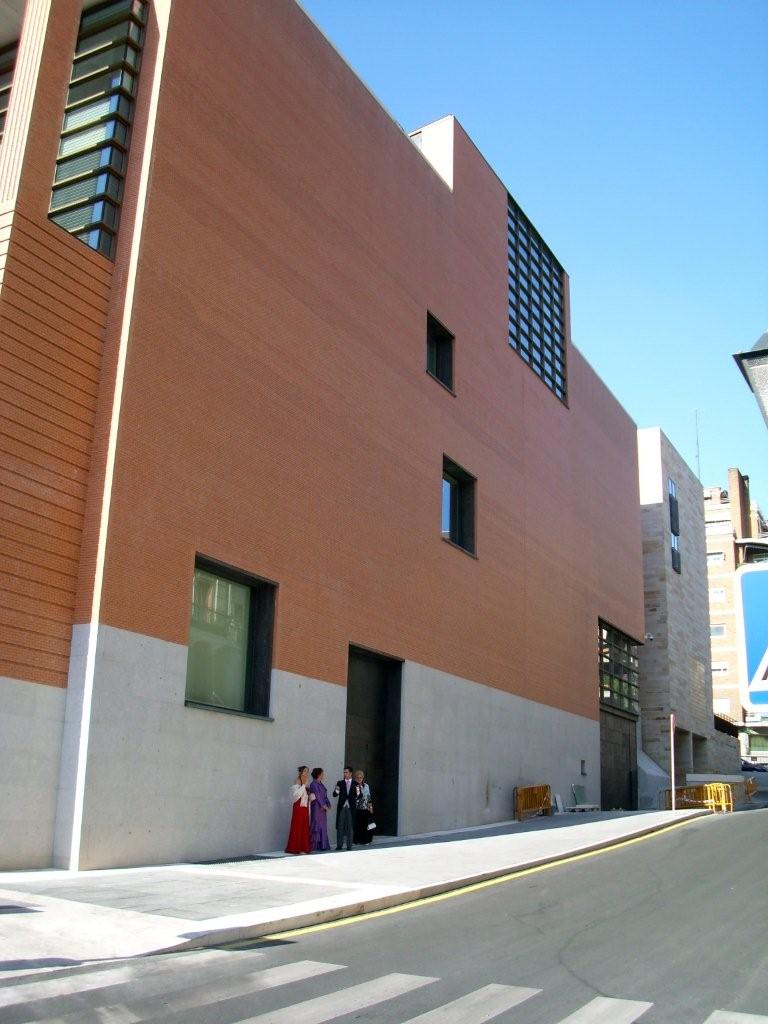
The Museum of Contemporary Art Reina Sofia was the old hospital of San Carlos, built by Carlos III (designed by Fernández Alba, Vázquez de Castro and Iñiguez de Onzoño). This solid building presents a strong and austere facade only animated by the glass exterior elevators. On the left of this building we see the extension to the Museum, designed by the French architect Jean Nouvel in 2002, a contemporary structure that covers a series of glass containers that host the museums temporary exhibitions, a library and an auditorium.
.
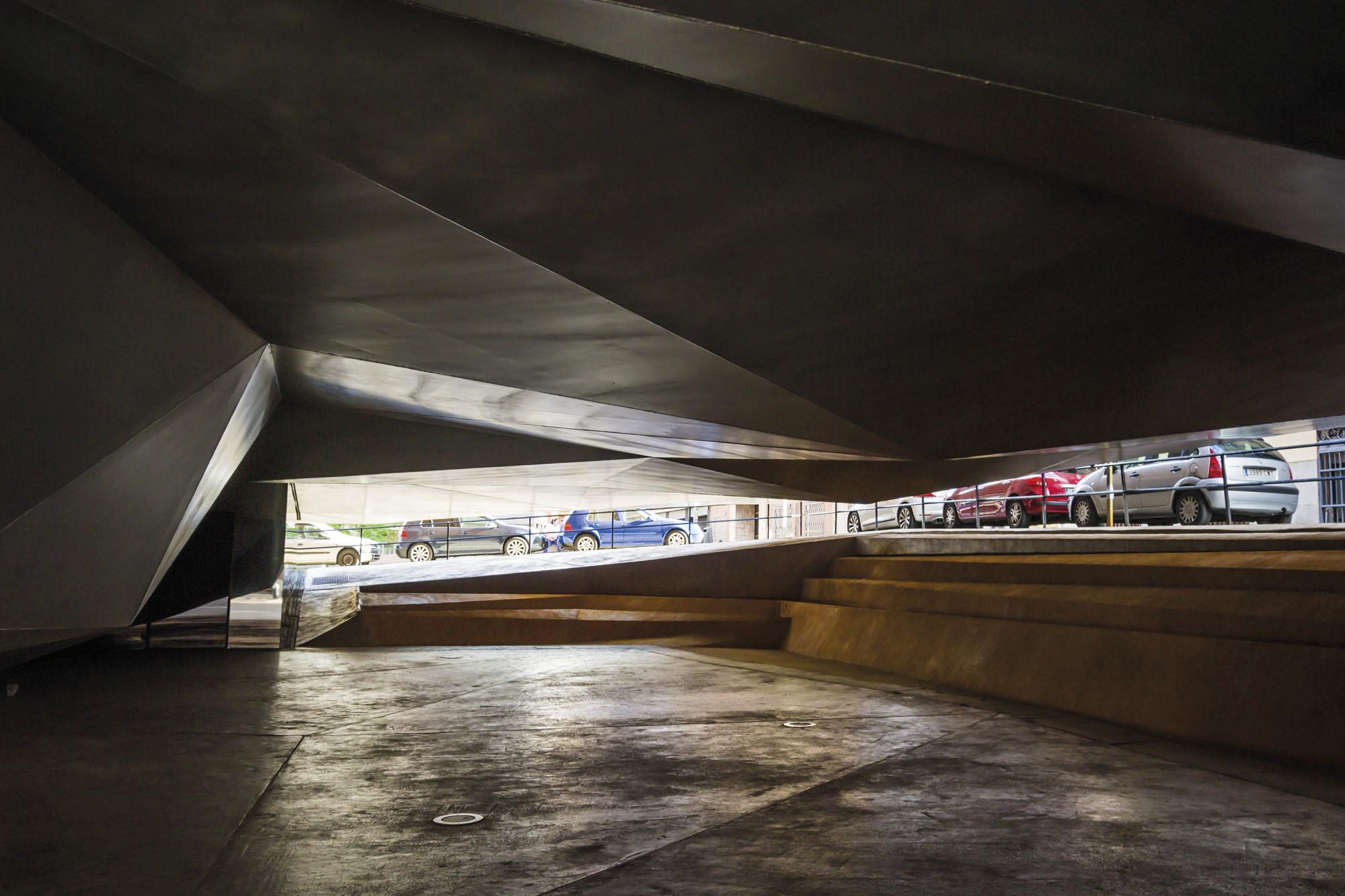
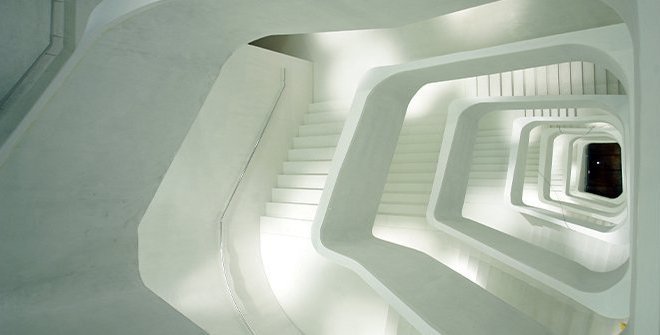
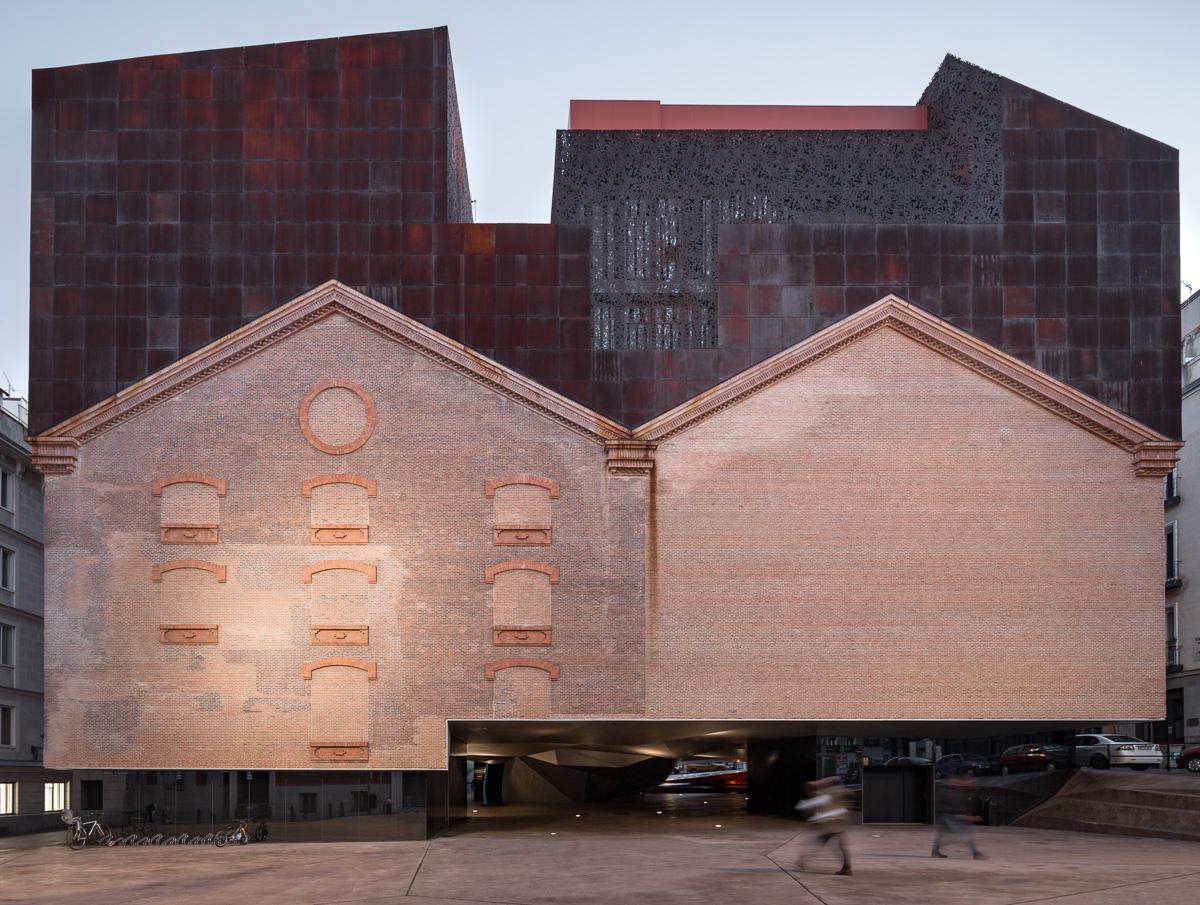
Caixa Forum is the result of the transformation of the former Mediodía Power Station, a hallmark of late 19th century industrial architecture that still stands in the city’s old quarter, into Caixa Forum Madrid, its new social and cultural headquarters in Madrid, designed by the partnership Herzog and de Meuron, winners of the Pritzker Architecture Prize in 2001. The transformation was indeed a surgical operation. The Swiss architects demolished the original roof and interiors. They cut away the granite base of the brick exterior walls, creating the illusion that the building floats in mid-air, hovering over a covered entry plaza. A tour of the building will show the contrast between the flexible character of the exhibition spaces and the spatial complexity of the upper floor with its restaurant and offices.
.
Ministry of Agriculture and Atocha Station, in depth with the 4h tour (KEEP READING clicking here)
.
Ministry of Agriculture is a late 19th century neoclassic building by the architect Ricardo Velázquez Bosco.
.
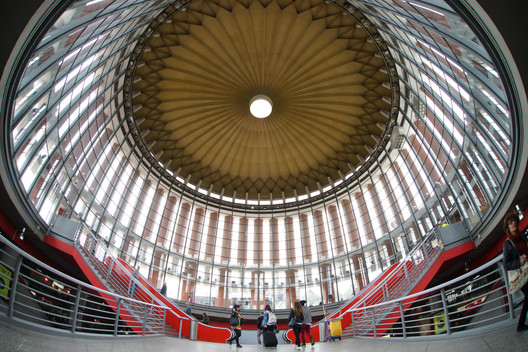
Atocha Station (1888) was designed by Alberto de Palacio Elissagne who was an assistant of Gustave Eiffel. The extension to the station is by Rafael Moneo (1988-92). It was a difficult intervention that Moneo won in a restricted competition. He had to maintain the original Mediodía Station and integrate new installations for both local and long-distance trains in the back. The urban image was conceived almost as a monastery, the temples nave as the old station, the bell tower as the clock tower, and the baptistery as the access building. The old structure is now an interesting tropical garden that we will be visiting in the full 4h tour.
.
.
Details:
.
- Starting Point: Banco de España Metro Station
- Duration: Between 2,5 – 4 hrs
- Language : English, Spanish and others upon request
.
.
.
Walking itinerary:
.
.
Photos:
.










.
For + INFO or to make a reservation:
.


.
MAD(drid) Grandes Museos
El Paseo del Prado, construido por Carlos III de Borbón en el S. XVIII, con sus ideales europeos, doto a Madrid en este siglo de un esplendor que nunca antes había sido visto, dotando a la ciudad espacios públicos propios de su condición como capital. Y es aquí donde se encuentran los principales museos de esta ciudad, principales pinacotecas a nivel internacional, y sus modernas ampliaciones de arquitectura contemporánea, diseñados por grandes arquitectos estrella nacionales y también, de alto nivel internacional, que colocan a Madrid entre las ciudades vanguardia a nivel museístico (contenedor y contenido).
1. Museo del Prado (S. XIX), anterior Academia de Ciencias Naturales de Villanueva y ampliación contemporánea de Rafael Moneo que integra al museo el claustro de la Iglesia de San Jerónimo el Real. El Museo del Prado alberga las colecciones de pintura de las Casas Reales de los Austria y los Borbón, la que seguramente es la mayor y más importante pinacoteca clásica del mundo. Entre sus obras, destaca las Meninas de Velázquez y el Jardín de las Delicias del Bosco. Finalmente, el claustro de la Iglesia de San Jerónimo, es tratada por Rafael Moneo como una obra de arte en sí, y podremos comprobar como este elemento es expuesto en la ampliación del Museo, como si de una pieza ingrávida se tratase.
2. Museo Thyssen, también uno de los más emblemáticos de la arquitectura neoclásica madrileña, antiguo Palacio de Villahermosa y reformado interiormente también por Rafael Moneo.
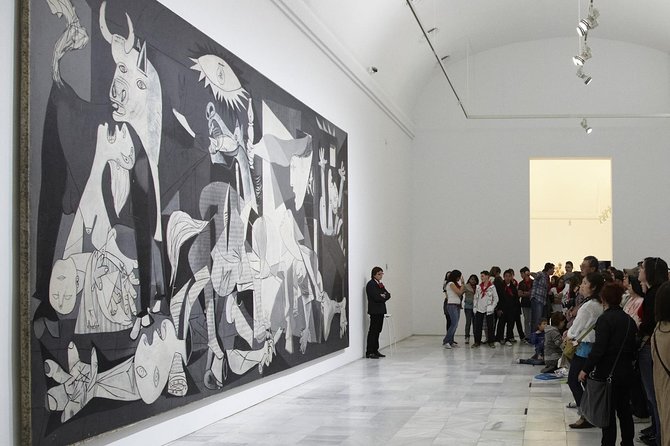
3. Museo de Arte Contemporáneo Reina Sofía era el antiguo hospital de San Carlos (S. XVIII) . Destaca en el edificio su patio central repleto de esculturas de arte contemporáneo, y dentro de su colección, destaca como obra principal la pintura moral del Gernica de Picasso (Paris en 1937).
En su parte posterior, encontraremos la ampliación de Jean Nouvel, que con un gran alerón que se relaciona perfectamente con la cornisa del edificio neoclásico de la colección permanente del Museo, cubre un conjunto de volúmenes, como de contenedores de arte contemporáneo se tratasen. Y es justamente aquí donde quedan ubicadas las colecciones temporales de este otro gran museo: auditorio, cafetería y la preciosa biblioteca exquisitamente iluminada, sin duda, espacios y elementos arquitectónicos que podremos recorrer y admirar, como state of the art, en este caso, de arte contemporáneo, efectivamente se tratasen.
4. Cabe recordar la presencia de otros edificios emblemáticos que podremos visitar, estudiar y admirar, como es el caso del Caixa Forum, antigua Central Eléctrica de Mediodía (Jesús Carrasco y José María Hernández, finales S. XIX) remodelada y ampliada por los arquitectos suizos Herzog y de Meuron (2008) consiguiendo suspender la antigua central eléctrica en el aire. Sin duda una nueva obra de arte, que se une al conjunto del triángulo formado por los tres anteriores y principales museos.
Detalles:
- Punto de Inicio: Metro Banco de España
- Duración: Entre 2,5 – 4 hrs
- Idioma: Español e Inglés y otros idiomas según la necesidad.
Recorrido a pie:
.
Fotografías:
.
 Pure Expeditions