
.
Fernando Higuera’s Modern Innovation
This tour focuses in the work of one of the most important Spanish master architects: Fernando Higueras. His expressive work was innovative because he was one of the first architects in Spain’s modern architecture to start using “exposed” concrete structures in the 60s. We have selected three of his best projects, in the west and north west part of Madrid. Ordered chronologically, from the earlier to the later:
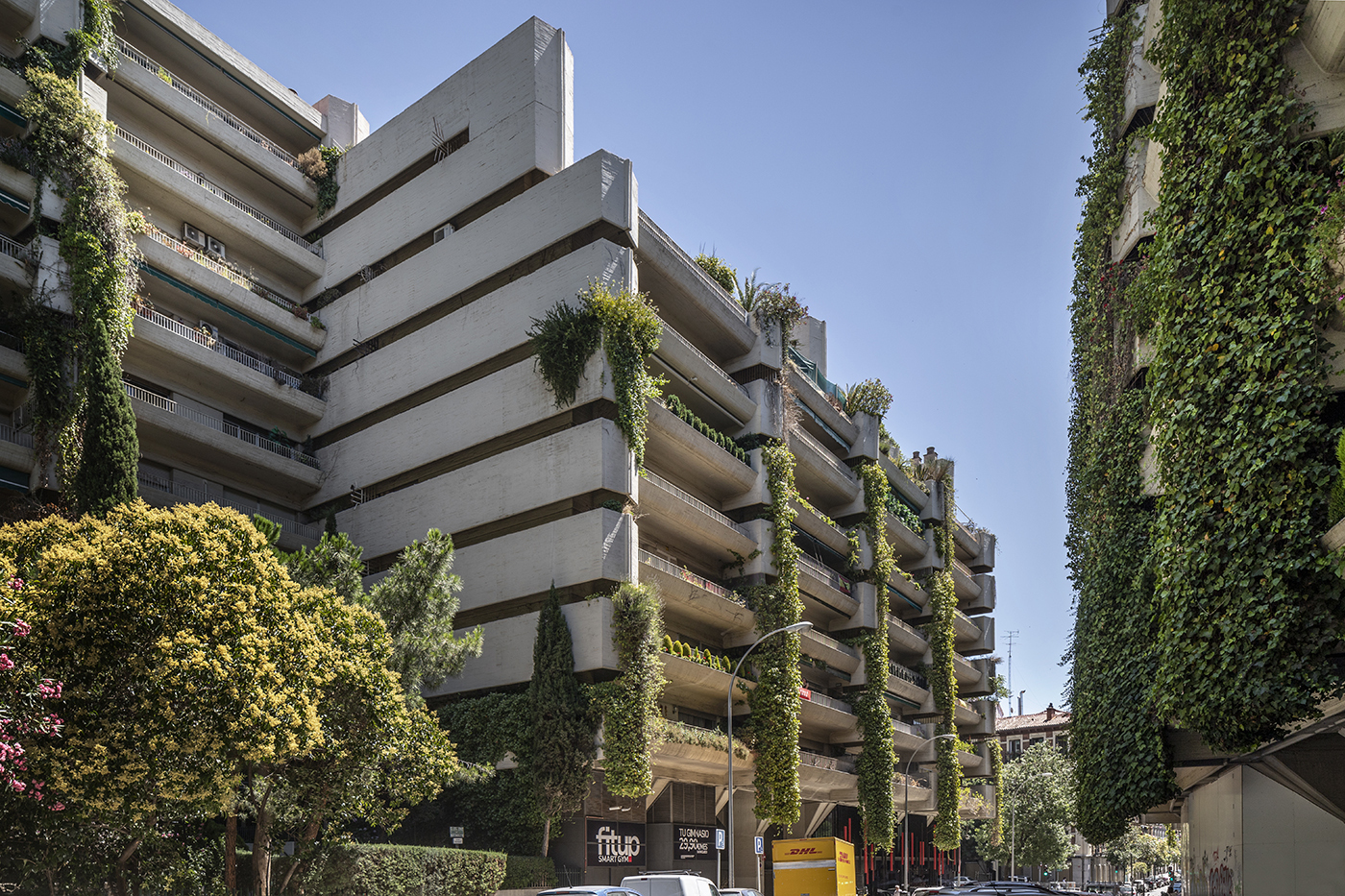
1. Landscaped Terraces Building (1973-75). In 1973, Fernando Higueras and Antonio Miró were commissioned to build housing for the Board of Military in Madrid. The site is located on the corner of Alberto Aguilera and San Bernardo, an area of the city center of undoubted historical value where it was essential to respect the alignment and volume of the surroundings. Higueras and Miró make an ambitious commitment, in which they propose a building with a heterodox image based on exposed concrete and vegetation on the façade. Read more…
.
In the words of Fernando Higueras himself, this project should be understood as “a building between dividing walls that sticks at all times to the boundaries (heights, setbacks, etc.) that the town hall marked”. The site, located in an area of undoubted historical value on the corner of Alberto Aguilera and San Bernardo, was occupied by the old Hospital de la Princesa. Divided in two by Santa Cruz de Marcenado Street, the project is structured in two blocks A and B that are separately adapted to their own urban constraints. The square that is generated between them, originally open to the city, has a privileged orientation that allows it to receive the midday light. Block A (next to the San Bernardo roundabout) is organised around a generously sized interior patio that provides greater ventilation and lighting in the housing service area. In addition, due to its continuity and formal richness, it provides unobstructed perspectives on the interior street intended for pedestrian access.
.
Below ground, the building is made up of four parking floors with natural ventilation and lighting through four enormous circular patios designed so that, just like light, the vegetation enters and grows freely.
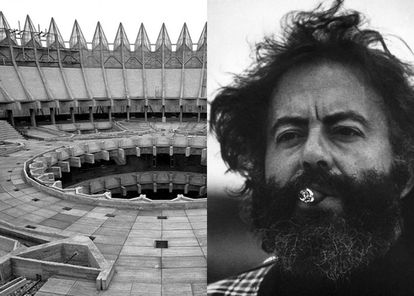
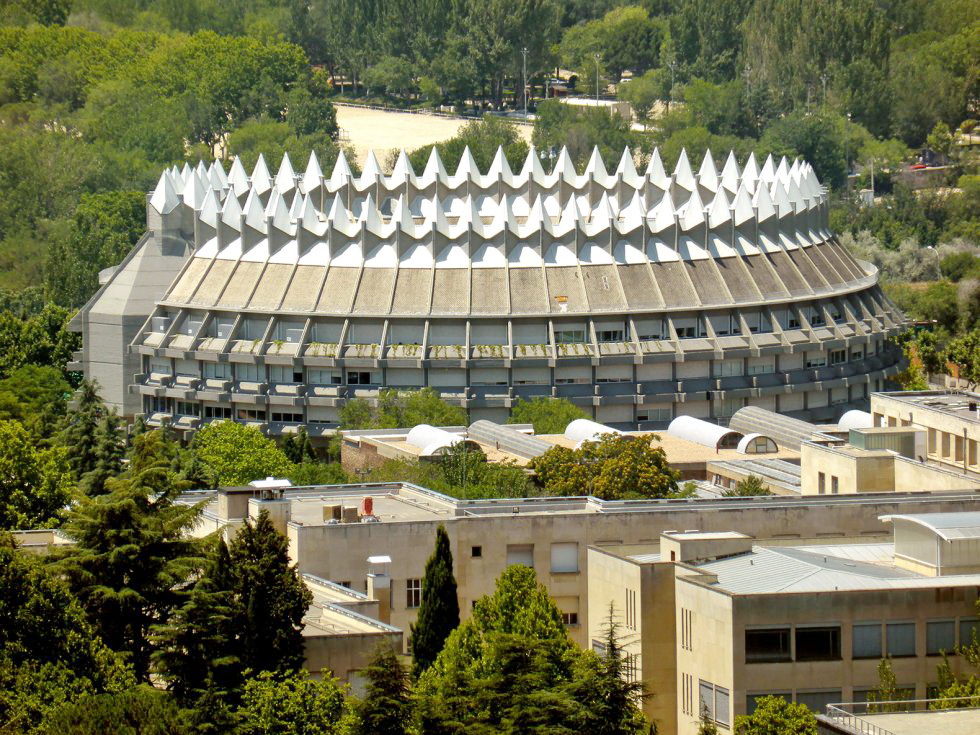
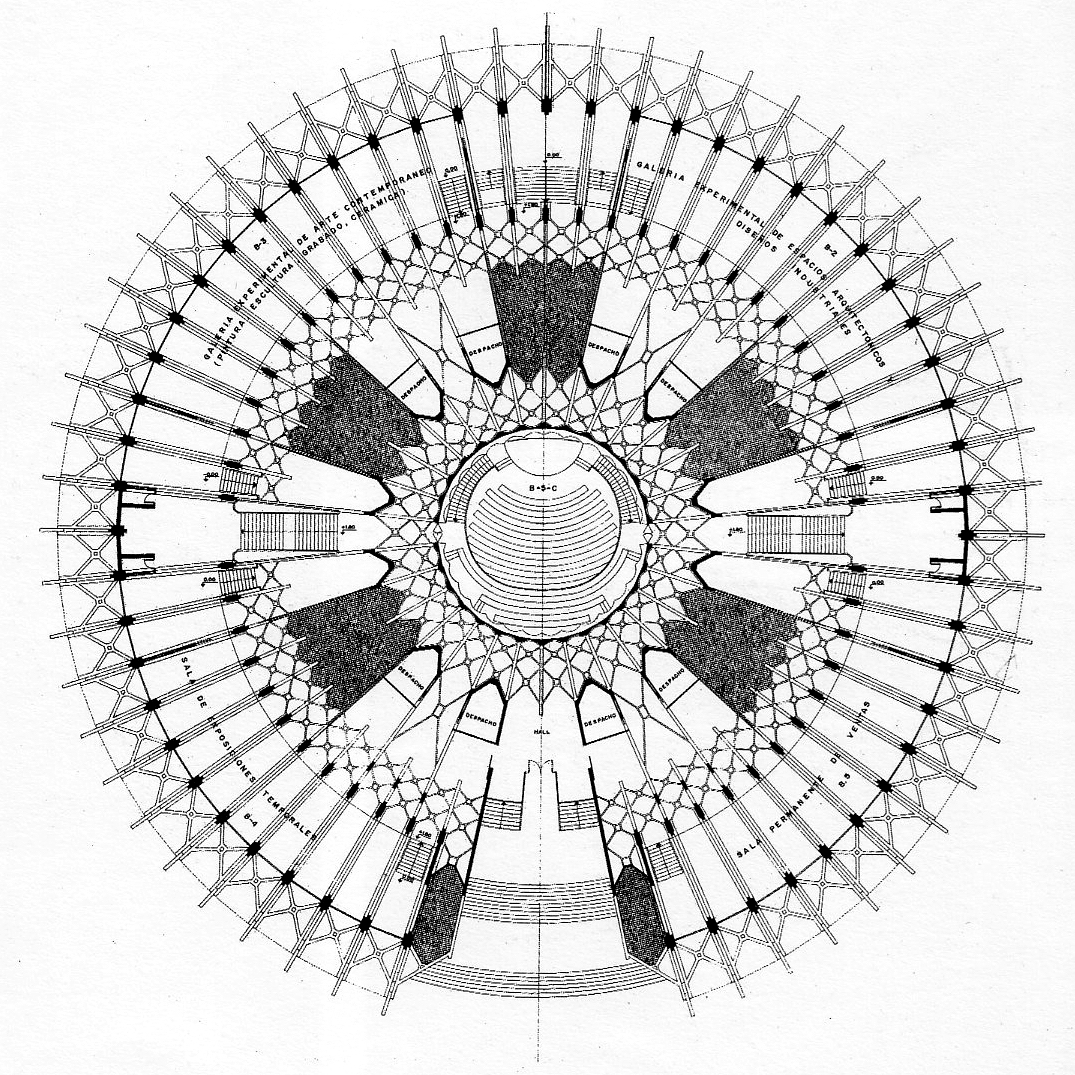
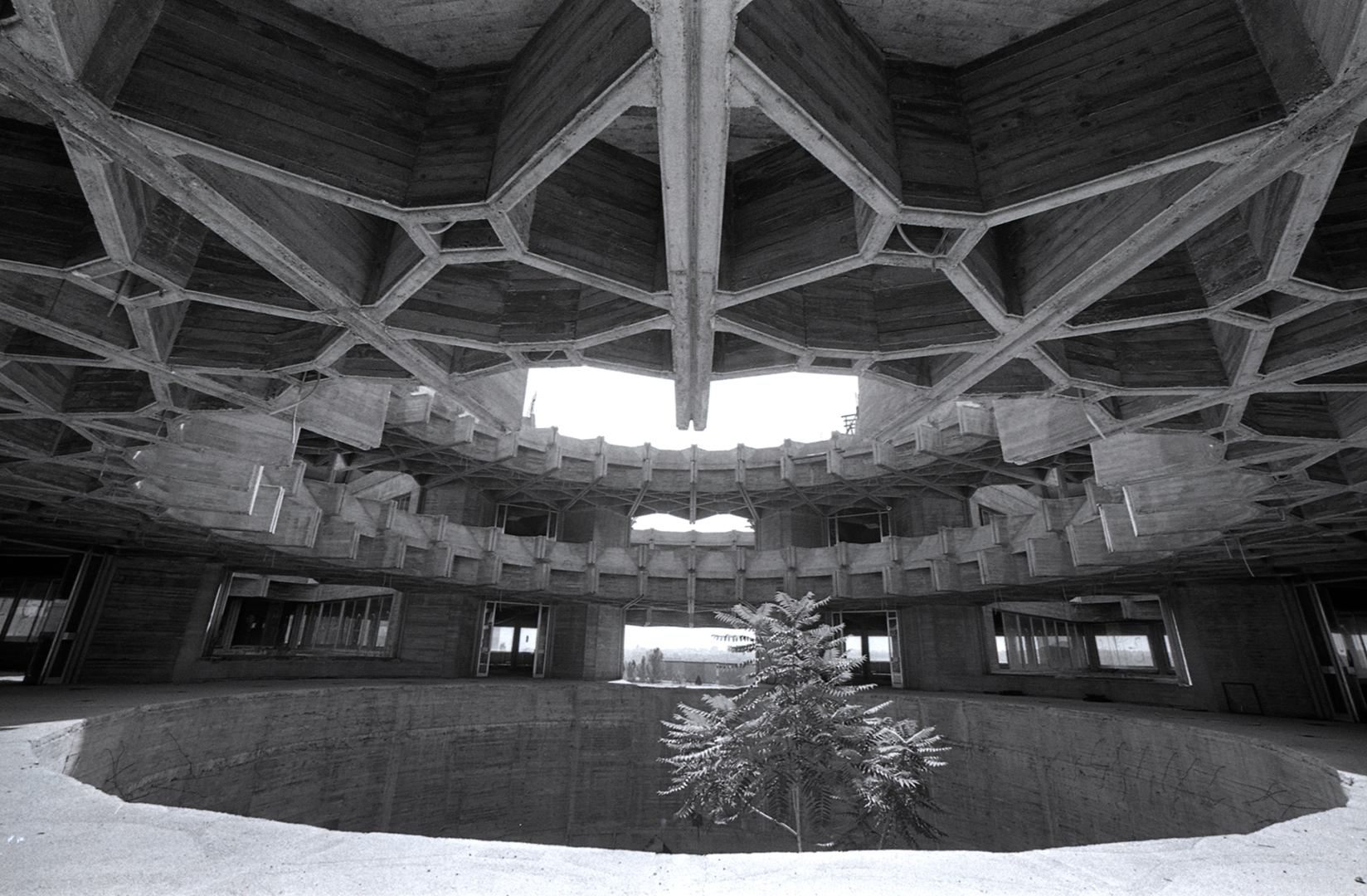
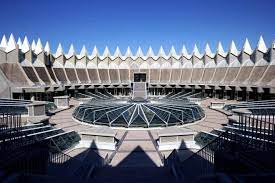
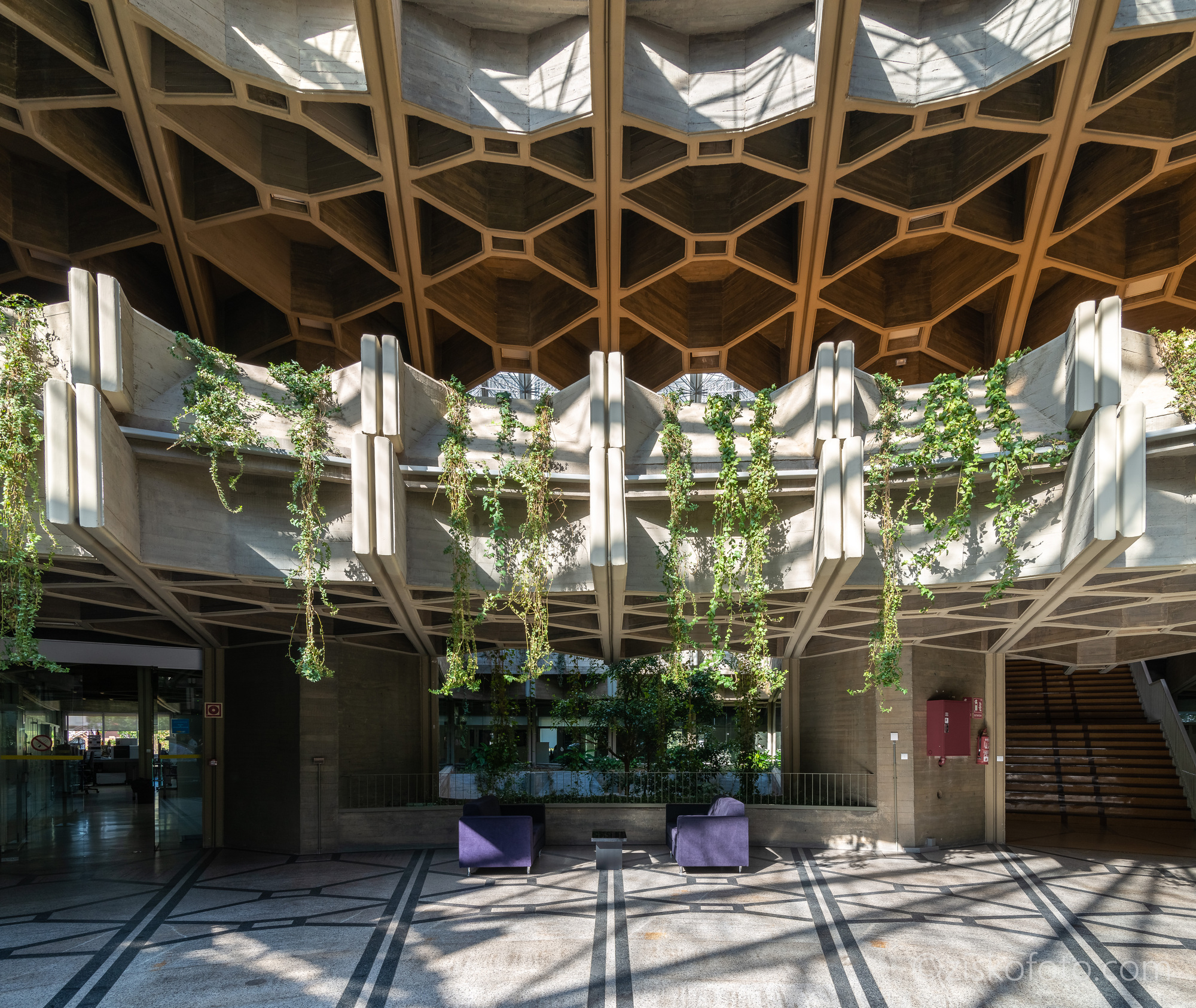
2. National Center for Restoration (1965). Here we find Fernando Higuera’s grand masterpiece. It is easily identifiable below in the photograph section. This is due to its singular circular geometry and crown full of “spikes”. This is the reason why locally the building is known as the “Corona de Espinas” or “Crown of Thorns”. The building has a giant oculus. It illuminates the entire building vertically. It also introduces light to the spectacular library on the ground floor. The library has an extensive book collection in the art and restoration realm. This is a part of the Ministry of Culture. It is within the Central Administration for all the National Heritage Restoration Projects of the kingdom of Spain.
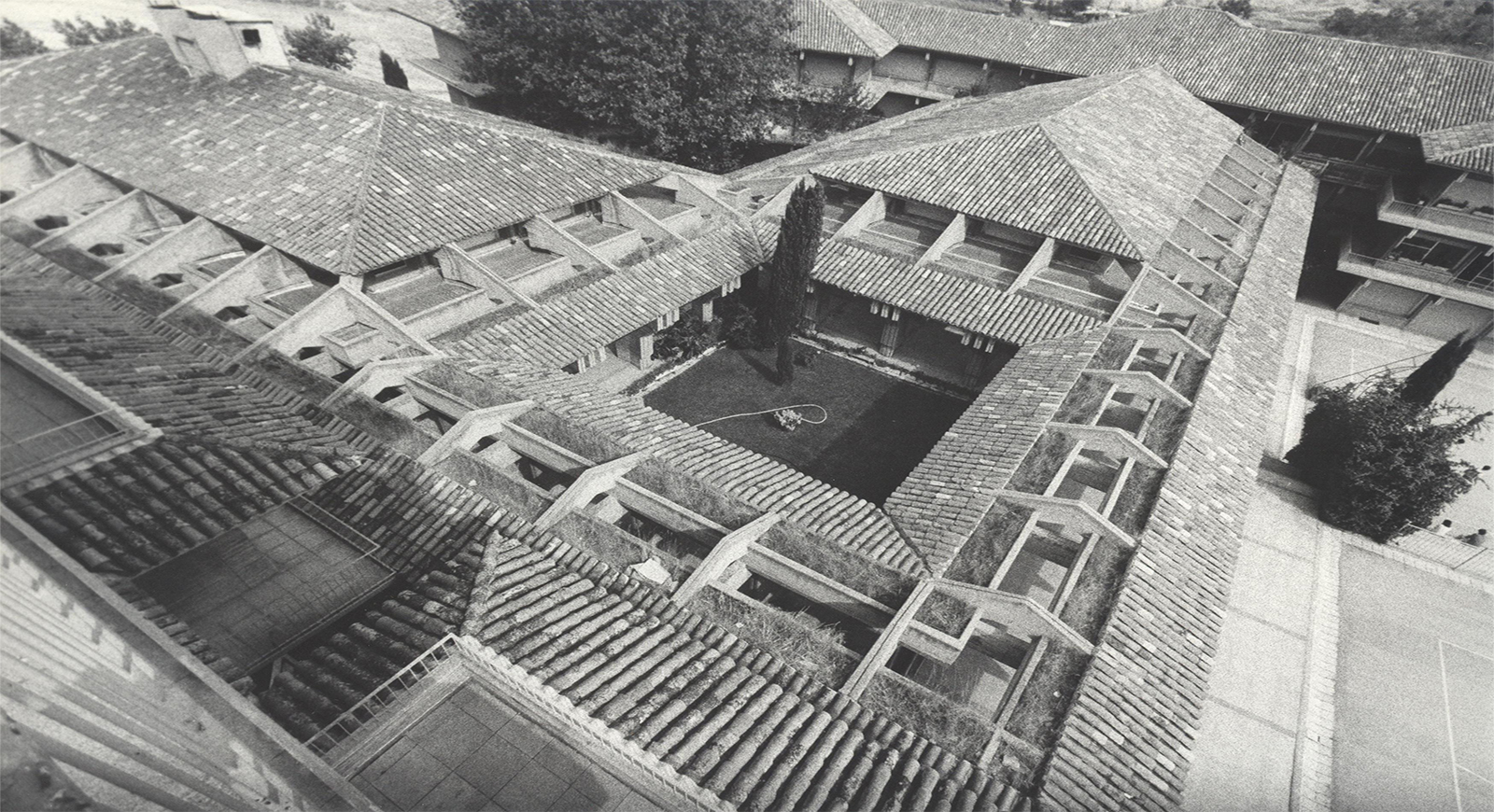
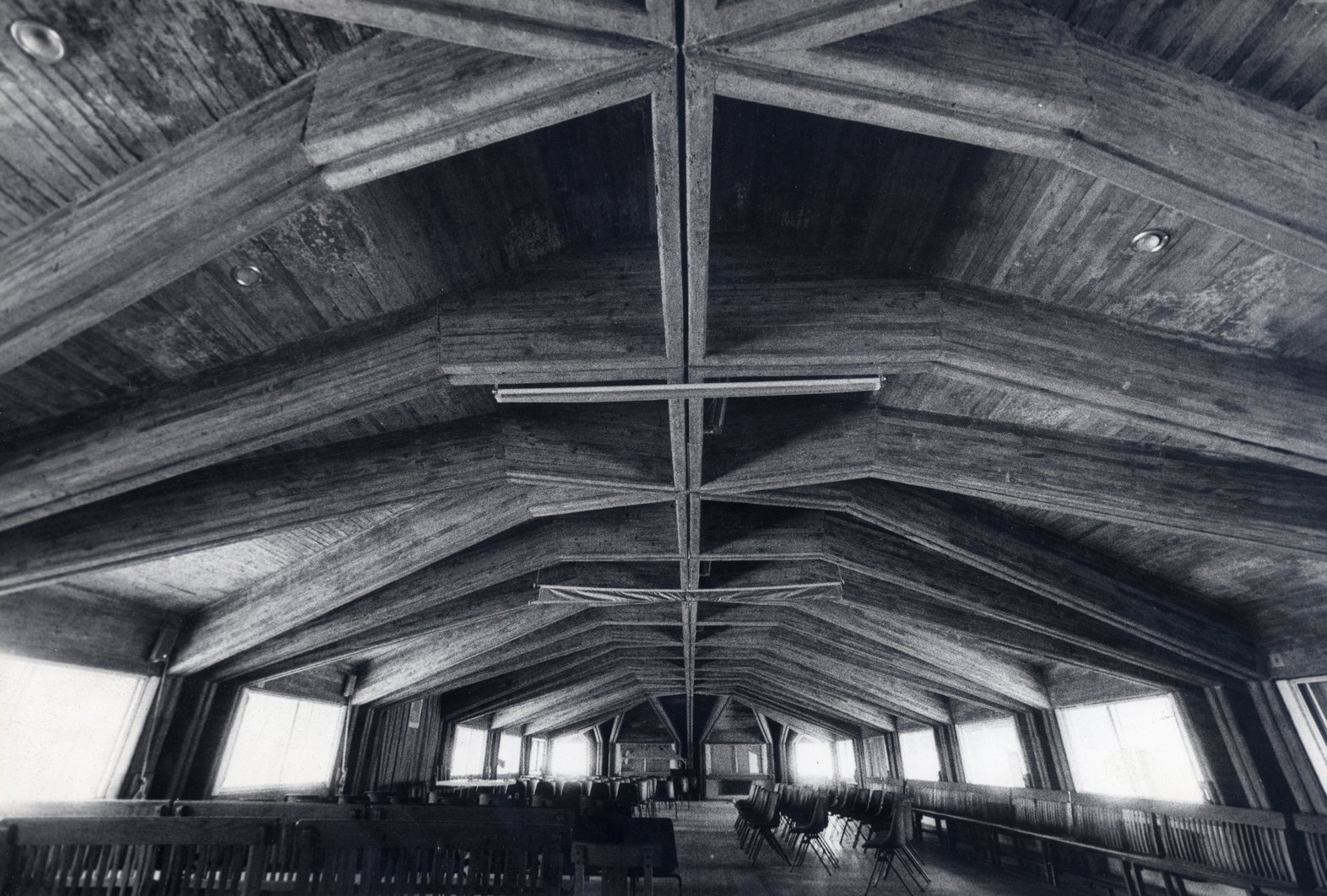
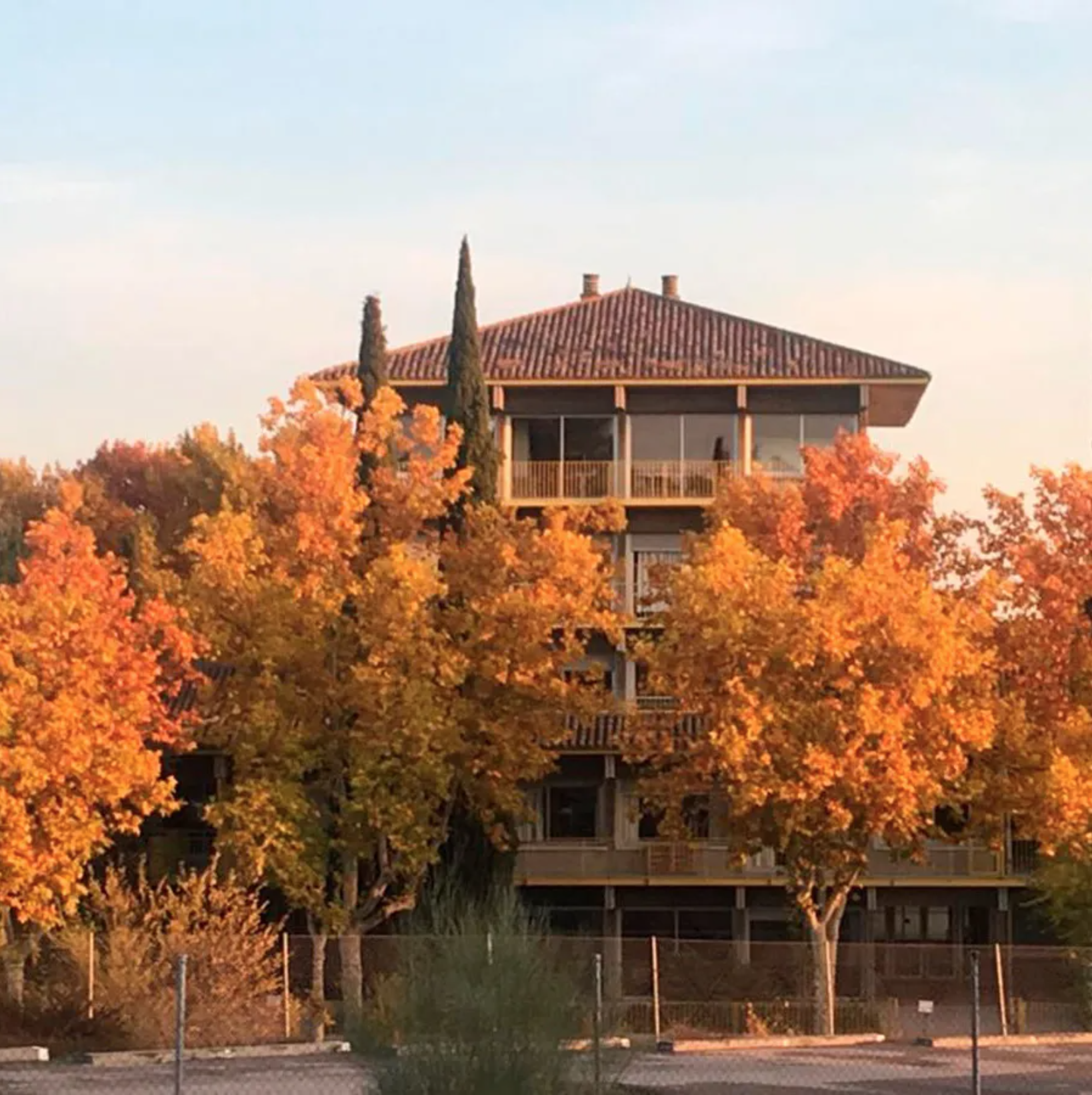
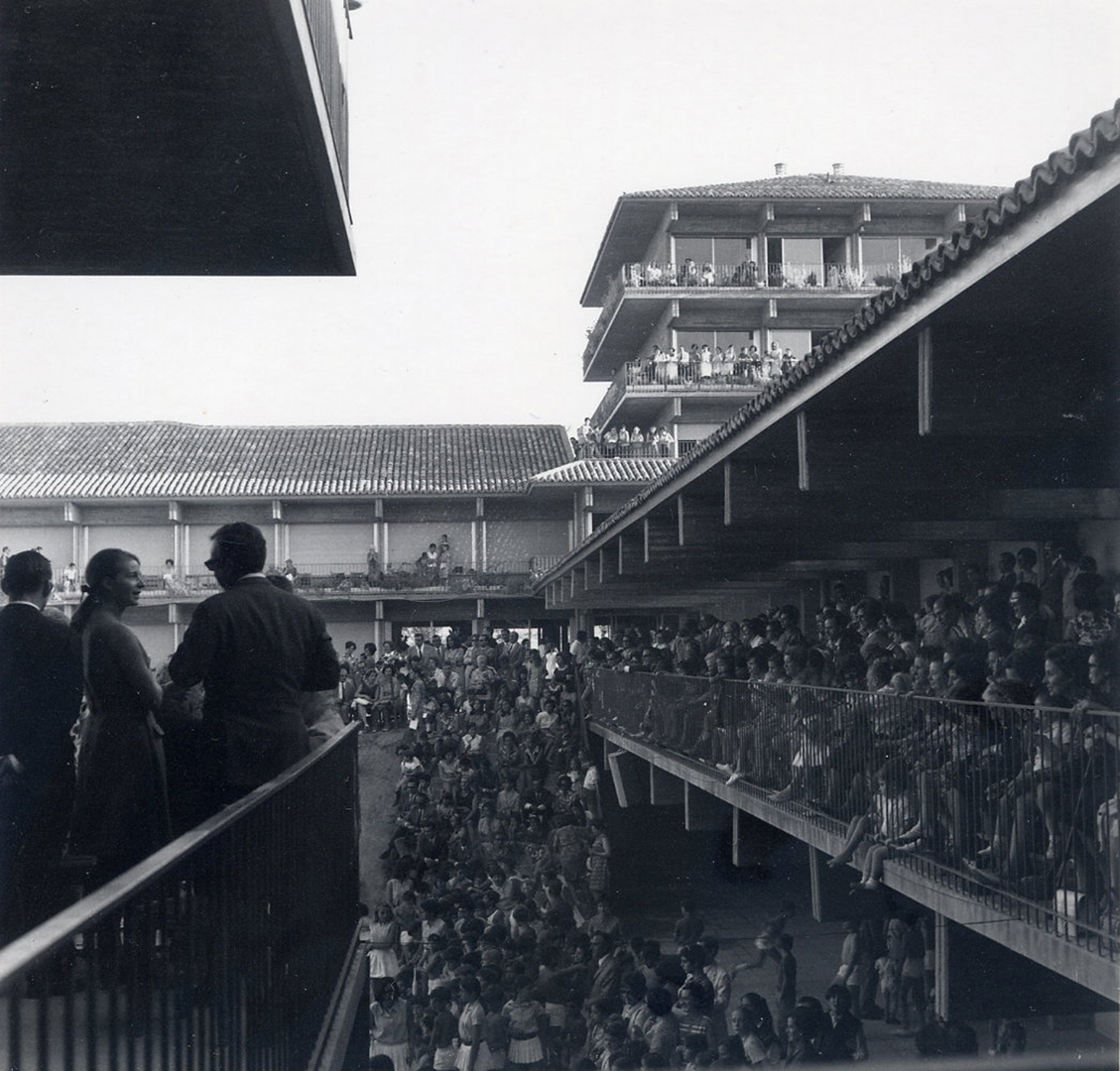
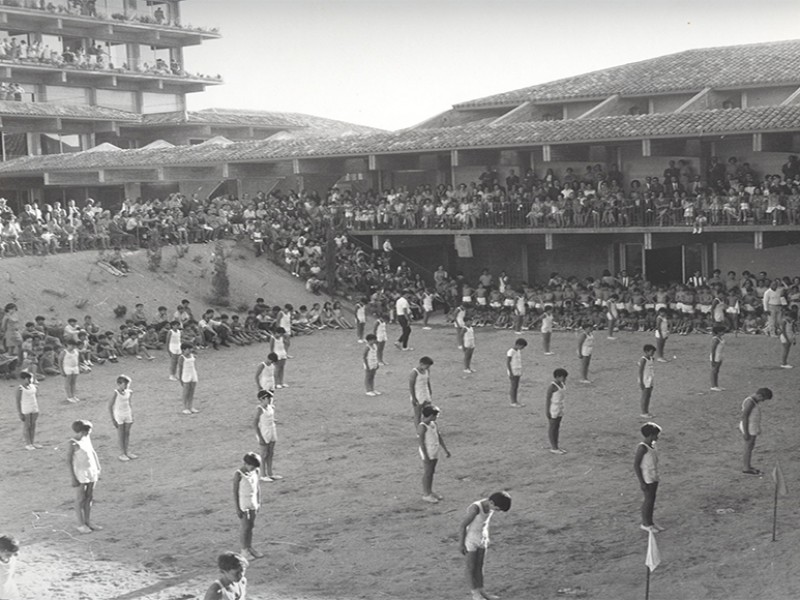
3. Colegio Estudio Primary and Secondary School (1962-64) in Valemarín (Aravaca). The school with innovative teaching methodologies, that belongs to the Institución de Libre Enseñanza (Institute for Liberal Education) was founded in the 1876 by Francisco Giner de los Ríos. “Fernando Higueras was alumni of the Colegio Estudio, and was the first registered architect that came out of this institution. With this commission Fernando made here his debut and produced a masterpiece.”1 . The Institute for Liberal Education, needed a modern and also innovative new school, which could only show their modern ideals through and expressive, still then experimental new architecture made of exposed concrete. Read more…
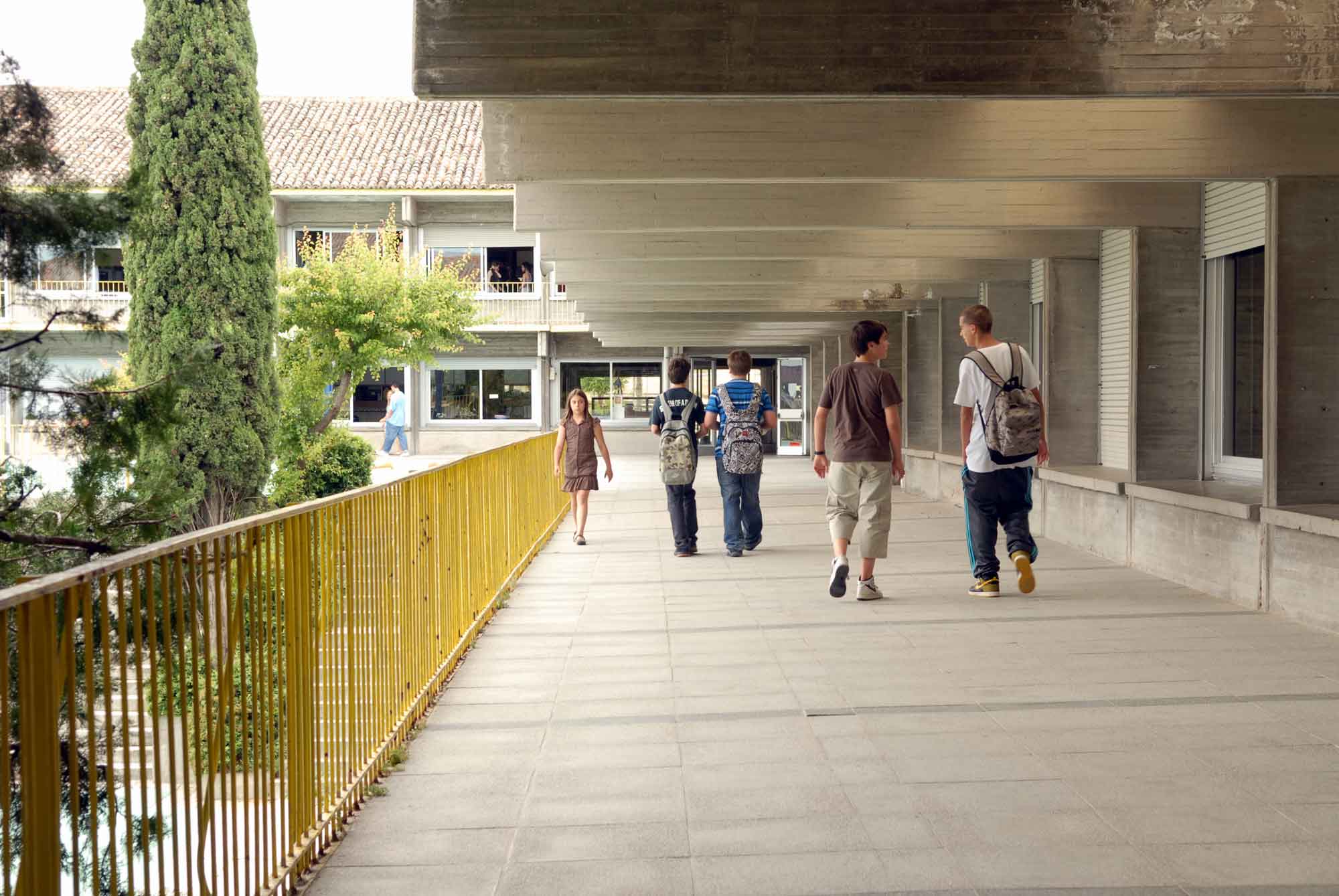
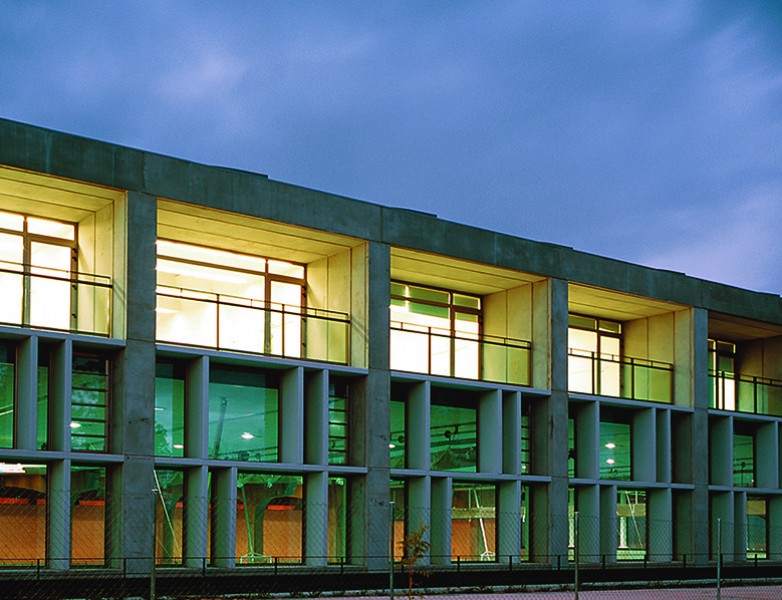
This new technology enabled a light structure for open and wide spaces. It also allowed fluid movement of students and ventilation. Fernando here resolved technical details and unique ways to knot the rebars inside the concrete. The image of the school, always in the memory of those that studied here, is of linear perimetral exterior terraces. These terraces encompass the whole with fine steel handrails painted in yellow. There are diaphanous grand spaces. Classrooms are interconnected with wide corridors. Finally, there is a tower. It looks somewhat like the bell tower of a monastery. There is also a chapel with a little garden on one side. This remind us of a square Romanesque cloister. Underneath is perhaps the heart of the institution. An indoor gym showcases the naked concrete structure. It serves as the frame for this new education system. The gym is surrounded by outdoor sports facilities. Physical education has always held a predominant position here. Between 1999 and 2002, the school constructed a modern extension. The extension included new classrooms and a gym. Former alumni of the school also designed it. Junquera Arquitectos designed a contemporary extension. They used the same materials and language. It remains contemporary to the original Fernando Higuera’s work. Fernando was always “such a precocious and brilliant architect!”1 (Adrian Navarro)
.
Details:
- Starting Point: At your hotel or at Metro Alberto Aguilera (L4) if done by Public Transport.
- Duration: 4 hrs
- Language : English, Spanish and others upon demand
.
Itinerary:
.
Photos:








Possible Extensión:
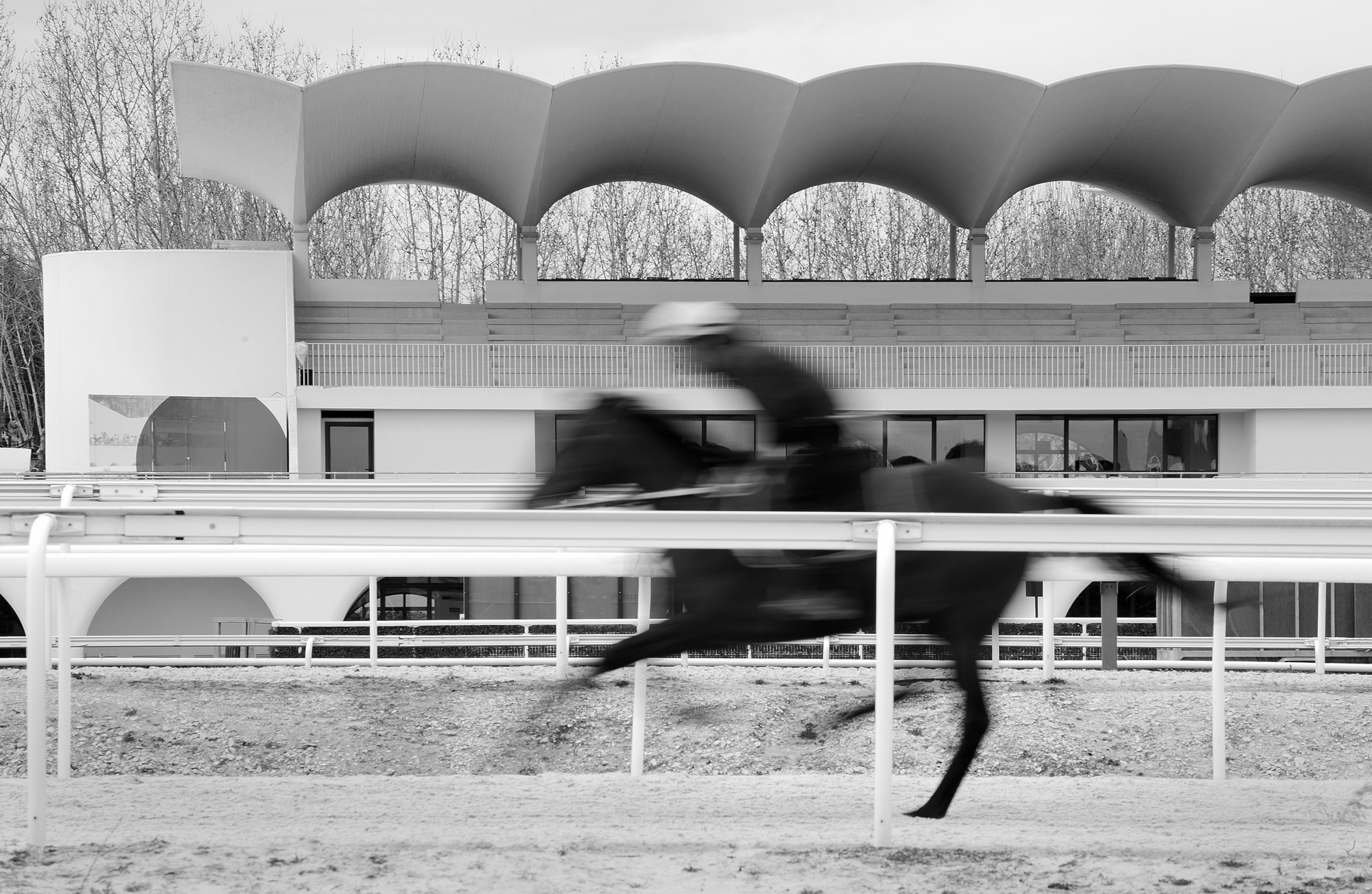
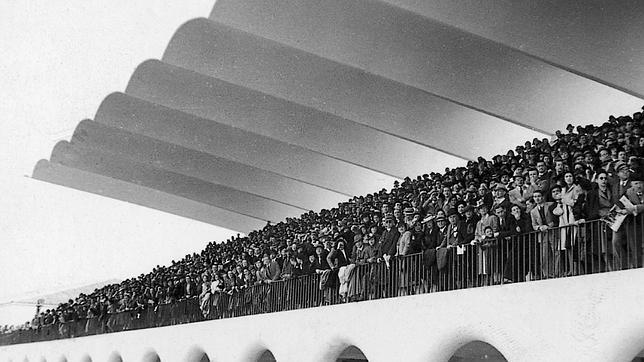
- Zarzuela Hippodrome – Horse ring’s terraces and cantilevered structures (1935-1941) by E. Torroja


.


 Pure Expeditions