.
Spanish Modern & CONTEMPORARY Architecture in MAD(drid)’s Center
This pleasant walking tour through the center of Madrid highlights top modern and contemporary Spanish architecture. These structures are accessible by foot. They are located in Madrid Central District (Distrito Centro). We will start in the authentic Chamberí District, and the itinerary will include, in this order, the next top quality projects:
1. Landscaped Terraces Building (1973-75) by Higueras: In 1973, Fernando Higueras and Antonio Miró were commissioned to build housing for the Board of Military in Madrid. The site is located on the corner of Alberto Aguilera and San Bernardo, an area of the city center of undoubted historical value where it was essential to respect the alignment and volume of the surroundings. Higueras and Miró make an ambitious commitment, in which they propose a building with a heterodox image based on exposed concrete and vegetation on the façade… Read More
.
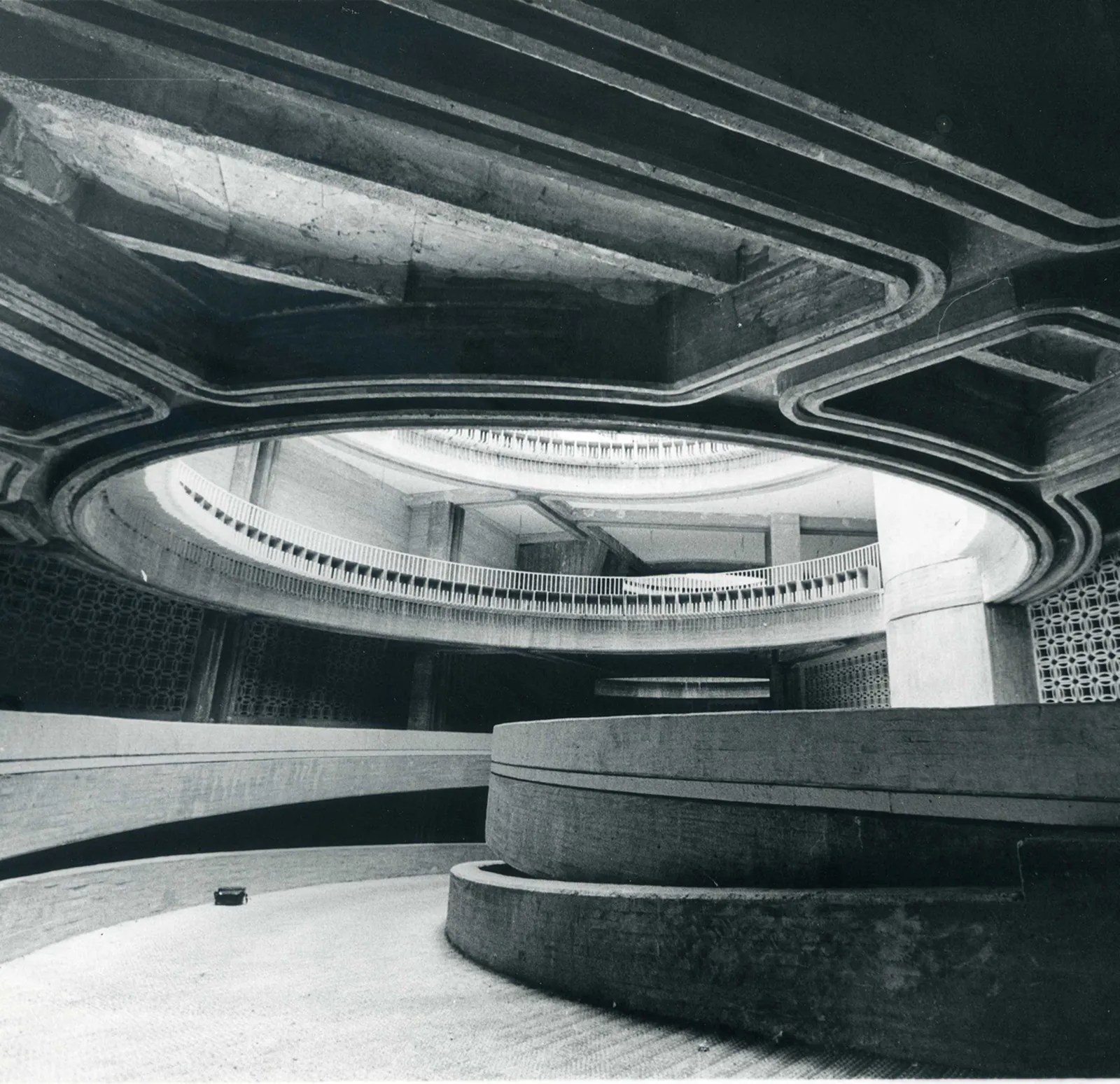
In the words of Fernando Higueras himself, this project should be understood as “a building between dividing walls that sticks at all times to the boundaries (heights, setbacks, etc.) that the town hall marked”. The site, located in an area of undoubted historical value on the corner of Alberto Aguilera and San Bernardo, was occupied by the old Hospital de la Princesa. Divided in two by Santa Cruz de Marcenado Street, the project is structured in two blocks A and B that are separately adapted to their own urban constraints. The square that is generated between them, originally open to the city, has a privileged orientation that allows it to receive the midday light. Block A (next to the San Bernardo roundabout) is organised around a generously sized interior patio that provides greater ventilation and lighting in the housing service area. In addition, due to its continuity and formal richness, it provides unobstructed perspectives on the interior street intended for pedestrian access.
.
Below ground, the building is made up of four parking floors with natural ventilation and lighting through four enormous circular patios designed so that, just like light, the vegetation enters and grows freely.
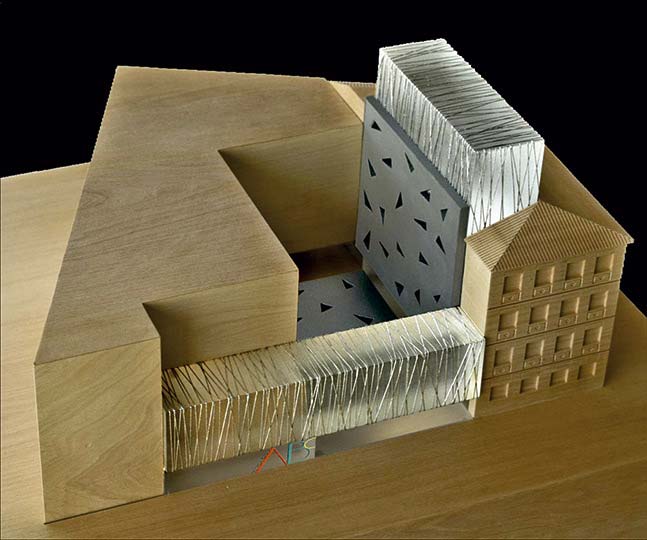
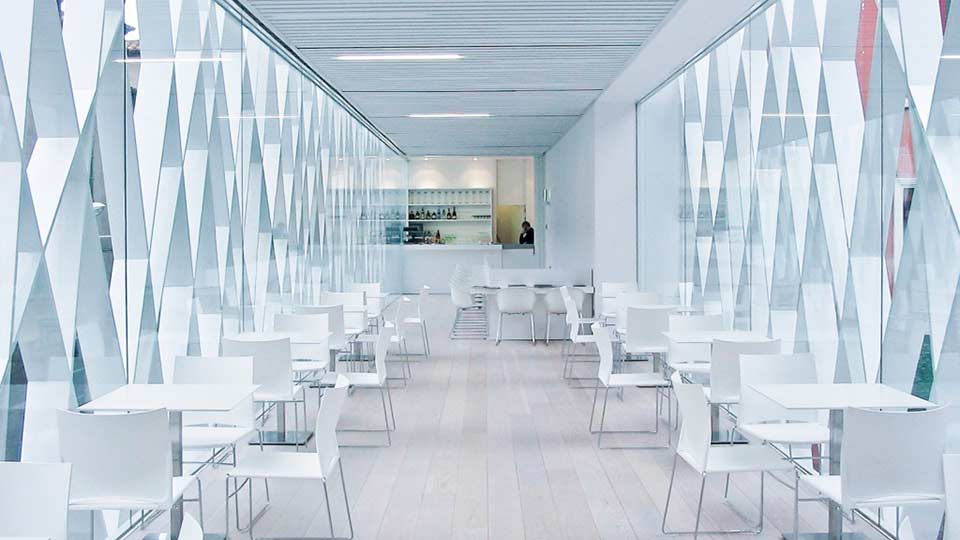
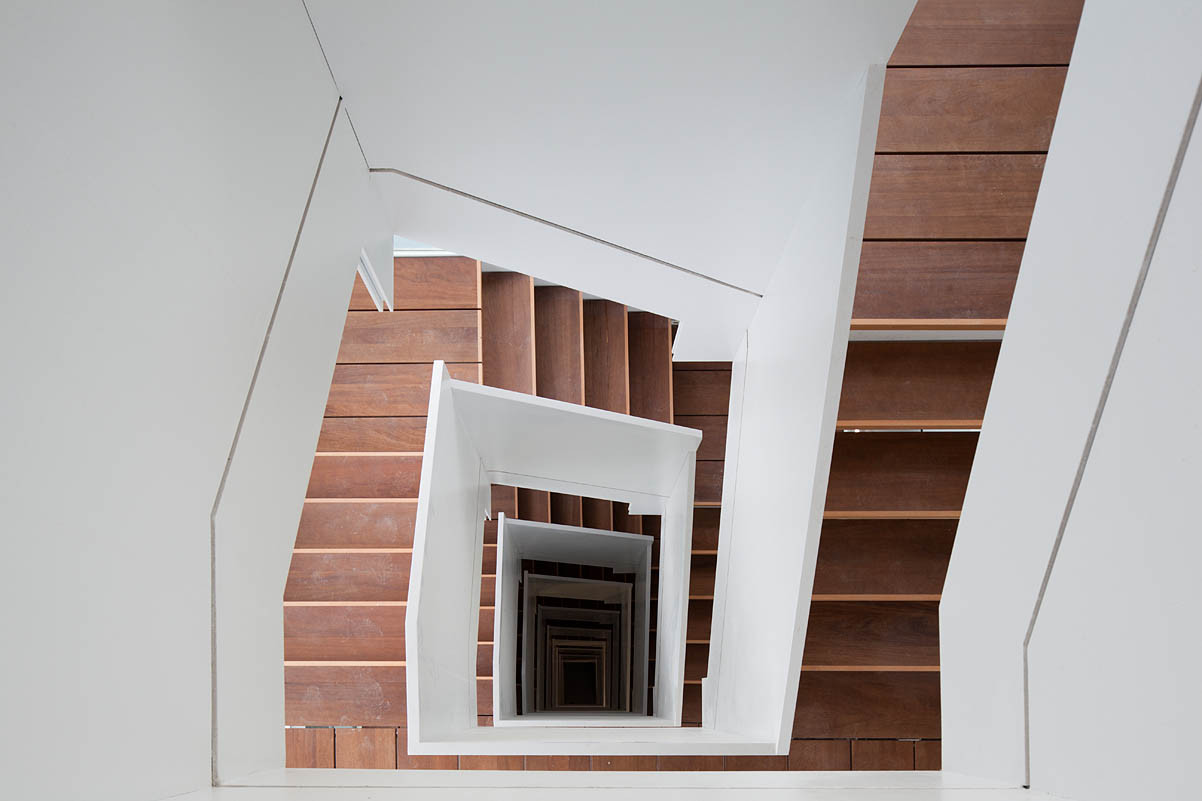
2. ABC Center (2006-2010) by Aranguren & Gallegos serves as the new Headquarters for the ABC Foundation. It is also the Center of Drawing and Illustration. A great sample of contemporary architecture incorporated in the historic center.
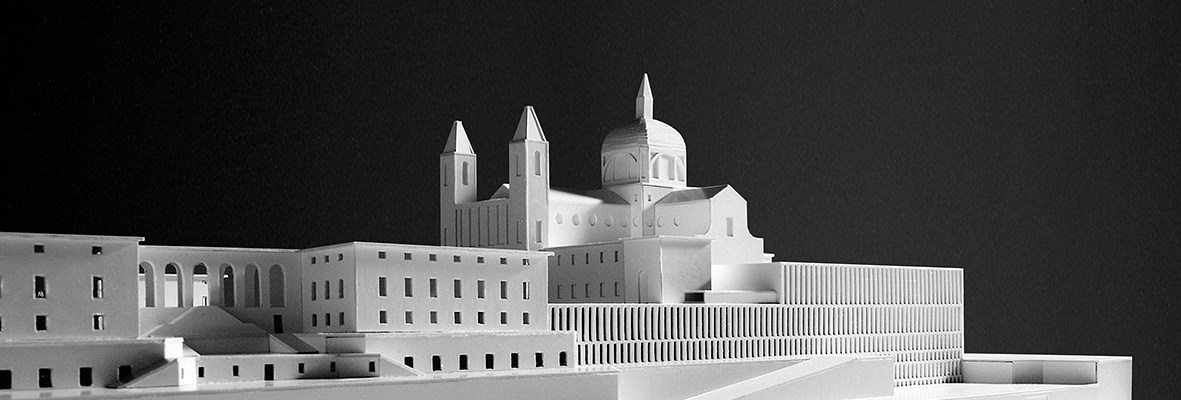
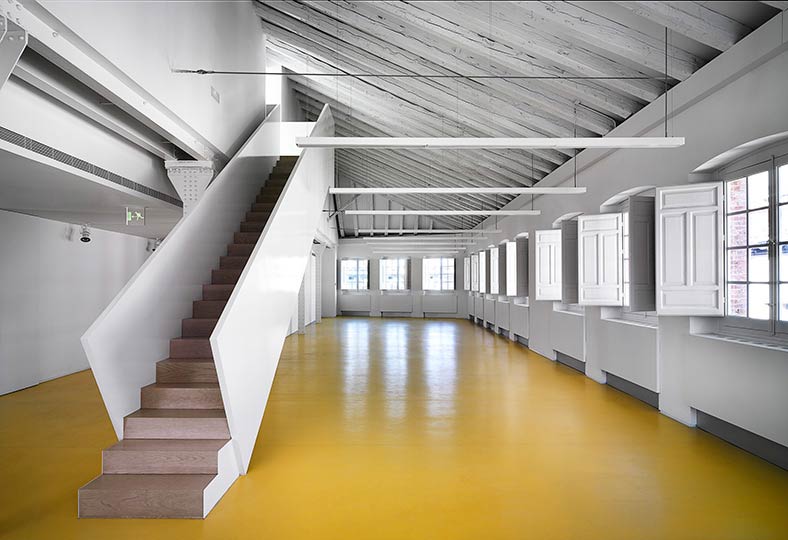
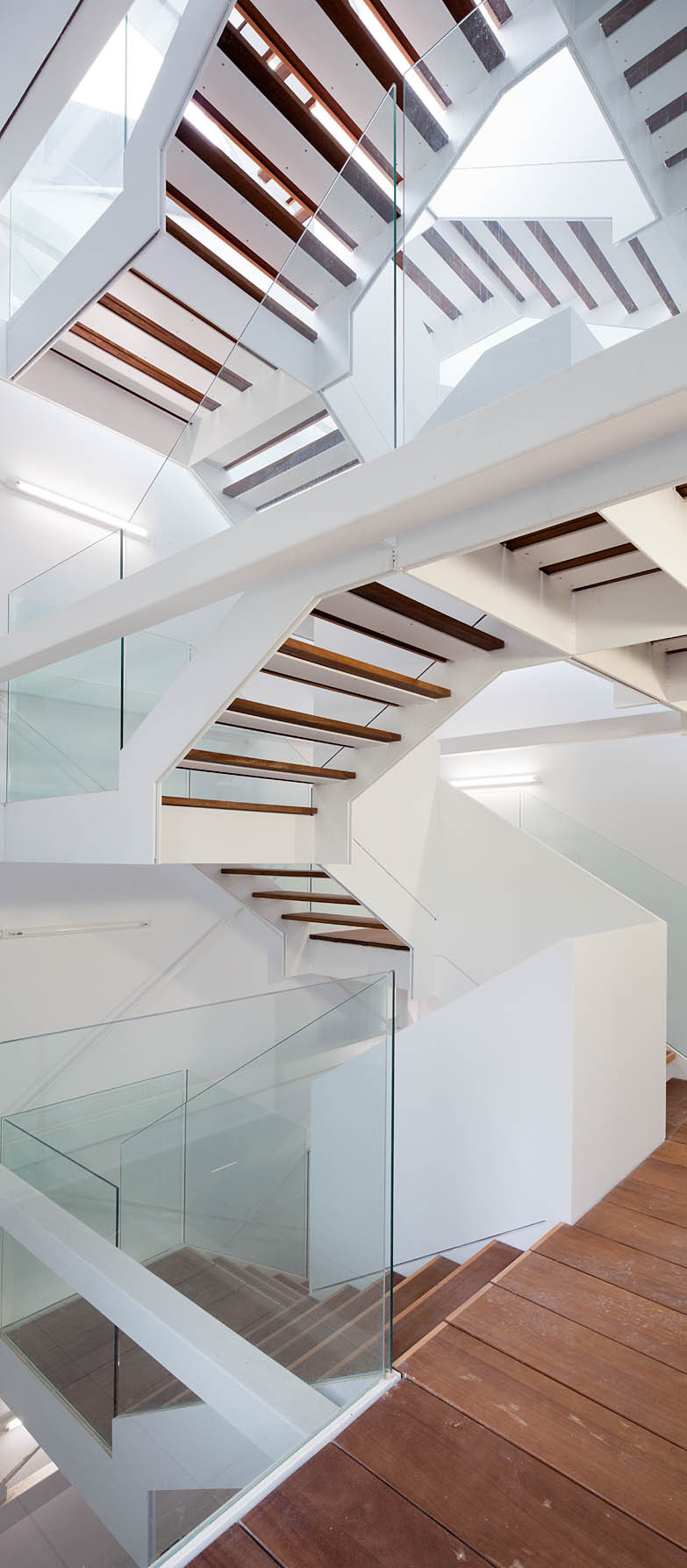
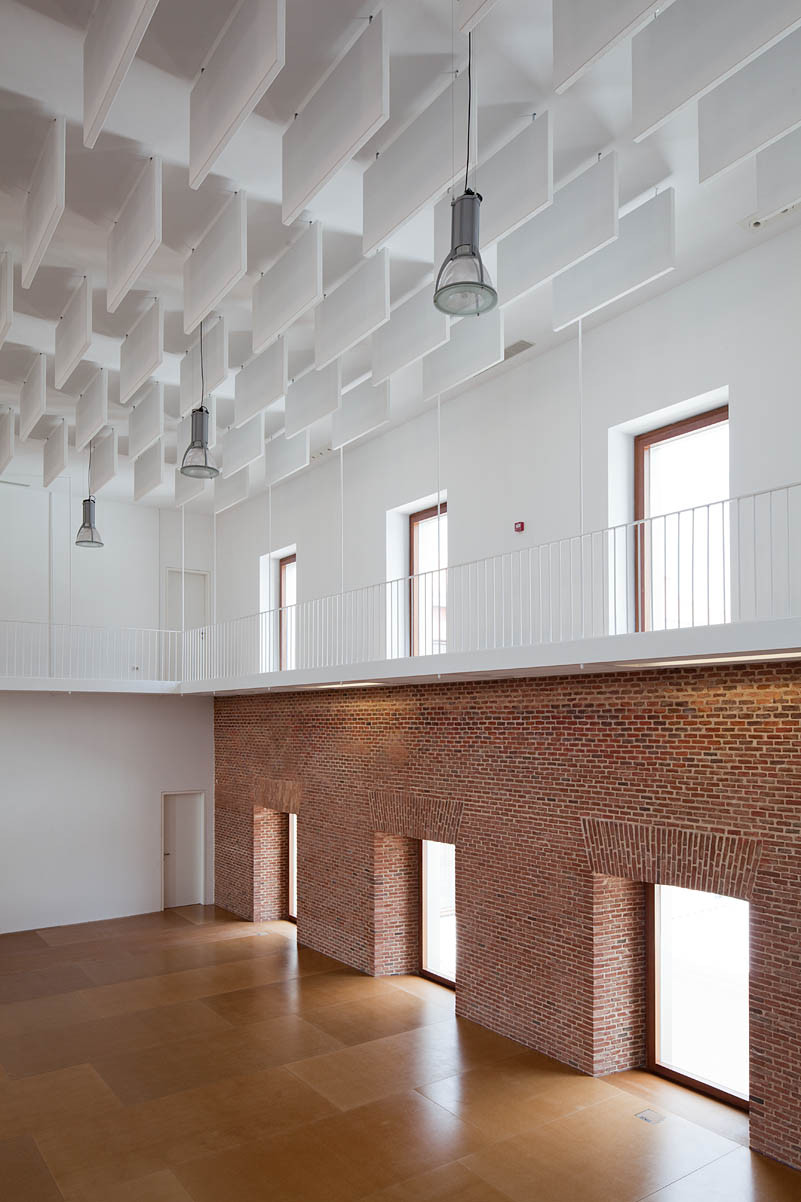
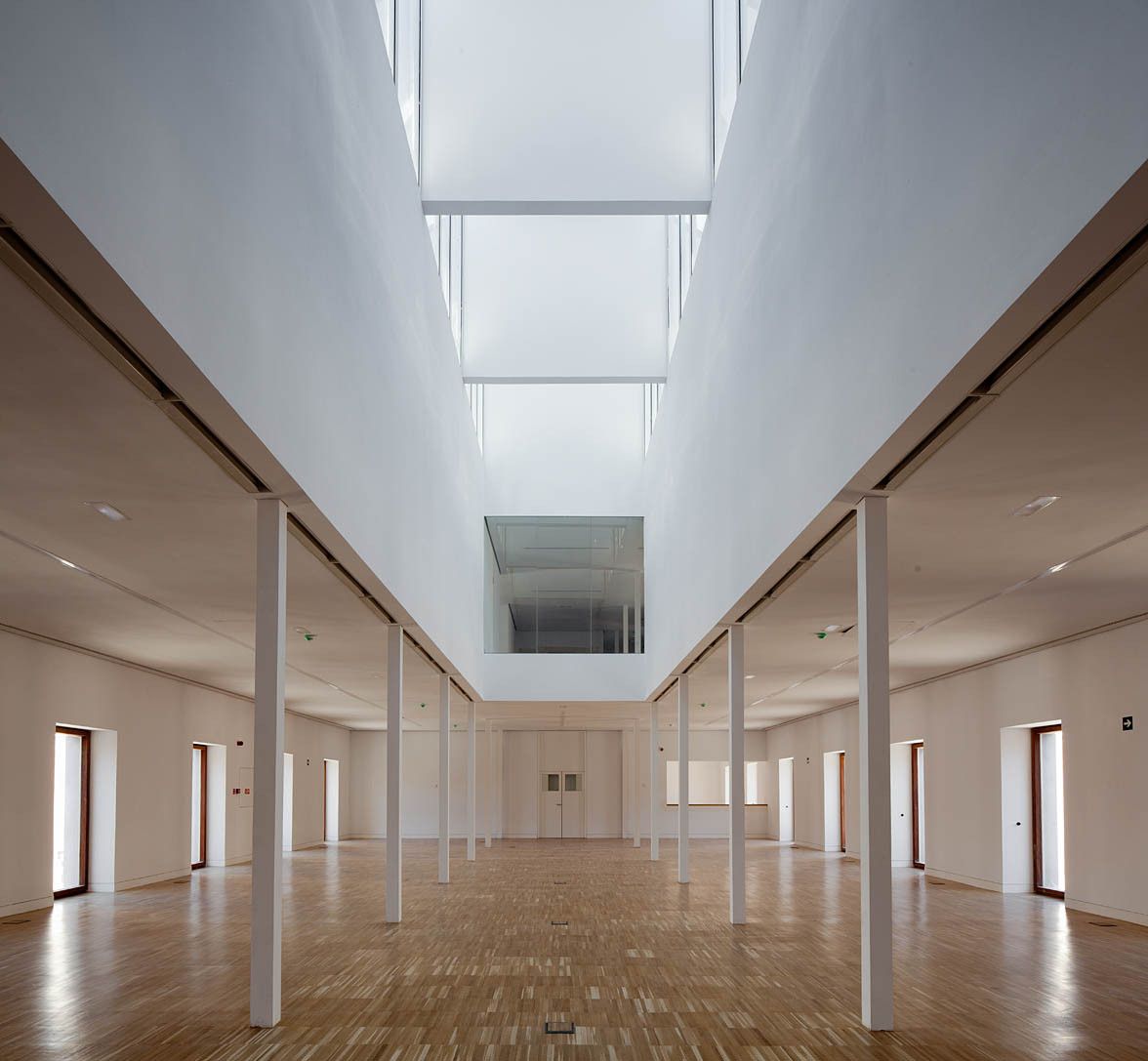
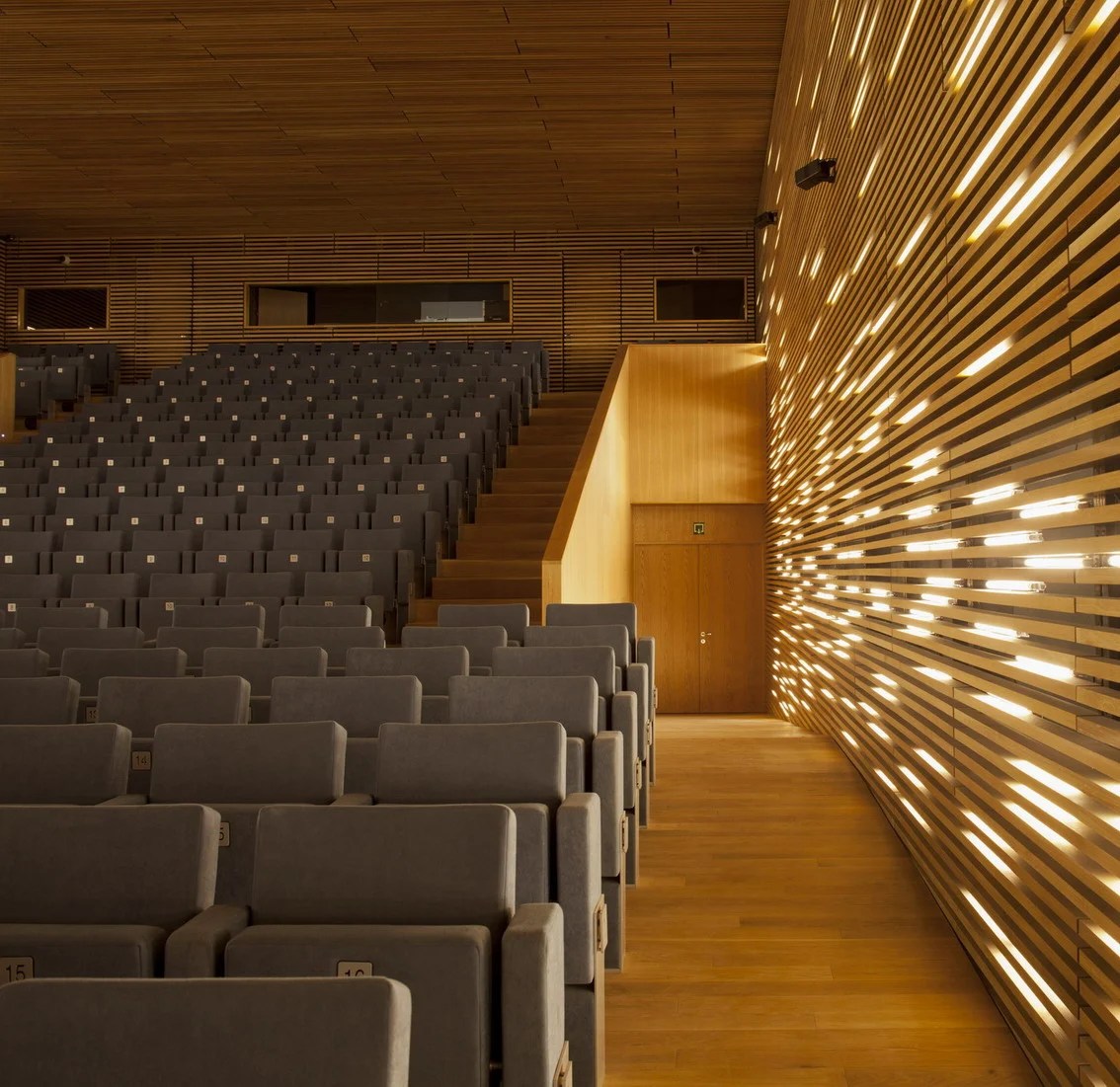
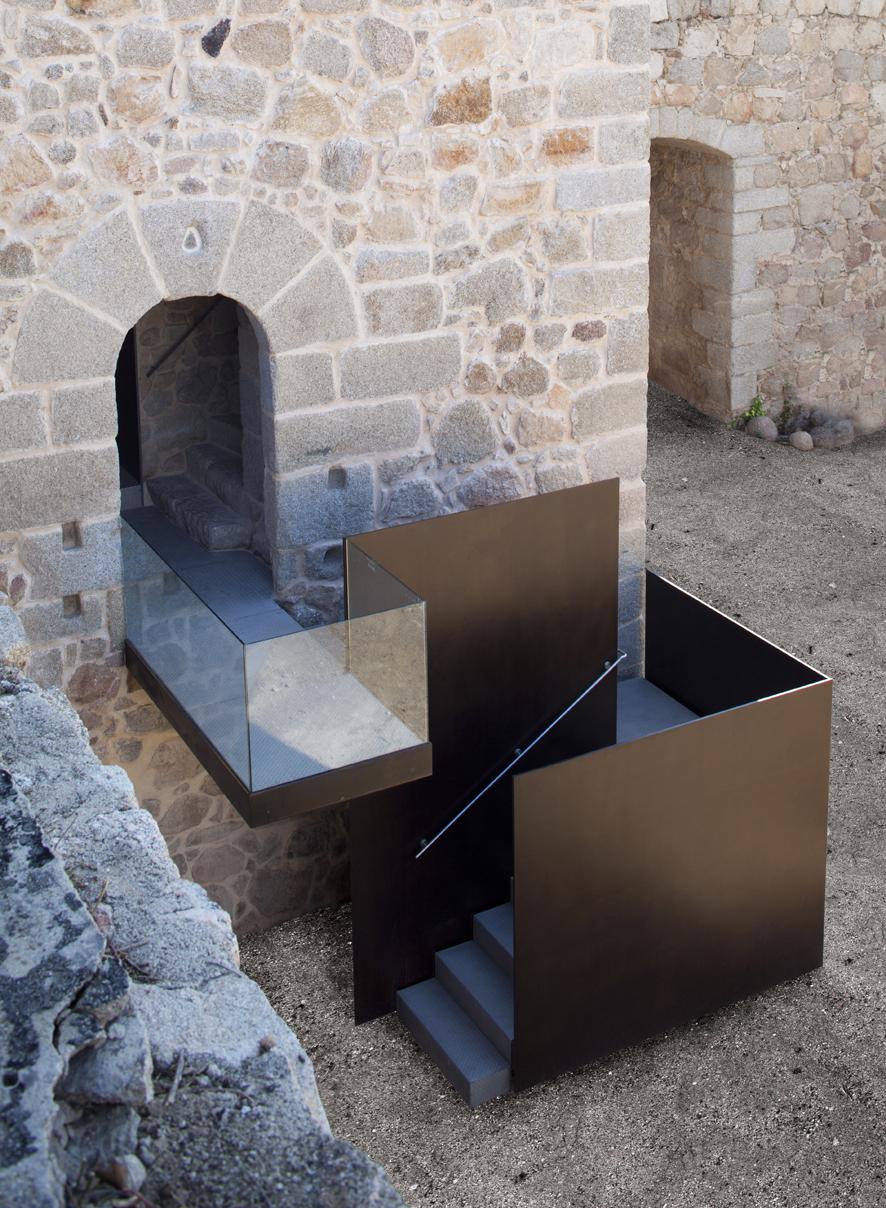
3. Cuartel of Conde Duque (Count Duke Barracks Quartel) Early 18th Century. Refurbishment (2010-11) by Carlos de Riaño Lozano, an exquisit detailed interior refurbishment, which was done in three phases, and includes: The Villa Archives, the Municipal Historical Library, the Víctor Espinós Musical Library, a Newspaper Municipal Library of Madrid, the Conde Duque Public Library or a Museum of Contemporary Art, among other uses that we will discover, some of them underground very strong aesthetic of archaeological and scenic character… Read More
Attention to the detailed and beautiful designs that perfectly integrates the pre-existing brick building with the new intervention, a beautiful underground dialog of dark and light with new materials such as steel glass and warm wood interiors in the case of theatrical spaces.
Text by the architect:
In 1717, Pedro de Ribera drew the first project of the Conde Duque barracks in Madrid. It had to provide answers for an ambitious program to house the more than 600 men and 400 horses of the Royal Guard.
In 2004, with the drafting of the Plan Director, began a new adventure in the life of the Conde Duque, which finished with the completion of the works in 2011, after a total and coordinated renovation of the whole building.
The first images of its naked interior were open naves of brick arches on granite pillars and at other levels, wrought columns and riveted beams. Clean and austere spaces covered with solid brick structures. The powerful space called for an obvious solution: to maintain the skeleton, to remove additions and to concentrate the new interventions. The aim was to achieve a big neutral container where new timeless objects and specific elements could be situated.
The program proposed by the City of Madrid was aware of those premises and facilitated the task. It essentially wanted to create places of interaction, multi-use spaces and a small collection of venues for the development of activities (a concert hall, a theatre, an assembly hall…). The interior courtyards shape the vast and diverse program. They are also an opportunity to recover open spaces and to allow the indoors and outdoors flow. The building is still very hermetic towards the exterior, but these courts offer a friendly and accessible face. They mean the antechamber, the place of approach, the possibility of understanding.
4. Plaza of Spain (Plaza de España) is home to tall towers like the Torre de Madrid (Madrid Tower). These towers dominate the plaza. Towers like the Edifice of Spain (Edificio de España) were constructed in the 1950s. They served as a classic hotel and commercial gallery. These constructions contrast with other contemporary hotels in the same square. In the center we will find a statue dedicated to Miguel Cervantes and his famous novel “Don Quixote”. All of this was part of the 62 million euros renovation of this public space (2019-21). Porras Lacasta carried out the project. This architect won the first prize in the ideas competition promoted by the City Council of Madrid. The competition was held under the motto “Welcome mother Nature“.
5. Debod Temple (II Century) Egyptian temple from the 2nd century BC. installed near the Plaza de España in the Parque del Cuartel de la Montaña. The Egyptian government donated the temple to Spain. They wanted to prevent it from being flooded after the construction of the Aswan High Dam. It was dismantled and moved to this new location. It overlooks the Manzanares River and further west the Casa de Campo. This is a wonderful spot to come in the evenings to obtain a beautiful sunset. The construction of the temple began at the beginning of the 2nd century BC. by the King of Meroe Adijalamani, who dedicated a chapel to God Amun and Goddess Isis.
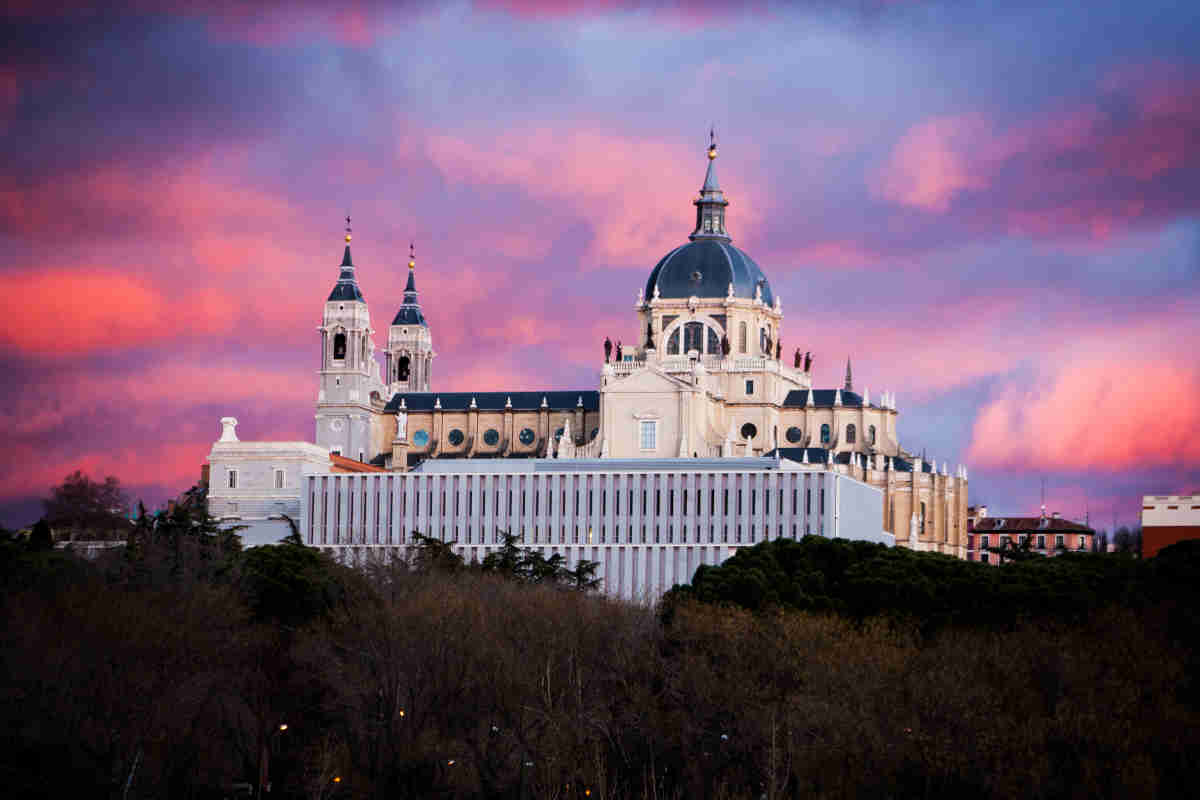
6. Royal Collections Museum (2006- 2016) by Tuñon & Mansilla is a contemporary intervention. The clean volume dialogues with the geometry of the facade of the Royal Palace. It brings the set of elements together with the Royal Palace and the Cathedral in a perfect composition. This integration forms a single complex, now perfectly unified and completed. Years after its conception and competition, the museum has been inaugurated in the summer of 2023 and can finally be visited internally.
.
Details:
- Starting Point: Metro Alberto Aguilera
- Duration: Between 2,5 – 4 hrs
- Language : English, Spanish and others upon request
.
Walking itinerary:
.
Photos:












.


 Pure Expeditions